I drove the Chevrolet Corvette E-Ray for a week — and I can’t believe it runs off hybrid power
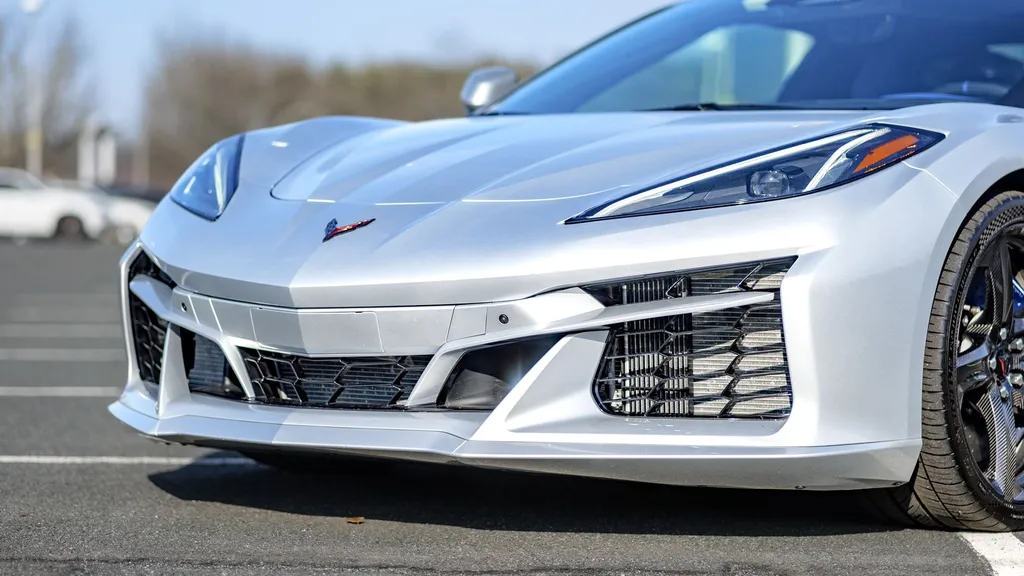
The 2026 Chevrolet Corvette E-Ray is a hybrid sports car combining a 6.2L V8 engine with a 1.9 kWh battery for a total of 655 horsepower and a 0 to 60 mph time of 2.5 seconds. Despite its high performance, it is surprisingly easy to drive and includes modern features like an automatic lifting system and ample storage. However, it lacks proper adaptive cruise control and its electric 'Stealth Mode' is limited in cold temperatures.
- ▪The 2026 Chevrolet Corvette E-Ray is the first electrified version of the Corvette, using a hybrid powertrain.
- ▪It produces 655 horsepower from a combination of a 6.2L LT2 V8 engine and a 1.9 kWh lithium-ion battery.
- ▪The car achieves a 0 to 60 mph time of just 2.5 seconds and offers improved highway efficiency.
- ▪It features an automatic front lifting system and unexpected storage capacity for a sports car.
- ▪Stealth Mode, which allows electric-only driving, disables in colder temperatures and the car lacks full adaptive cruise control.
- ▪The reviewer found the E-Ray remarkably easy to drive for a high-performance hybrid supercar.
Tom's Guide files mainly under tech. We currently carry 991 of its stories.
Story provenance
Source · retrieval · rights · ranking — open for full record
inspect →
Story provenance
Attribution is not the same as permission. This drawer separates discovery metadata, excerpts, WeSearch-generated summaries, reuse status, and whether the publisher receives the visit. Nothing here claims a legal grant the publisher has not made.
Record
| Original publisher | Tom's Guide |
| Canonical URL | https://www.tomsguide.com/vehicle-tech/2026-chevrolet-corvette-e-ray-review |
| Publication time | Tue, 28 Apr 2026 09:00:00 +0000 |
| Retrieval time | 2026-04-28T09:04:15.354Z |
| Last seen | 2026-04-28T09:04:15.354Z |
| Headline source | Publisher (no WeSearch rewrite) |
| Excerpt source | publisher body |
| Excerpt method | First ~120 words (~800 chars) of extracted publisher body, fair-use limited. |
| Summary | WeSearch · cerebras-chat (WeSearch summarizer) |
| Summary source text | contentText |
| Citation coverage | Summary is a WeSearch-generated derivative; primary citation is the original publisher URL. |
| Cluster | F5FM3V_RGbL- |
| Cluster logic | Grouped by semantic title/content similarity across sources within a rolling window. Same-publisher template collisions are excluded from coverage comparison. |
| Ranking reason | Story pages are not engagement-ranked. Hub feeds use recency, with optional source-diversified chronological ordering (cap consecutive stories per source). No personalized ranking. |
| Publisher visit | Yes — open original |
| Substitutes article? | No — link-out required for full text |
Rights status (four layers)
WeSearch handling by dimension
| Indexing | May the item be indexed (stored, ranked, made findable)? | Allowed |
| Snippet | May a short excerpt of the publisher's text be shown? | Allowed |
| AI summary | May WeSearch generate its own short summary of the article? | Limited |
| Retrieval / RAG | May the content be exposed for third-party retrieval-augmented generation? | Not asserted |
| Model training | May the content be used to train AI models? | Not asserted |
| Commercial reuse | May the content be reused commercially? | Not permitted |
Basis: Derived from the published RSS/Atom feed. Contact: [email protected]. Reviewed: 2026-07-24.
Opening excerpt (first ~120 words) tap to expand
Tom's Guide Verdict The 2026 Chevrolet Corvette E-Ray is a high-tech supercar that introduces electric power to maintain the storied performance tuning Corvettes are known for — all while delivering a modern, tech-forward makeover. Pros +No-compromise hybrid power +Easy to drive +Automatic lifting system +Surprising storage spaces +Respectable highway efficiency Cons -Lacks proper adaptive cruise control -Stealth mode disables at colder temperatures Best picks for you The best electric cars in 2026 I’ve worn smart glasses for over 5 years — here’s the best AR and AI glasses in 2026 I test dash cams for a living and these are the ones I’d buy to protect my car Why you can trust Tom's Guide Our writers and editors spend hours analyzing and reviewing products, services, and apps to help find…
Excerpt limited to ~120 words for fair-use compliance. The full article is at Tom's Guide.
Discussion
0 commentsMore from Tom's Guide