'I would never have guessed it': Unexpected effect is squeezing Mars' atmosphere like toothpaste, experts say
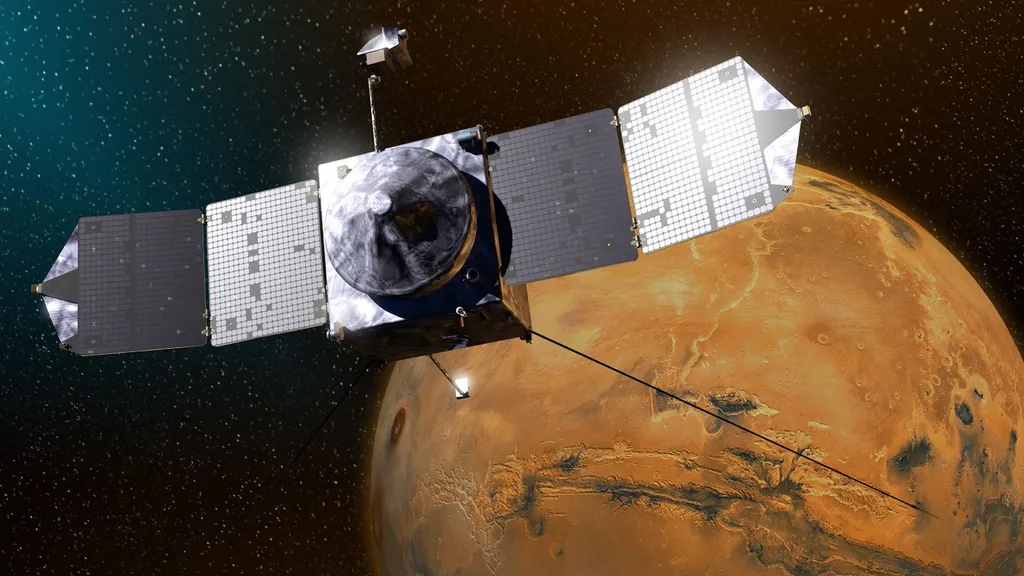
Researchers have discovered the Zwan-Wolf effect on Mars, which was previously thought to be impossible on the planet. This phenomenon, detected by NASA's MAVEN spacecraft, involves the squeezing of plasma in Mars' upper atmosphere following a solar storm. The findings could alter our understanding of space weather effects throughout the solar system.
- ▪The Zwan-Wolf effect was first identified on Earth in 1976 and involves charged particles being squeezed along magnetic structures.
- ▪NASA's MAVEN spacecraft detected the effect after a powerful coronal mass ejection hit Mars in December 2023.
- ▪This discovery suggests that similar phenomena may occur on other planets, despite Mars lacking a significant magnetosphere.
Opening excerpt (first ~120 words) tap to expand
Space Astronomy Planets Mars 'I would never have guessed it': Unexpected effect is squeezing Mars' atmosphere like toothpaste, experts say Researchers have uncovered an unexpected phenomenon, dubbed the Zwan-Wolf effect, squeezing plasma "like toothpaste" in Mars' upper atmosphere. This effect, which also happens on Earth, was thought to be impossible on the Red Planet. By Harry Baker published 29 May 2026 in News When you purchase through links on our site, we may earn an affiliate commission. Here’s how it works. NASA's MAVEN spacecraft detected strange "wiggles" in Mars' atmosphere after a powerful coronal mass ejection smashed into the Red Planet in 2023. These fluctuations were tell-tale signs of the Zwan-Wolf effect, which was previously thought to be impossible on Mars.
…
Excerpt limited to ~120 words for fair-use compliance. The full article is at Live Science.
Discussion
0 commentsMore from Live Science