Indonesia’s Dive Into Economic Nationalism
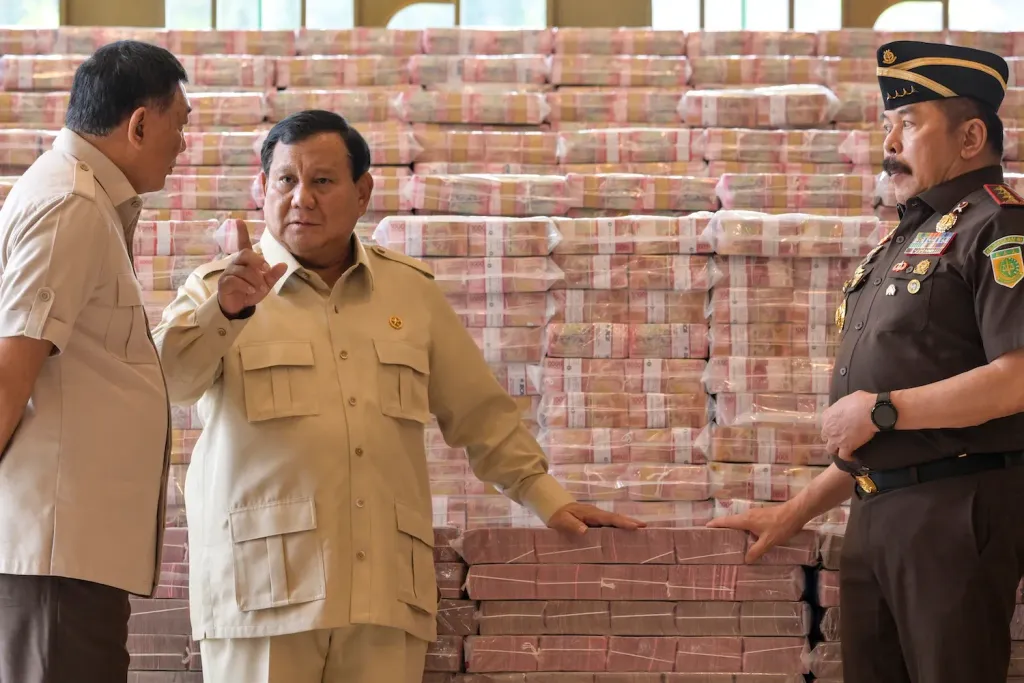
Indonesia is implementing a policy to nationalize resource exports, requiring all exports of selected raw materials to go through a single state-owned enterprise. This decision, announced by President Prabowo Subianto, aims to combat under-invoicing and increase government revenue. However, the rollout has been chaotic, leaving both companies and government officials unprepared for the sudden change.
- ▪President Prabowo Subianto announced a nationalization policy for resource exports in a recent speech to parliament.
- ▪The policy aims to combat under-invoicing, which has cost the government billions in lost revenue.
- ▪The implementation of this policy has left both companies and government officials scrambling to adapt.
Foreign Policy files mainly under world. We currently carry 82 of its stories.
Story provenance
Source · retrieval · rights · ranking — open for full record
inspect →
Story provenance
Attribution is not the same as permission. This drawer separates discovery metadata, excerpts, WeSearch-generated summaries, reuse status, and whether the publisher receives the visit. Nothing here claims a legal grant the publisher has not made.
Record
| Original publisher | Foreign Policy |
| Canonical URL | https://foreignpolicy.com/2026/05/27/indonesia-nationalize-resource-exports-prabowo-danantara/ |
| Publication time | Wed, 27 May 2026 05:00:28 +0000 |
| Retrieval time | 2026-05-27T05:37:56.834Z |
| Last seen | 2026-05-27T05:37:56.834Z |
| Headline source | Publisher (no WeSearch rewrite) |
| Excerpt source | publisher body |
| Excerpt method | First ~120 words (~800 chars) of extracted publisher body, fair-use limited. |
| Summary | WeSearch · cerebras-chat (WeSearch summarizer) |
| Summary source text | contentText |
| Citation coverage | Summary is a WeSearch-generated derivative; primary citation is the original publisher URL. |
| Cluster | bFFlXrz6cXer |
| Cluster logic | Grouped by semantic title/content similarity across sources within a rolling window. Same-publisher template collisions are excluded from coverage comparison. |
| Ranking reason | Story pages are not engagement-ranked. Hub feeds use recency, with optional source-diversified chronological ordering (cap consecutive stories per source). No personalized ranking. |
| Publisher visit | Yes — open original |
| Substitutes article? | No — link-out required for full text |
Rights status (four layers)
WeSearch handling by dimension
| Indexing | May the item be indexed (stored, ranked, made findable)? | Allowed |
| Snippet | May a short excerpt of the publisher's text be shown? | Allowed |
| AI summary | May WeSearch generate its own short summary of the article? | Limited |
| Retrieval / RAG | May the content be exposed for third-party retrieval-augmented generation? | Not asserted |
| Model training | May the content be used to train AI models? | Not asserted |
| Commercial reuse | May the content be reused commercially? | Not permitted |
Basis: Derived from the published RSS/Atom feed. Contact: [email protected]. Reviewed: 2026-07-24.
Opening excerpt (first ~120 words) tap to expand
Southeast Asia Brief A weekly dispatch on the politics, economics, and culture of a pivotal region, caught between China and the United States but still going its own way. Written by Bangkok-based journalist Joseph Rachman. Indonesia’s Dive Into Economic Nationalism A messy rollout looks set to disrupt global commodity markets. Joseph Rachman: A pencil drawing of a man wearing glasses in a t-shirt Joseph Rachman By Joseph Rachman, the writer of Foreign Policy’s weekly Southeast Asia Brief.
…
Excerpt limited to ~120 words for fair-use compliance. The full article is at Foreign Policy.
Discussion
0 commentsMore from Foreign Policy