Insight Is Still the Currency of Data Science
The article argues that data science should prioritize insight and discovery over code implementation, especially as coding agents reduce the effort required to write and execute code. The author suggests that review practices need to shift from scrutinizing code structure to evaluating the scientific reasoning, data quality, and validity of conclusions. By treating code as a tool rather than the primary deliverable, data scientists can better balance engineering demands with the exploratory work necessary for meaningful analysis.
- ▪Coding agents like Claude Code and OpenAI Codex reduce the time between forming an idea and testing it against data.
- ▪The author contends that code is merely a tool for scientific work, similar to a calculator, and does not define the discipline's value.
- ▪Reviewing an analysis should focus on the question, findings, and evidence rather than just the code implementation.
- ▪Smaller data science teams often face tension between building applications and conducting exploratory scientific work.
- ▪Understanding programming fundamentals remains important for directing coding agents and verifying that generated code correctly represents the problem.
Towards Data Science files mainly under ai. We currently carry 199 of its stories.
Story provenance
Source · retrieval · rights · ranking — open for full record
inspect →
Story provenance
Attribution is not the same as permission. This drawer separates discovery metadata, excerpts, WeSearch-generated summaries, reuse status, and whether the publisher receives the visit. Nothing here claims a legal grant the publisher has not made.
Record
| Original publisher | Towards Data Science |
| Canonical URL | https://towardsdatascience.com/insight-is-still-the-currency-of-data-science/ |
| Publication time | Wed, 30 Sep 2026 14:00:02 GMT |
| Retrieval time | 2026-09-30T14:02:01.531Z |
| Last seen | 2026-09-30T14:02:01.531Z |
| Headline source | Publisher (no WeSearch rewrite) |
| Excerpt source | publisher body |
| Excerpt method | First ~120 words (~800 chars) of extracted publisher body, fair-use limited. |
| Summary | WeSearch · cerebras-chat (WeSearch summarizer) |
| Summary source text | contentText |
| Citation coverage | Summary is a WeSearch-generated derivative; primary citation is the original publisher URL. |
| Cluster | M0RxPAdfjUZO · 1 stories |
| Cluster logic | Grouped by semantic title/content similarity across sources within a rolling window. Same-publisher template collisions are excluded from coverage comparison. |
| Ranking reason | Story pages are not engagement-ranked. Hub feeds use recency, with optional source-diversified chronological ordering (cap consecutive stories per source). No personalized ranking. |
| Publisher visit | Yes — open original |
| Substitutes article? | No — link-out required for full text |
Rights status (four layers)
WeSearch handling by dimension
| Indexing | May the item be indexed (stored, ranked, made findable)? | Allowed |
| Snippet | May a short excerpt of the publisher's text be shown? | Allowed |
| AI summary | May WeSearch generate its own short summary of the article? | Limited |
| Retrieval / RAG | May the content be exposed for third-party retrieval-augmented generation? | Not asserted |
| Model training | May the content be used to train AI models? | Not asserted |
| Commercial reuse | May the content be reused commercially? | Not permitted |
Basis: Derived from the published RSS/Atom feed. Contact: [email protected]. Reviewed: 2026-07-24.
Opening excerpt (first ~120 words) tap to expand
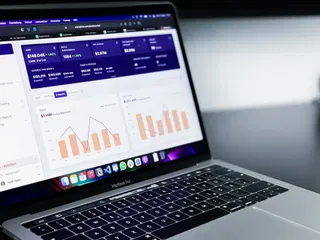
Data ScienceInsight Is Still the Currency of Data ScienceCoding agents give us more time for discovery and our review practices should follow the analysisAndrew HintonSeptember 30, 202610 min readPhoto by Kevin Ku on UnsplashWhen I ask a data scientist to explain an analysis, I am often handed a pull request and sent away to understand the implementation. Twenty minutes later, I may understand how the code is organized and still not know what the data showed. I want to understand the question, what we found, and whether the evidence supports the conclusion. The implementation belongs in that discussion, but it cannot carry the discussion on its own.Coding agents have made this distinction harder to ignore.
…
Excerpt limited to ~120 words for fair-use compliance. The full article is at Towards Data Science.
Discussion
0 commentsMore from Towards Data Science