Is Hormuz the US dollar’s Suez?
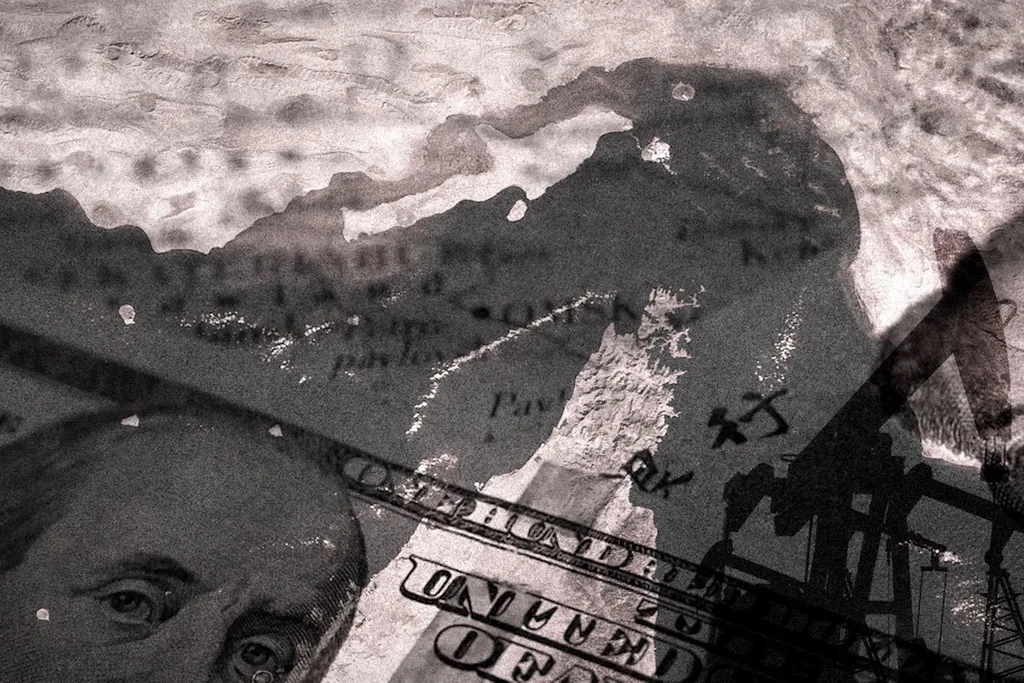
The article discusses the potential decline of the US dollar as a global reserve currency, drawing parallels to the British pound's fall after the Suez Crisis. It highlights the current economic challenges facing the US, including a high debt-to-GDP ratio and a widening current account deficit. Despite these issues, the dollar remains dominant in international trade, though the global monetary system is evolving towards a multipolar landscape.
- ▪The US dollar currently accounts for about three-fifths of all foreign exchange reserves.
- ▪China is increasingly pricing energy contracts in renminbi, indicating a shift in global currency dynamics.
- ▪The Euro Area is hesitant to issue union-wide safe assets, which limits the euro's potential as a reserve currency.
2 outlets in our directory ran this story, first to last over 7 hours. All of the coverage we found sits in one bucket: centre. That one-sidedness is itself worth noticing.
- ▪ Is Hormuz the US dollar’s Suez? — r/Economics
Asia Times files mainly under world. We currently carry 156 of its stories.
Story provenance
Source · retrieval · rights · ranking — open for full record
inspect →
Story provenance
Attribution is not the same as permission. This drawer separates discovery metadata, excerpts, WeSearch-generated summaries, reuse status, and whether the publisher receives the visit. Nothing here claims a legal grant the publisher has not made.
Record
| Original publisher | Asia Times |
| Canonical URL | https://asiatimes.com/2026/06/is-hormuz-the-us-dollars-suez/ |
| Publication time | Wed, 03 Jun 2026 05:23:27 +0000 |
| Retrieval time | 2026-06-03T05:26:56.052Z |
| Last seen | 2026-06-03T05:26:56.052Z |
| Headline source | Publisher (no WeSearch rewrite) |
| Excerpt source | publisher body |
| Excerpt method | First ~120 words (~800 chars) of extracted publisher body, fair-use limited. |
| Summary | WeSearch · cerebras-chat (WeSearch summarizer) |
| Summary source text | contentText |
| Citation coverage | Summary is a WeSearch-generated derivative; primary citation is the original publisher URL. |
| Cluster | TdqASKJuxSI0 · 2 stories |
| Cluster logic | Grouped by semantic title/content similarity across sources within a rolling window. Same-publisher template collisions are excluded from coverage comparison. |
| Ranking reason | Story pages are not engagement-ranked. Hub feeds use recency, with optional source-diversified chronological ordering (cap consecutive stories per source). No personalized ranking. |
| Publisher visit | Yes — open original |
| Substitutes article? | No — link-out required for full text |
Rights status (four layers)
WeSearch handling by dimension
| Indexing | May the item be indexed (stored, ranked, made findable)? | Allowed |
| Snippet | May a short excerpt of the publisher's text be shown? | Allowed |
| AI summary | May WeSearch generate its own short summary of the article? | Limited |
| Retrieval / RAG | May the content be exposed for third-party retrieval-augmented generation? | Not asserted |
| Model training | May the content be used to train AI models? | Not asserted |
| Commercial reuse | May the content be reused commercially? | Not permitted |
Basis: Derived from the published RSS/Atom feed. Contact: [email protected]. Reviewed: 2026-07-24.
Opening excerpt (first ~120 words) tap to expand
In the dog days of summer 70 years ago, Gamal Abdel Nasser announced the nationalization of the Suez Canal. The move triggered the invasion of Egypt by a joint force of British, French and Israeli troops. Although the military operation was a success, it was a diplomatic disaster. Led by the United States, the international community condemned the war, eventually forcing a humiliating withdrawal. This subsequent financial fallout was devastating for the British pound. Having entered the crisis with a significant debt burden and fragile external balances, the loss of confidence in the sterling led to heavy selloffs. Already relegated to a secondary reserve currency by then, the crisis was effectively the final nail in the coffin of the pound’s status as a global currency.
…
Excerpt limited to ~120 words for fair-use compliance. The full article is at Asia Times.
Discussion
0 commentsMore from Asia Times