Is the Gulf losing its grip on the oil world?
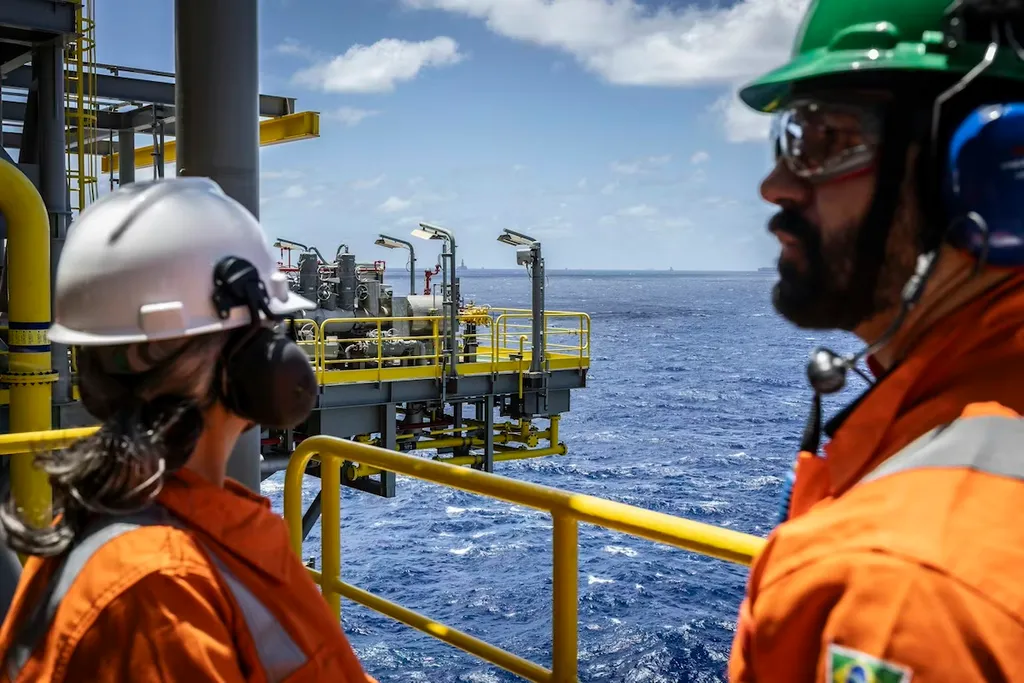
The global oil market has shown resilience despite disruptions caused by the Iran war, with prices remaining around US$100 per barrel. Oil production in the Americas is increasingly meeting global demand, with significant output increases from countries like the US and Brazil. However, while the Americas are expanding production, the Gulf region still maintains a cost advantage in oil extraction.
- ▪The global oil market has remained resilient despite disruptions in the Strait of Hormuz.
- ▪Oil production in the Americas is expected to rise significantly, potentially reaching 30 million barrels per day by 2026.
- ▪Gulf producers have lower extraction costs, which may allow them to outlast higher-cost producers in the Americas during price downturns.
Asia Times files mainly under world. We currently carry 156 of its stories.
Story provenance
Source · retrieval · rights · ranking — open for full record
inspect →
Story provenance
Attribution is not the same as permission. This drawer separates discovery metadata, excerpts, WeSearch-generated summaries, reuse status, and whether the publisher receives the visit. Nothing here claims a legal grant the publisher has not made.
Record
| Original publisher | Asia Times |
| Canonical URL | https://asiatimes.com/2026/05/is-the-gulf-losing-its-grip-on-the-oil-world/ |
| Publication time | Wed, 27 May 2026 10:33:02 +0000 |
| Retrieval time | 2026-05-27T10:37:58.859Z |
| Last seen | 2026-05-27T10:37:58.859Z |
| Headline source | Publisher (no WeSearch rewrite) |
| Excerpt source | publisher body |
| Excerpt method | First ~120 words (~800 chars) of extracted publisher body, fair-use limited. |
| Summary | WeSearch · cerebras-chat (WeSearch summarizer) |
| Summary source text | contentText |
| Citation coverage | Summary is a WeSearch-generated derivative; primary citation is the original publisher URL. |
| Cluster | gvjG9_0u27uv |
| Cluster logic | Grouped by semantic title/content similarity across sources within a rolling window. Same-publisher template collisions are excluded from coverage comparison. |
| Ranking reason | Story pages are not engagement-ranked. Hub feeds use recency, with optional source-diversified chronological ordering (cap consecutive stories per source). No personalized ranking. |
| Publisher visit | Yes — open original |
| Substitutes article? | No — link-out required for full text |
Rights status (four layers)
WeSearch handling by dimension
| Indexing | May the item be indexed (stored, ranked, made findable)? | Allowed |
| Snippet | May a short excerpt of the publisher's text be shown? | Allowed |
| AI summary | May WeSearch generate its own short summary of the article? | Limited |
| Retrieval / RAG | May the content be exposed for third-party retrieval-augmented generation? | Not asserted |
| Model training | May the content be used to train AI models? | Not asserted |
| Commercial reuse | May the content be reused commercially? | Not permitted |
Basis: Derived from the published RSS/Atom feed. Contact: [email protected]. Reviewed: 2026-07-24.
Opening excerpt (first ~120 words) tap to expand
One of the most striking features of the Iran war has been the resilience of the global oil market. Despite the disruption of flows through the Strait of Hormuz, the world’s most important oil transit chokepoint, prices have generally hovered around US$100 per barrel – a lower level than many observers had expected. A key reason for this resilience is the growing importance of oil production in the Americas. Even before the war, the International Energy Agency predicted that virtually all global oil demand growth in 2026 could be met by rising supply from North and South American countries such as the US, Canada, Brazil, Guyana and Argentina. At that time, the OPEC oil producers’ cartel was also preparing to increase output, raising expectations of a period of oversupply and weak prices.
…
Excerpt limited to ~120 words for fair-use compliance. The full article is at Asia Times.
Discussion
0 commentsMore from Asia Times