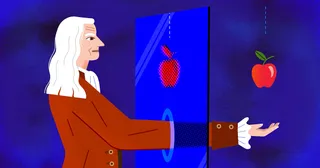
Key Chemistry Question Answered, No Quantum Computer Required
A recent study led by Garnet Chan and colleagues demonstrates that classical computers can effectively solve complex chemical problems, specifically regarding the enzyme nitrogenase. This finding challenges the prevailing notion that quantum computers are necessary for understanding intricate biochemical processes. While the debate continues, this milestone highlights the capabilities of traditional computing methods in the field of chemistry.
- ▪Garnet Chan and five other quantum chemists reached a key milestone in understanding the enzyme nitrogenase using classical methods.
- ▪Nitrogenase is crucial for converting atmospheric nitrogen into ammonia, a process essential for life on Earth.
- ▪The study suggests that quantum computers may not be required to solve some of the biggest questions in chemistry.
Quanta Magazine files mainly under science. We currently carry 20 of its stories.
Story provenance
Source · retrieval · rights · ranking — open for full record
inspect →
Story provenance
Attribution is not the same as permission. This drawer separates discovery metadata, excerpts, WeSearch-generated summaries, reuse status, and whether the publisher receives the visit. Nothing here claims a legal grant the publisher has not made.
Record
| Original publisher | Quanta Magazine |
| Canonical URL | https://www.quantamagazine.org/key-chemistry-question-answered-no-quantum-computer-required-20260529/ |
| Publication time | Fri, 29 May 2026 13:54:11 +0000 |
| Retrieval time | 2026-05-29T14:00:00.929Z |
| Last seen | 2026-05-29T14:00:00.929Z |
| Headline source | Publisher (no WeSearch rewrite) |
| Excerpt source | publisher body |
| Excerpt method | First ~120 words (~800 chars) of extracted publisher body, fair-use limited. |
| Summary | WeSearch · cerebras-chat (WeSearch summarizer) |
| Summary source text | contentText |
| Citation coverage | Summary is a WeSearch-generated derivative; primary citation is the original publisher URL. |
| Cluster | 30pqJECNfKLP |
| Cluster logic | Grouped by semantic title/content similarity across sources within a rolling window. Same-publisher template collisions are excluded from coverage comparison. |
| Ranking reason | Story pages are not engagement-ranked. Hub feeds use recency, with optional source-diversified chronological ordering (cap consecutive stories per source). No personalized ranking. |
| Publisher visit | Yes — open original |
| Substitutes article? | No — link-out required for full text |
Rights status (four layers)
WeSearch handling by dimension
| Indexing | May the item be indexed (stored, ranked, made findable)? | Allowed |
| Snippet | May a short excerpt of the publisher's text be shown? | Allowed |
| AI summary | May WeSearch generate its own short summary of the article? | Limited |
| Retrieval / RAG | May the content be exposed for third-party retrieval-augmented generation? | Not asserted |
| Model training | May the content be used to train AI models? | Not asserted |
| Commercial reuse | May the content be reused commercially? | Not permitted |
Basis: Derived from the published RSS/Atom feed. Contact: [email protected]. Reviewed: 2026-07-24.
Opening excerpt (first ~120 words) tap to expand
Home Key Chemistry Question Answered, No Quantum Computer Required Comment Save Article Read Later Share Facebook Copied! Copy link Email Pocket Reddit Ycombinator Comment Comments Save Article Read Later Read Later chemistry Key Chemistry Question Answered, No Quantum Computer Required By Kevin Hartnett May 29, 2026 Do we need quantum computers to fully understand complex chemical reactions? A new result, decades in the making, shows the surprising power of ordinary “classical” machines. Comment Save Article Read Later Nash Weerasekera for Quanta Magazine Introduction By Kevin Hartnett Contributing Writer May 29, 2026 View PDF/Print Mode chemistry computer science quantum computing quantum physics All topics What Garnet Chan cares most about is basic science.
…
Excerpt limited to ~120 words for fair-use compliance. The full article is at Quanta Magazine.