Keyboard Lights As An Airgap Attack Vector
Researchers have demonstrated a method to transmit data to airgapped computers using modified keyboards. By aligning LED indicators with photoresistors on a second keyboard, a unidirectional channel can be created that encodes keystrokes via light. The technique can deliver small programs to the isolated system and may be used for further exploitation.
- ▪Nikolay Valentinovich Repnitskiy created a unidirectional network using two Dell SK-8115 keyboards.
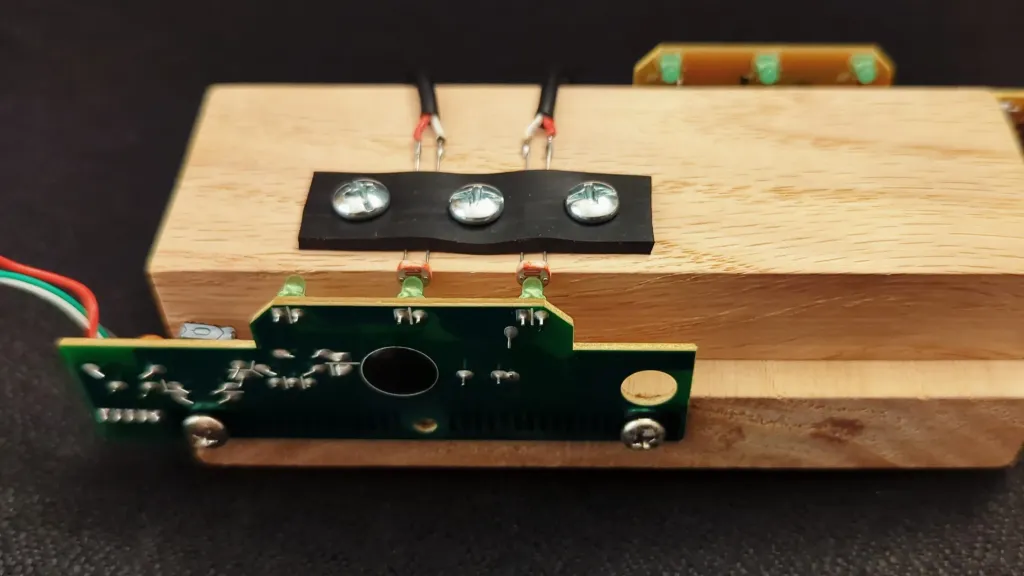
- ▪One keyboard was altered with photoresistors that register a keypress when illuminated by the other keyboard's LEDs.
- ▪The Num Lock and Caps Lock LEDs were positioned to flash data that the photoresistors interpret as keystrokes.
- ▪The method enables transfer of small executable programs to an airgapped machine for potential further compromise.
Hackaday files mainly under tech. We currently carry 319 of its stories.
Story provenance
Source · retrieval · rights · ranking — open for full record
inspect →
Story provenance
Attribution is not the same as permission. This drawer separates discovery metadata, excerpts, WeSearch-generated summaries, reuse status, and whether the publisher receives the visit. Nothing here claims a legal grant the publisher has not made.
Record
| Original publisher | Hackaday |
| Canonical URL | https://hackaday.com/2026/07/29/keyboard-lights-as-an-airgap-attack-vector/ |
| Publication time | Thu, 30 Jul 2026 02:00:20 +0000 |
| Retrieval time | 2026-07-30T02:08:20.952Z |
| Last seen | 2026-07-30T02:08:20.952Z |
| Headline source | Publisher (no WeSearch rewrite) |
| Excerpt source | publisher body |
| Excerpt method | First ~120 words (~800 chars) of extracted publisher body, fair-use limited. |
| Summary | WeSearch · cerebras-chat (WeSearch summarizer) |
| Summary source text | contentText |
| Citation coverage | Summary is a WeSearch-generated derivative; primary citation is the original publisher URL. |
| Cluster | kBWIDOFqYgpQ |
| Cluster logic | Grouped by semantic title/content similarity across sources within a rolling window. Same-publisher template collisions are excluded from coverage comparison. |
| Ranking reason | Story pages are not engagement-ranked. Hub feeds use recency, with optional source-diversified chronological ordering (cap consecutive stories per source). No personalized ranking. |
| Publisher visit | Yes — open original |
| Substitutes article? | No — link-out required for full text |
Rights status (four layers)
WeSearch handling by dimension
| Indexing | May the item be indexed (stored, ranked, made findable)? | Allowed |
| Snippet | May a short excerpt of the publisher's text be shown? | Allowed |
| AI summary | May WeSearch generate its own short summary of the article? | Limited |
| Retrieval / RAG | May the content be exposed for third-party retrieval-augmented generation? | Not asserted |
| Model training | May the content be used to train AI models? | Not asserted |
| Commercial reuse | May the content be reused commercially? | Not permitted |
Basis: Derived from the published RSS/Atom feed. Contact: [email protected]. Reviewed: 2026-07-24.
Opening excerpt (first ~120 words) tap to expand
Keyboard Lights As An Airgap Attack Vector No comments by: Zoe Skyforest July 29, 2026 Title: Copy Short Link: Copy What do you do when you need to get data into an airgapped machine? Well, you might find yourself limited to basic input devices to interact with the computer in question. As [Nikolay Valentinovich Repnitskiy] demonstrates, though, you can do some fun stuff amidst such limitations. [Nikolay] created what he calls a “unidirectional network” connection via a keyboard. Specifically, he took two Dell SK-8115 keyboards, and stripped them down to their controller PCBs. On one, he soldered photoresistors to a couple of the keyboard matrix pins, such that they’d fire a keypress when lit up.
…
Excerpt limited to ~120 words for fair-use compliance. The full article is at Hackaday.
Discussion
0 commentsMore from Hackaday