Korea’s being positioned as logistics base for US-China conflict
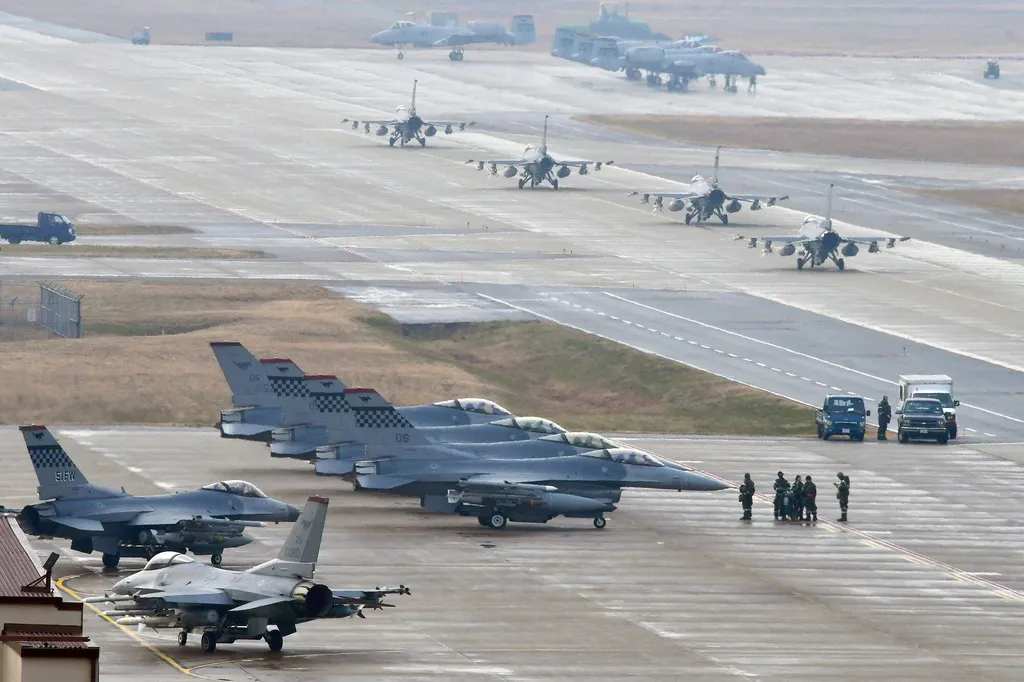
South Korea is being positioned as a logistics base amid the US-China conflict, reflecting shifting power dynamics. The perception of the US-South Korea alliance is changing, with concerns about American reliability growing among South Koreans. As the US reassesses its strategic priorities, South Korea's role in regional military logistics is expanding.
- ▪The US-South Korea alliance is increasingly viewed as transactional rather than based on shared sacrifice.
- ▪Concerns about American protection have risen following recent conflicts in the Gulf region.
- ▪South Korea is being positioned as a regional sustainment hub for potential US military operations against China.
Asia Times files mainly under world. We currently carry 150 of its stories.
Story provenance
Source · retrieval · rights · ranking — open for full record
inspect →
Attribution is not the same as permission. This drawer separates discovery metadata, excerpts, WeSearch-generated summaries, reuse status, and whether the publisher receives the visit. Nothing here claims a legal grant the publisher has not made.
Record
| Original publisher | Asia Times |
| Canonical URL | https://asiatimes.com/2026/05/koreas-being-positioned-as-logistics-base-for-us-china-conflict/ |
| Publication time | Tue, 19 May 2026 22:35:36 +0000 |
| Retrieval time | 2026-05-19T22:39:58.350Z |
| Last seen | 2026-05-19T22:39:58.350Z |
| Headline source | Publisher (no WeSearch rewrite) |
| Excerpt source | publisher body |
| Excerpt method | First ~120 words (~800 chars) of extracted publisher body, fair-use limited. |
| Summary | WeSearch · cerebras-chat (WeSearch summarizer) |
| Summary source text | contentText |
| Citation coverage | Summary is a WeSearch-generated derivative; primary citation is the original publisher URL. |
| Cluster | RA_AazKBEy3i |
| Cluster logic | Grouped by semantic title/content similarity across sources within a rolling window. Same-publisher template collisions are excluded from coverage comparison. |
| Ranking reason | Story pages are not engagement-ranked. Hub feeds use recency, with optional source-diversified chronological ordering (cap consecutive stories per source). No personalized ranking. |
| Publisher visit | Yes — open original |
| Substitutes article? | No — link-out required for full text |
Rights status (four layers)
WeSearch handling by dimension
| Indexing | May the item be indexed (stored, ranked, made findable)? | Allowed |
| Snippet | May a short excerpt of the publisher's text be shown? | Allowed |
| AI summary | May WeSearch generate its own short summary of the article? | Limited |
| Retrieval / RAG | May the content be exposed for third-party retrieval-augmented generation? | Not asserted |
| Model training | May the content be used to train AI models? | Not asserted |
| Commercial reuse | May the content be reused commercially? | Not permitted |
Basis: Derived from the published RSS/Atom feed. Contact: [email protected]. Reviewed: 2026-07-24.
Opening excerpt (first ~120 words) tap to expand
For many South Korean viewers, the most memorable image from the 2017 Trump-Xi meeting was a small gesture in the Forbidden City. Walking the imperial axis beside Donald Trump, Xi Jinping kept both hands in his coat pockets. When Trump turned and their eyes met, Xi quickly pulled them out. Photo: Chosun Ilbo Photo: Chosun Ilbo To Korean audiences steeped in Confucian culture, the symbolism was unmistakable: America was the boss. The choreography reverses Nine years later, on May 14, 2026, the choreography had reversed. Trump arrived in Beijing – the first US presidential state visit to China since 2017 – and immediately reached for praise.
…
Excerpt limited to ~120 words for fair-use compliance. The full article is at Asia Times.
Discussion
0 commentsMore from Asia Times