Lake study shows ways to 'cancel' climate impact
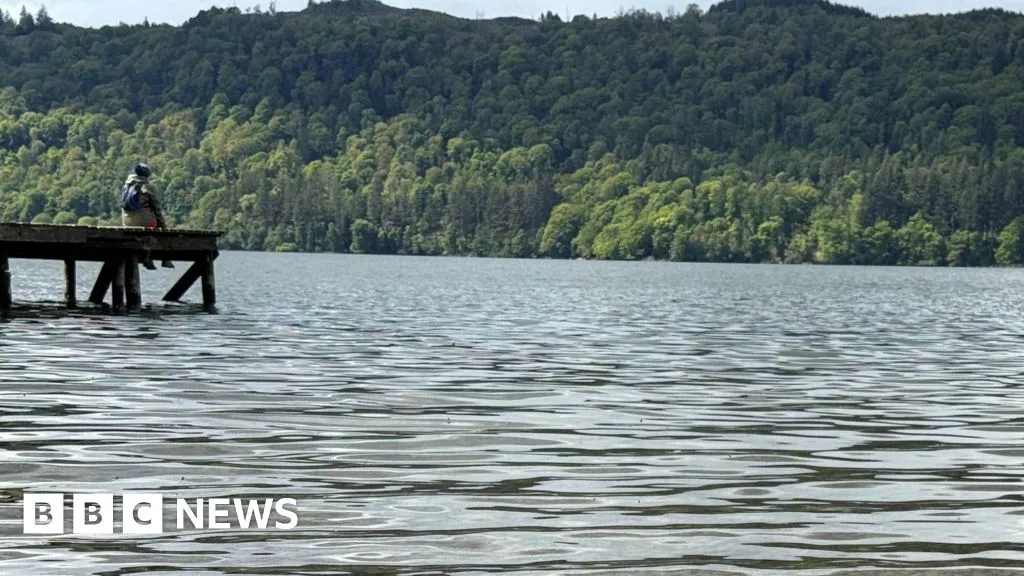
A recent study by the Environment Agency explores ways to mitigate the impact of climate change on Windermere, England's largest lake. The research indicates that removing all wastewater could fully counteract the lake's projected climate change effects over the next 50 years. The study emphasizes the need for tailored solutions for different lakes, as various factors influence their response to pollution and climate change.
- ▪The study suggests that stopping all sewage from entering Windermere could eliminate harmful blue-green algae days, even with rising temperatures.
- ▪Windermere's mean temperatures are projected to rise by 2.4 to 2.5C by the late 2070s due to climate change.
- ▪The research combined two computer models to better understand nutrient flow and pollution impacts on the lake.
BBC News — Science publishes from United Kingdom and files mainly under science. We currently carry 94 of its stories.
Story provenance
Source · retrieval · rights · ranking — open for full record
inspect →
Story provenance
Attribution is not the same as permission. This drawer separates discovery metadata, excerpts, WeSearch-generated summaries, reuse status, and whether the publisher receives the visit. Nothing here claims a legal grant the publisher has not made.
Record
| Original publisher | BBC News — Science |
| Canonical URL | https://www.bbc.com/news/articles/c8r834z8ze8o?at_medium=RSS&at_campaign=rss |
| Publication time | Wed, 20 May 2026 10:41:38 GMT |
| Retrieval time | 2026-05-20T10:45:02.071Z |
| Last seen | 2026-05-20T10:45:02.071Z |
| Headline source | Publisher (no WeSearch rewrite) |
| Excerpt source | publisher body |
| Excerpt method | First ~120 words (~800 chars) of extracted publisher body, fair-use limited. |
| Summary | WeSearch · cerebras-chat (WeSearch summarizer) |
| Summary source text | contentText |
| Citation coverage | Summary is a WeSearch-generated derivative; primary citation is the original publisher URL. |
| Cluster | kXRVI9kz_91J |
| Cluster logic | Grouped by semantic title/content similarity across sources within a rolling window. Same-publisher template collisions are excluded from coverage comparison. |
| Ranking reason | Story pages are not engagement-ranked. Hub feeds use recency, with optional source-diversified chronological ordering (cap consecutive stories per source). No personalized ranking. |
| Publisher visit | Yes — open original |
| Substitutes article? | No — link-out required for full text |
Rights status (four layers)
WeSearch handling by dimension
| Indexing | May the item be indexed (stored, ranked, made findable)? | Allowed |
| Snippet | May a short excerpt of the publisher's text be shown? | Allowed |
| AI summary | May WeSearch generate its own short summary of the article? | Limited |
| Retrieval / RAG | May the content be exposed for third-party retrieval-augmented generation? | Not asserted |
| Model training | May the content be used to train AI models? | Not asserted |
| Commercial reuse | May the content be reused commercially? | Not permitted |
Basis: Derived from the published RSS/Atom feed. Contact: [email protected]. Reviewed: 2026-07-24.
Opening excerpt (first ~120 words) tap to expand
Lake study shows ways to 'cancel' climate impactJust nowShareSaveAdd as preferred on GooglePhil Chapmanat WindermereBBCThe Environment Agency said it hoped the study would help protect water quality at WindermereResearch looking at how to protect the future of England's largest lake showed potential to "fully cancel out" the projected impact of climate change on it.The Environment Agency (EA) has published a study exploring ways to reduce pollution in Windermere and protect its water quality from algae growth, which can make water unsafe to swim and harm wildlife.The EA said the "most ambitious option" tested involved removing all wastewater, including from septic tanks."[This] was enough to fully cancel out the projected effects of climate change on the lake in the next 50 years," the…
Excerpt limited to ~120 words for fair-use compliance. The full article is at BBC News — Science.
Discussion
0 commentsMore from BBC News — Science