Loopholes undermine palm oil industry’s antideforestation pledges
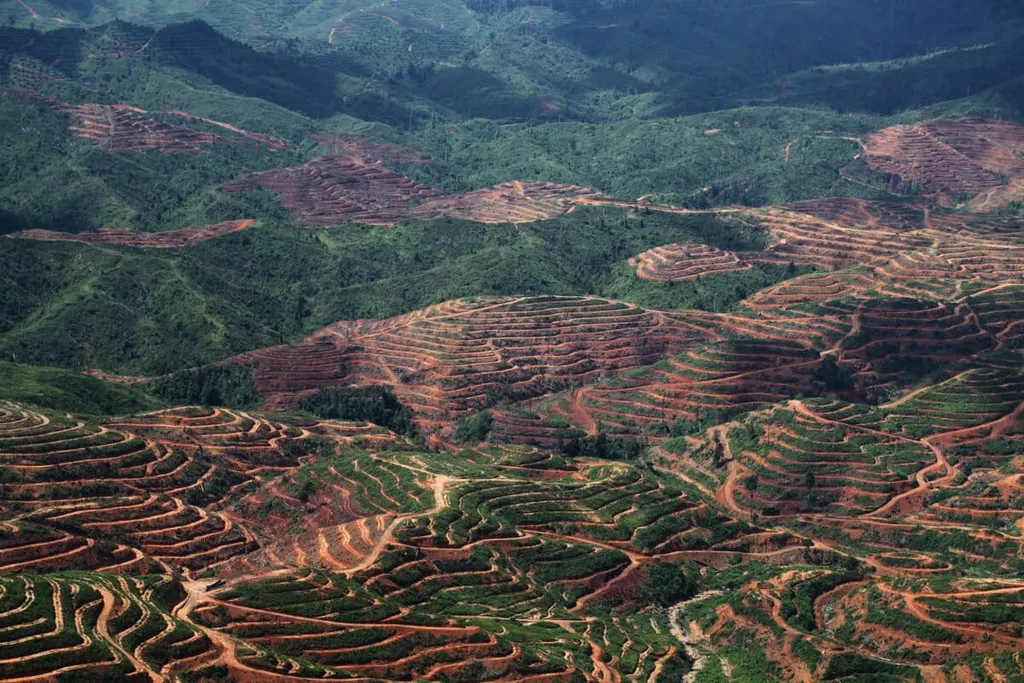
Despite the palm oil industry's commitment to 'No Deforestation, No Peat, No Exploitation' (NDPE) policies, deforestation in Indonesia continues to be a significant issue. New satellite data reveals that over 31,000 hectares of forest were cleared for palm oil in 2025, highlighting persistent gaps in enforcement. Campaigners point to loopholes in traceability and supply chains as major contributors to ongoing deforestation linked to palm oil production.
- ▪Satellite analysis shows 31,073 hectares of forest were cleared for palm oil in Indonesia in 2025.
- ▪Deforestation linked to palm oil persists due to gaps in traceability and corporate ownership loopholes.
- ▪NDPE policies aim to eliminate harm in palm oil production but have not fully stopped deforestation.
Mongabay — News files mainly under climate. We currently carry 81 of its stories.
Story provenance
Source · retrieval · rights · ranking — open for full record
inspect →
Story provenance
Attribution is not the same as permission. This drawer separates discovery metadata, excerpts, WeSearch-generated summaries, reuse status, and whether the publisher receives the visit. Nothing here claims a legal grant the publisher has not made.
Record
| Original publisher | Mongabay — News |
| Canonical URL | https://news.mongabay.com/2026/05/loopholes-undermine-palm-oil-industrys-antideforestation-pledges/ |
| Publication time | 27 May 2026 21:51:57 +0000 |
| Retrieval time | 2026-05-27T22:08:05.906Z |
| Last seen | 2026-05-27T22:08:05.906Z |
| Headline source | Publisher (no WeSearch rewrite) |
| Excerpt source | publisher body |
| Excerpt method | First ~120 words (~800 chars) of extracted publisher body, fair-use limited. |
| Summary | WeSearch · cerebras-chat (WeSearch summarizer) |
| Summary source text | contentText |
| Citation coverage | Summary is a WeSearch-generated derivative; primary citation is the original publisher URL. |
| Cluster | E1fh1SLkIJcK |
| Cluster logic | Grouped by semantic title/content similarity across sources within a rolling window. Same-publisher template collisions are excluded from coverage comparison. |
| Ranking reason | Story pages are not engagement-ranked. Hub feeds use recency, with optional source-diversified chronological ordering (cap consecutive stories per source). No personalized ranking. |
| Publisher visit | Yes — open original |
| Substitutes article? | No — link-out required for full text |
Rights status (four layers)
WeSearch handling by dimension
| Indexing | May the item be indexed (stored, ranked, made findable)? | Allowed |
| Snippet | May a short excerpt of the publisher's text be shown? | Allowed |
| AI summary | May WeSearch generate its own short summary of the article? | Limited |
| Retrieval / RAG | May the content be exposed for third-party retrieval-augmented generation? | Not asserted |
| Model training | May the content be used to train AI models? | Not asserted |
| Commercial reuse | May the content be reused commercially? | Not permitted |
Basis: Derived from the published RSS/Atom feed. Contact: [email protected]. Reviewed: 2026-07-24.
Opening excerpt (first ~120 words) tap to expand
More than a decade after the palm oil industry adopted “No Deforestation, No Peat, No Exploitation” (NDPE) commitments, new satellite data show forest clearing for palm oil in Indonesia persists, with more than 31,000 hectares (nearly 77,000 acres) lost in 2025.Campaigners say deforestation increasingly slips through structural gaps in the system, including incomplete traceability, fragmented smallholder supply chains, and loopholes that allow companies linked to forest clearing to continue selling into supposedly deforestation-free markets.Investigators cite cases in Indonesia, the top producer of the commodity, as examples of how palm fruit from deforestation-linked plantations can still enter global supply chains through third-party mills and opaque ownership structures.Analysts warn…
Excerpt limited to ~120 words for fair-use compliance. The full article is at Mongabay — News.