Made in China, Stolen From America
The article discusses allegations of industrial-scale theft of U.S. artificial intelligence technology by China. It highlights the potential legal and economic repercussions for China if its products are found to be manufactured using patented American techniques. The author emphasizes the importance of patent-based trade remedies over tariffs in negotiating with China.
- ▪White House science advisor Michael Kratsios accused China of stealing U.S. AI technology.
- ▪The International Trade Commission has the authority to halt imports of products made using patent-infringing methods.
- ▪The U.S. Supreme Court ruled that Congress, not the Executive Branch, has primary authority to restrict trade.
The American Spectator files mainly under politics. We currently carry 159 of its stories.
Story provenance
Source · retrieval · rights · ranking — open for full record
inspect →
Story provenance
Attribution is not the same as permission. This drawer separates discovery metadata, excerpts, WeSearch-generated summaries, reuse status, and whether the publisher receives the visit. Nothing here claims a legal grant the publisher has not made.
Record
| Original publisher | The American Spectator | USA News and Politics |
| Canonical URL | https://spectator.org/made-in-china-stolen-from-america/ |
| Publication time | Fri, 29 May 2026 04:19:51 +0000 |
| Retrieval time | 2026-05-29T04:24:41.818Z |
| Last seen | 2026-05-29T04:24:41.818Z |
| Headline source | Publisher (no WeSearch rewrite) |
| Excerpt source | publisher body |
| Excerpt method | First ~120 words (~800 chars) of extracted publisher body, fair-use limited. |
| Summary | WeSearch · cerebras-chat (WeSearch summarizer) |
| Summary source text | contentText |
| Citation coverage | Summary is a WeSearch-generated derivative; primary citation is the original publisher URL. |
| Cluster | AZA9Dh0NEISZ |
| Cluster logic | Grouped by semantic title/content similarity across sources within a rolling window. Same-publisher template collisions are excluded from coverage comparison. |
| Ranking reason | Story pages are not engagement-ranked. Hub feeds use recency, with optional source-diversified chronological ordering (cap consecutive stories per source). No personalized ranking. |
| Publisher visit | Yes — open original |
| Substitutes article? | No — link-out required for full text |
Rights status (four layers)
WeSearch handling by dimension
| Indexing | May the item be indexed (stored, ranked, made findable)? | Allowed |
| Snippet | May a short excerpt of the publisher's text be shown? | Allowed |
| AI summary | May WeSearch generate its own short summary of the article? | Limited |
| Retrieval / RAG | May the content be exposed for third-party retrieval-augmented generation? | Not asserted |
| Model training | May the content be used to train AI models? | Not asserted |
| Commercial reuse | May the content be reused commercially? | Not permitted |
Basis: Derived from the published RSS/Atom feed. Contact: [email protected]. Reviewed: 2026-07-24.
Opening excerpt (first ~120 words) tap to expand
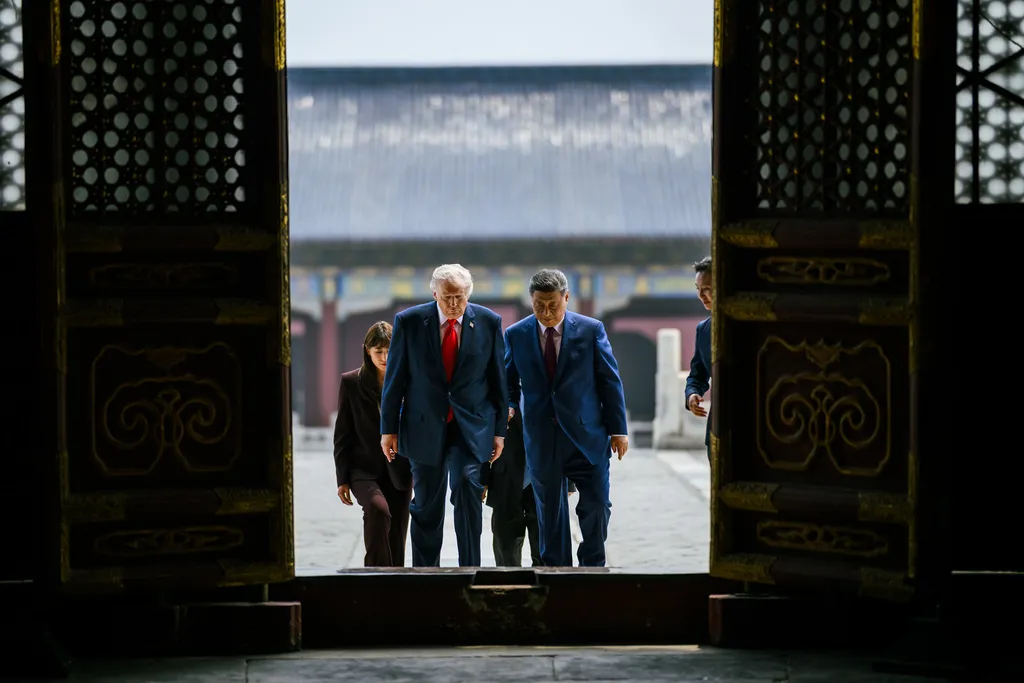
The eyes of the world were on President Donald J. Trump and Chairman of Everything Xi Jinping at their high-profile summit in Beijing earlier this month. But behind the sunny scenes of cheering children and marching soldiers, China’s economic mischief continued in the shadows.White House science advisor Michael Kratsios has accused China of “industrial scale” theft of U.S. artificial-intelligence technology. In an April 23 memorandum, he added: “There is nothing innovative about systematically extracting and copying the innovations of American industry, and there is nothing open about supposedly open models that are derived from acts of malicious exploitation.”China may have gained a short-term advantage by using unauthorized American AI expertise in its manufacturing processes.
…
Excerpt limited to ~120 words for fair-use compliance. The full article is at The American Spectator | USA News and Politics.
Discussion
0 comments