
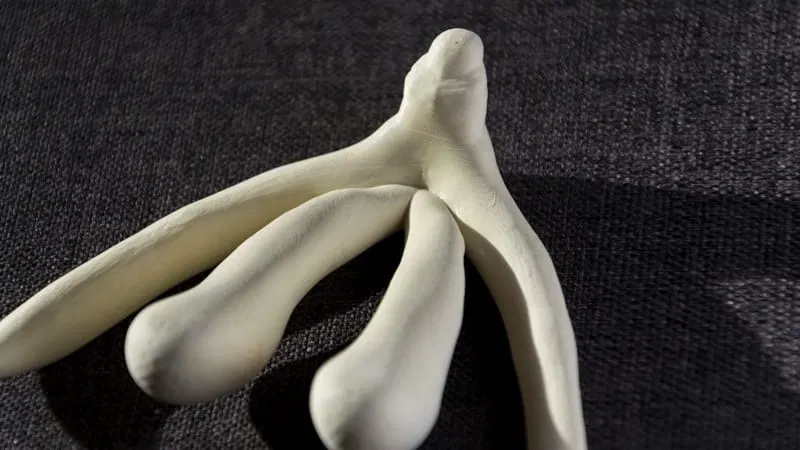
Micrometer CT Reveals Clitoral Neural Anatomy
Recent research has produced the first 3-D map of nerves within the clitoral glans, enhancing our understanding of female anatomy. This study reveals the complex innervation of the clitoris, which has implications for women's health and sexual response. The findings challenge previous notions about clitoral nerve structure and highlight the need for careful consideration in surgical procedures involving the vulva.
- ▪Scientists have created a detailed 3-D map of the clitoral nerve network using advanced imaging techniques.
- ▪The study identified previously uncharacterized nerve pathways and branches related to the clitoris and surrounding structures.
- ▪These findings are significant for improving surgical outcomes in gender-affirming and reconstructive surgeries.
Medscape files mainly under health. We currently carry 231 of its stories.
Story provenance
Source · retrieval · rights · ranking — open for full record
inspect →
Story provenance
Attribution is not the same as permission. This drawer separates discovery metadata, excerpts, WeSearch-generated summaries, reuse status, and whether the publisher receives the visit. Nothing here claims a legal grant the publisher has not made.
Record
| Original publisher | Medscape |
| Canonical URL | https://www.medscape.com/viewarticle/micrometer-ct-reveals-clitoral-neural-anatomy-2026a1000h5j?src=rss |
| Publication time | Tue, 26 May 2026 07:25:03 EDT |
| Retrieval time | 2026-05-26T11:37:48.652Z |
| Last seen | 2026-05-26T11:37:48.652Z |
| Headline source | Publisher (no WeSearch rewrite) |
| Excerpt source | publisher body |
| Excerpt method | First ~120 words (~800 chars) of extracted publisher body, fair-use limited. |
| Summary | WeSearch · cerebras-chat (WeSearch summarizer) |
| Summary source text | contentText |
| Citation coverage | Summary is a WeSearch-generated derivative; primary citation is the original publisher URL. |
| Cluster | yKQNMXTX360h |
| Cluster logic | Grouped by semantic title/content similarity across sources within a rolling window. Same-publisher template collisions are excluded from coverage comparison. |
| Ranking reason | Story pages are not engagement-ranked. Hub feeds use recency, with optional source-diversified chronological ordering (cap consecutive stories per source). No personalized ranking. |
| Publisher visit | Yes — open original |
| Substitutes article? | No — link-out required for full text |
Rights status (four layers)
WeSearch handling by dimension
| Indexing | May the item be indexed (stored, ranked, made findable)? | Allowed |
| Snippet | May a short excerpt of the publisher's text be shown? | Allowed |
| AI summary | May WeSearch generate its own short summary of the article? | Limited |
| Retrieval / RAG | May the content be exposed for third-party retrieval-augmented generation? | Not asserted |
| Model training | May the content be used to train AI models? | Not asserted |
| Commercial reuse | May the content be reused commercially? | Not permitted |
Basis: Derived from the published RSS/Atom feed. Contact: [email protected]. Reviewed: 2026-07-24.
Opening excerpt (first ~120 words) tap to expand
Twenty-first-century medicine has mapped many anatomic puzzles and now can pinpoint the tiniest DNA mutations. Yet gaps remain — especially in our understanding of the female body. Nearly 30 years after researchers charted the penile nerve network, scientists have produced the first 3-D map of nerves inside the clitoral glans, said Ju Young Lee, PhD, neuroscientist at Amsterdam University Medical Center, Amsterdam, Netherlands, opening new lines of research into female pleasure and other women’s health issues.As reported on bioRxiv, micrometer-scale computed tomography images of the female pelvis were obtained using a synchrotron radiation x-ray source.
…
Excerpt limited to ~120 words for fair-use compliance. The full article is at Medscape.
Discussion
0 commentsMore from Medscape


