More than 1,700 Hidden Proteins Discovered, Expanding Fundamental Biology and Future Cancer Therapies
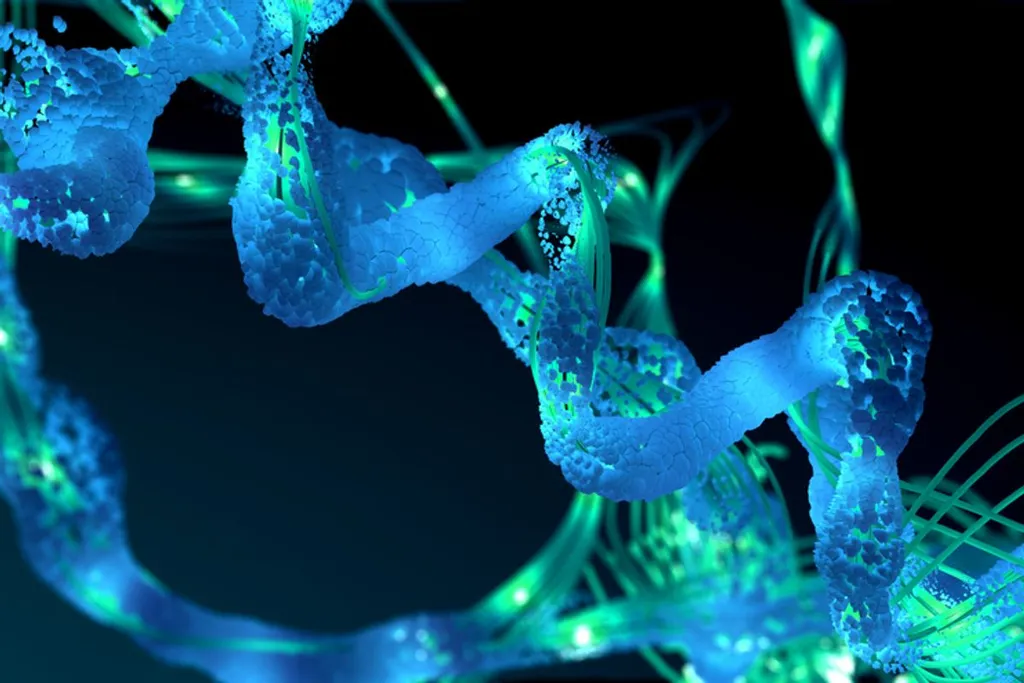
A recent study has discovered over 1,700 previously unknown protein-like structures, termed peptideins, which challenge traditional views of DNA and protein relationships. These microproteins, generated from sections of DNA once thought to be non-coding, may play crucial roles in cellular processes and could be significant for future cancer therapies. Researchers are now investigating the biological functions of peptideins and their potential applications in treating various diseases.
- ▪The study involved an international team of over 60 researchers and was published in Nature.
- ▪About a quarter of the unexplored DNA regions examined produced tiny protein-like structures that do not fit the traditional protein definition.
- ▪Some peptideins have been found to be essential for cell survival, with significant implications for cancer treatment.
Discover Magazine files mainly under science. We currently carry 86 of its stories.
Story provenance
Source · retrieval · rights · ranking — open for full record
inspect →
Attribution is not the same as permission. This drawer separates discovery metadata, excerpts, WeSearch-generated summaries, reuse status, and whether the publisher receives the visit. Nothing here claims a legal grant the publisher has not made.
Record
| Original publisher | Discover Magazine |
| Canonical URL | https://www.discovermagazine.com/more-than-1-700-hidden-proteins-discovered-expanding-fundamental-biology-and-future-cancer-therapies-49153 |
| Publication time | Tue, 26 May 2026 21:00:00 GMT |
| Retrieval time | 2026-05-26T21:07:54.543Z |
| Last seen | 2026-05-26T21:07:54.543Z |
| Headline source | Publisher (no WeSearch rewrite) |
| Excerpt source | publisher body |
| Excerpt method | First ~120 words (~800 chars) of extracted publisher body, fair-use limited. |
| Summary | WeSearch · cerebras-chat (WeSearch summarizer) |
| Summary source text | contentText |
| Citation coverage | Summary is a WeSearch-generated derivative; primary citation is the original publisher URL. |
| Cluster | e-33Ex2PTc-i |
| Cluster logic | Grouped by semantic title/content similarity across sources within a rolling window. Same-publisher template collisions are excluded from coverage comparison. |
| Ranking reason | Story pages are not engagement-ranked. Hub feeds use recency, with optional source-diversified chronological ordering (cap consecutive stories per source). No personalized ranking. |
| Publisher visit | Yes — open original |
| Substitutes article? | No — link-out required for full text |
Rights status (four layers)
WeSearch handling by dimension
| Indexing | May the item be indexed (stored, ranked, made findable)? | Allowed |
| Snippet | May a short excerpt of the publisher's text be shown? | Allowed |
| AI summary | May WeSearch generate its own short summary of the article? | Limited |
| Retrieval / RAG | May the content be exposed for third-party retrieval-augmented generation? | Not asserted |
| Model training | May the content be used to train AI models? | Not asserted |
| Commercial reuse | May the content be reused commercially? | Not permitted |
Basis: Derived from the published RSS/Atom feed. Contact: [email protected]. Reviewed: 2026-07-24.
Opening excerpt (first ~120 words) tap to expand
Some fundamentals of biology seem unshakeable. Since the discovery of DNA, researchers have established its central role in encoding how proteins are made, following strict rules about their structure and function. However, some DNA sections previously thought to contain no useful information may not be so useless after all. While considered too short to code for any known protein, they can produce molecules never described before, revealing an unknown layer of what DNA can do and opening the door to the dark proteome.Described by an international team of more than 60 researchers in a recent Nature study, these elusive protein-like structures challenge our understanding of the relationship between DNA and proteins while revealing possible new ways to treat cancer and other rare genetic…
Excerpt limited to ~120 words for fair-use compliance. The full article is at Discover Magazine.
Discussion
0 commentsMore from Discover Magazine