Most AI Agents Fail in Production Because They’re Built Backwards
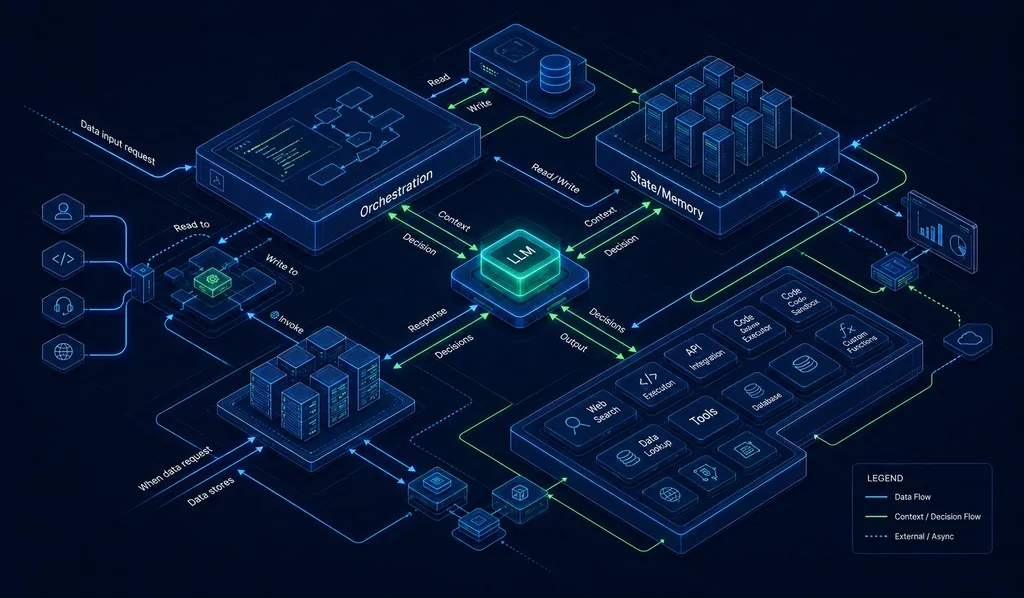
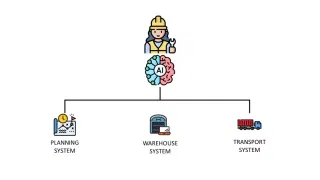
Many AI agents fail in production due to architectural issues rather than capability problems. Teams often build systems backwards, assuming that intelligent behavior will fill in gaps without proper structure. A successful production AI system requires a clear separation of responsibilities among components, rather than relying solely on the model.
- ▪Most AI agents that work in demos do not survive real-world use because of architectural problems.
- ▪Production AI agents should be viewed as systems with interacting components, rather than a single intelligent entity.
- ▪Building systems top-down from goals can lead to models being responsible for too much, making debugging difficult.
Towards Data Science files mainly under ai. We currently carry 106 of its stories.
Story provenance
Source · retrieval · rights · ranking — open for full record
inspect →
Story provenance
Attribution is not the same as permission. This drawer separates discovery metadata, excerpts, WeSearch-generated summaries, reuse status, and whether the publisher receives the visit. Nothing here claims a legal grant the publisher has not made.
Record
| Original publisher | Towards Data Science |
| Canonical URL | https://towardsdatascience.com/most-ai-agents-fail-in-production-because-theyre-built-backwards/ |
| Publication time | Wed, 27 May 2026 13:30:00 +0000 |
| Retrieval time | 2026-05-27T13:38:00.837Z |
| Last seen | 2026-05-27T13:38:00.837Z |
| Headline source | Publisher (no WeSearch rewrite) |
| Excerpt source | publisher body |
| Excerpt method | First ~120 words (~800 chars) of extracted publisher body, fair-use limited. |
| Summary | WeSearch · cerebras-chat (WeSearch summarizer) |
| Summary source text | contentText |
| Citation coverage | Summary is a WeSearch-generated derivative; primary citation is the original publisher URL. |
| Cluster | tezEaJVzIrlv |
| Cluster logic | Grouped by semantic title/content similarity across sources within a rolling window. Same-publisher template collisions are excluded from coverage comparison. |
| Ranking reason | Story pages are not engagement-ranked. Hub feeds use recency, with optional source-diversified chronological ordering (cap consecutive stories per source). No personalized ranking. |
| Publisher visit | Yes — open original |
| Substitutes article? | No — link-out required for full text |
Rights status (four layers)
WeSearch handling by dimension
| Indexing | May the item be indexed (stored, ranked, made findable)? | Allowed |
| Snippet | May a short excerpt of the publisher's text be shown? | Allowed |
| AI summary | May WeSearch generate its own short summary of the article? | Limited |
| Retrieval / RAG | May the content be exposed for third-party retrieval-augmented generation? | Not asserted |
| Model training | May the content be used to train AI models? | Not asserted |
| Commercial reuse | May the content be reused commercially? | Not permitted |
Basis: Derived from the published RSS/Atom feed. Contact: [email protected]. Reviewed: 2026-07-24.
Opening excerpt (first ~120 words) tap to expand
Agentic AI Most AI Agents Fail in Production Because They’re Built Backwards Good models don't save bad architecture, and most teams learn that the hard way. Benjamin Nweke May 27, 2026 10 min read Share Image by author (Generated with ChatGPT) The first time I saw a multi-agent system seriously fail in production, it wasn’t dramatic. There was no crash. No error message. The system just kept running and producing outputs that looked reasonable until someone actually read them carefully enough to notice something was off. When we decided to look into it, it took us two days’ worth of debugging to figure out what was going on. Funny enough, the model wasn’t hallucinating, and the input-output tools were delivering the correct results.
…
Excerpt limited to ~120 words for fair-use compliance. The full article is at Towards Data Science.
Discussion
0 commentsMore from Towards Data Science