Myanmar’s resource curse fueling its forever war
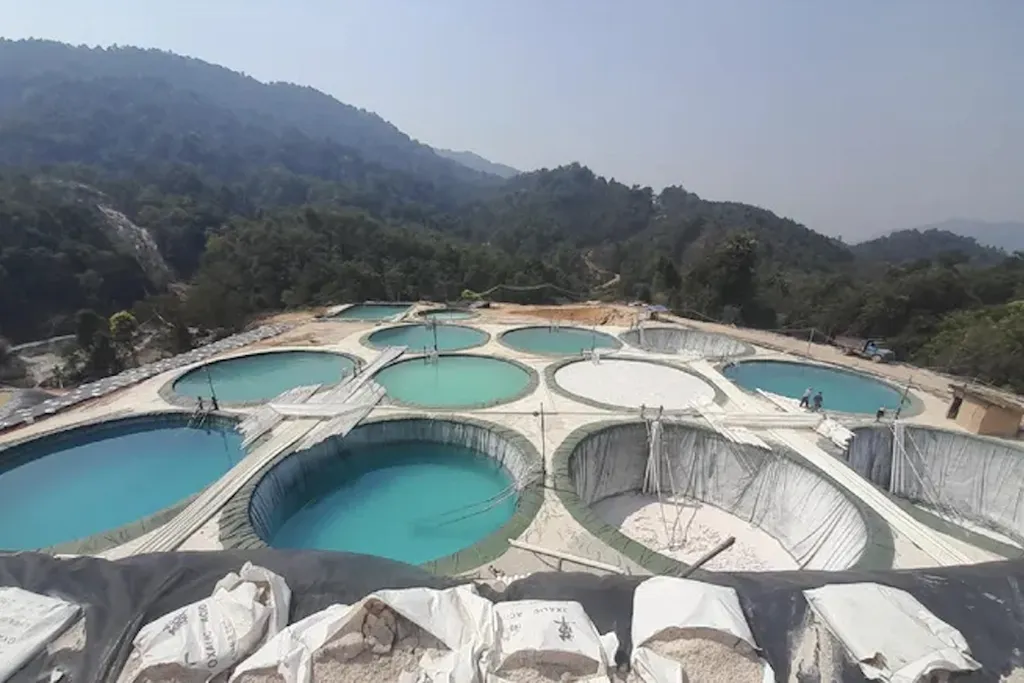
Myanmar's ongoing conflict is deeply rooted in its rich natural resources, which have fueled a perpetual war economy. The military regime has exploited these resources for its own gain, leading to a lack of accountability and public service. As a result, the wealth generated has not benefited the citizens but rather sustained violence and corruption.
- ▪Myanmar's crisis is driven by resource wealth, including jade, gas, and oil.
- ▪The military has maintained power by capturing revenue streams from state-owned enterprises and military-linked companies.
- ▪Natural resources have financed a permanent war economy, with citizens treated as subjects rather than stakeholders.
Asia Times files mainly under world. We currently carry 156 of its stories.
Story provenance
Source · retrieval · rights · ranking — open for full record
inspect →
Story provenance
Attribution is not the same as permission. This drawer separates discovery metadata, excerpts, WeSearch-generated summaries, reuse status, and whether the publisher receives the visit. Nothing here claims a legal grant the publisher has not made.
Record
| Original publisher | Asia Times |
| Canonical URL | https://asiatimes.com/2026/05/myanmars-resource-curse-fueling-its-forever-war/ |
| Publication time | Mon, 18 May 2026 07:01:50 +0000 |
| Retrieval time | 2026-05-18T07:04:56.123Z |
| Last seen | 2026-05-18T07:04:56.123Z |
| Headline source | Publisher (no WeSearch rewrite) |
| Excerpt source | publisher body |
| Excerpt method | First ~120 words (~800 chars) of extracted publisher body, fair-use limited. |
| Summary | WeSearch · cerebras-chat (WeSearch summarizer) |
| Summary source text | contentText |
| Citation coverage | Summary is a WeSearch-generated derivative; primary citation is the original publisher URL. |
| Cluster | GlfynqmCpRno |
| Cluster logic | Grouped by semantic title/content similarity across sources within a rolling window. Same-publisher template collisions are excluded from coverage comparison. |
| Ranking reason | Story pages are not engagement-ranked. Hub feeds use recency, with optional source-diversified chronological ordering (cap consecutive stories per source). No personalized ranking. |
| Publisher visit | Yes — open original |
| Substitutes article? | No — link-out required for full text |
Rights status (four layers)
WeSearch handling by dimension
| Indexing | May the item be indexed (stored, ranked, made findable)? | Allowed |
| Snippet | May a short excerpt of the publisher's text be shown? | Allowed |
| AI summary | May WeSearch generate its own short summary of the article? | Limited |
| Retrieval / RAG | May the content be exposed for third-party retrieval-augmented generation? | Not asserted |
| Model training | May the content be used to train AI models? | Not asserted |
| Commercial reuse | May the content be reused commercially? | Not permitted |
Basis: Derived from the published RSS/Atom feed. Contact: [email protected]. Reviewed: 2026-07-24.
Opening excerpt (first ~120 words) tap to expand
Myanmar’s war is often described as a clash of ideologies, ethnic identities and competing visions of the state. That is true, but incomplete. At its core, Myanmar’s crisis is also a resource-driven conflict, intensified by geography. The generals did not cling to power for the symbolism of uniform and flag alone. They did so because Myanmar sits on jade, gas, oil, timber, minerals, rare earths, and hydropower potential, while occupying corridors that connect China and India to the Indian Ocean. Natural wealth should have helped Myanmar build a modern state. Instead, it has helped to finance a permanent war economy.
…
Excerpt limited to ~120 words for fair-use compliance. The full article is at Asia Times.
Discussion
0 commentsMore from Asia Times