Not dying yet, the Quad even with Trump has a vital role to play
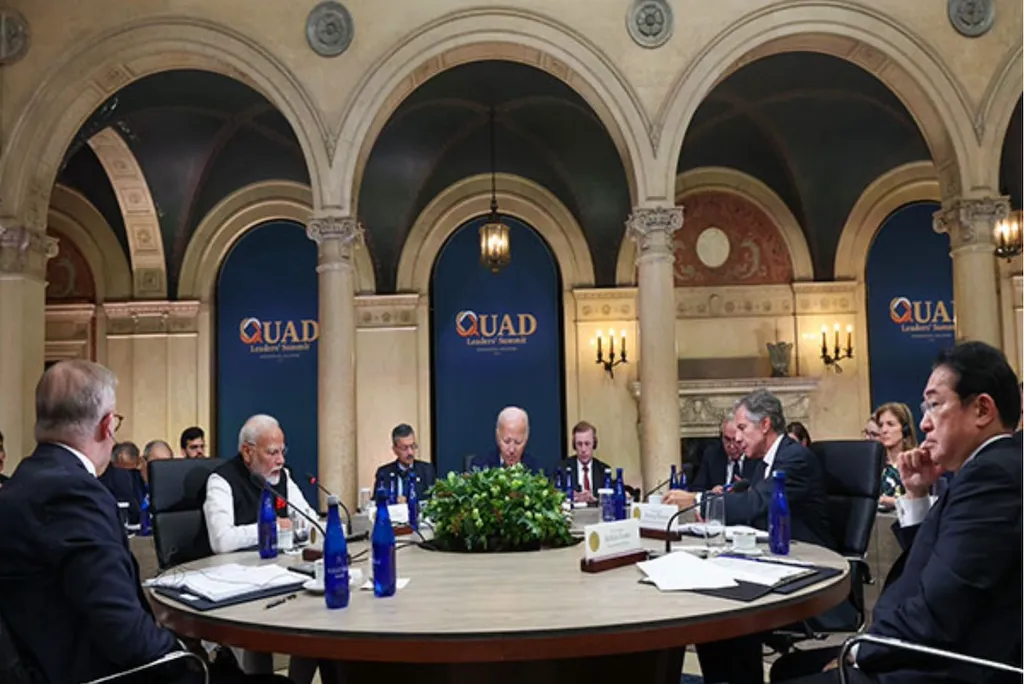
The Quad, comprising the United States, Australia, Japan, and India, faces challenges in maintaining its relevance amid changing geopolitical dynamics. Despite criticisms of drifting towards irrelevance, the structural threats posed by China remain a significant factor for the Quad's continued importance. Tensions between the US and India, particularly under President Trump's second term, have complicated the Quad's objectives and unity.
- ▪The Quad nations have not held a summit since 2024, raising concerns about its relevance.
- ▪China's military buildup and aggressive policies continue to influence the strategic landscape of the Indo-Pacific.
- ▪US-India relations have deteriorated due to Trump's immigration policies and tariffs, affecting Quad cohesion.
Asia Times files mainly under world. We currently carry 156 of its stories.
Story provenance
Source · retrieval · rights · ranking — open for full record
inspect →
Story provenance
Attribution is not the same as permission. This drawer separates discovery metadata, excerpts, WeSearch-generated summaries, reuse status, and whether the publisher receives the visit. Nothing here claims a legal grant the publisher has not made.
Record
| Original publisher | Asia Times |
| Canonical URL | https://asiatimes.com/2026/05/not-dying-yet-the-quad-even-with-trump-has-a-vital-role-to-play/ |
| Publication time | Fri, 29 May 2026 14:33:03 +0000 |
| Retrieval time | 2026-05-29T14:35:01.319Z |
| Last seen | 2026-05-29T14:35:01.319Z |
| Headline source | Publisher (no WeSearch rewrite) |
| Excerpt source | publisher body |
| Excerpt method | First ~120 words (~800 chars) of extracted publisher body, fair-use limited. |
| Summary | WeSearch · cerebras-chat (WeSearch summarizer) |
| Summary source text | contentText |
| Citation coverage | Summary is a WeSearch-generated derivative; primary citation is the original publisher URL. |
| Cluster | FYdMntvb-fY7 |
| Cluster logic | Grouped by semantic title/content similarity across sources within a rolling window. Same-publisher template collisions are excluded from coverage comparison. |
| Ranking reason | Story pages are not engagement-ranked. Hub feeds use recency, with optional source-diversified chronological ordering (cap consecutive stories per source). No personalized ranking. |
| Publisher visit | Yes — open original |
| Substitutes article? | No — link-out required for full text |
Rights status (four layers)
WeSearch handling by dimension
| Indexing | May the item be indexed (stored, ranked, made findable)? | Allowed |
| Snippet | May a short excerpt of the publisher's text be shown? | Allowed |
| AI summary | May WeSearch generate its own short summary of the article? | Limited |
| Retrieval / RAG | May the content be exposed for third-party retrieval-augmented generation? | Not asserted |
| Model training | May the content be used to train AI models? | Not asserted |
| Commercial reuse | May the content be reused commercially? | Not permitted |
Basis: Derived from the published RSS/Atom feed. Contact: [email protected]. Reviewed: 2026-07-24.
Opening excerpt (first ~120 words) tap to expand
Analysts have tried to make sense of US President Donald Trump’s second term with countless, sometimes contradictory, labels. He’s isolationist and transactional. He’s a populist. Or, more recently, a neoconservative. One way to make sense of both him and the broader state of geopolitics at the moment is to understand the difference between structure and agency. Trump has undoubtedly exercised his agency in expansive ways since beginning his second term. Yet, at the same time, he has been constrained by structural limitations. The Supreme Court’s ruling against his Liberation Day tariffs is one example. Another is Congress’s release of the Epstein files.
…
Excerpt limited to ~120 words for fair-use compliance. The full article is at Asia Times.
Discussion
0 commentsMore from Asia Times