Ocean Census Uncovers 1,121 New Marine Species From Sea Caves to Deep Trenches
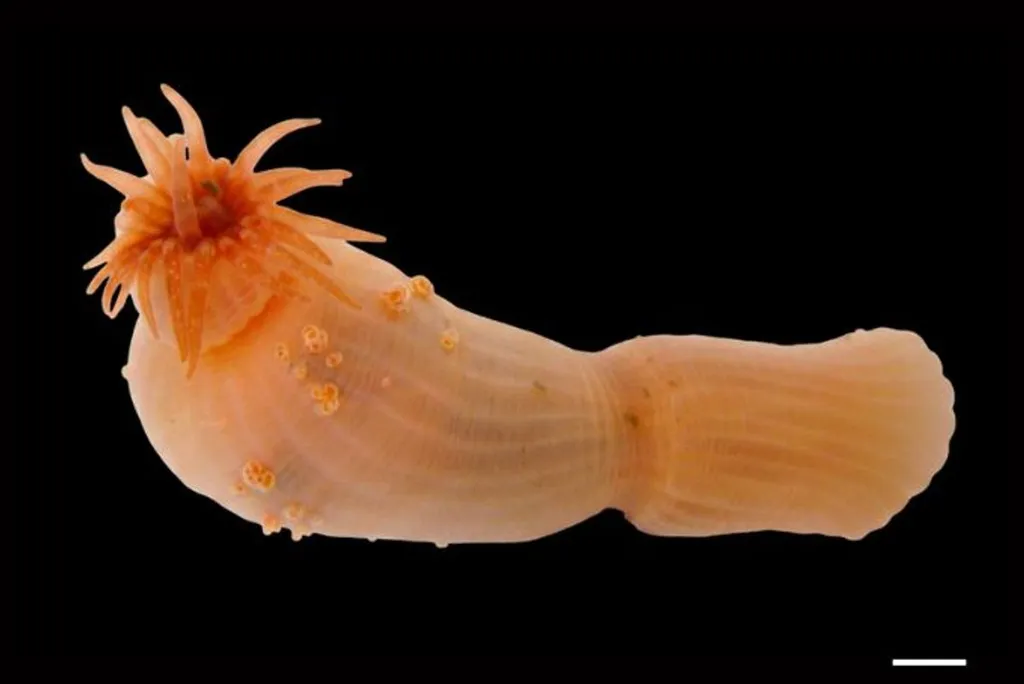
The Ocean Census has identified 1,121 new marine species over the past year, highlighting the vast unexplored biodiversity of the ocean. This initiative aims to accelerate the documentation of marine life before it disappears, with researchers estimating that up to 90 percent of species remain unknown. The discoveries range from deep-sea creatures to those found in shallow waters, emphasizing the urgent need for marine conservation efforts.
- ▪The Ocean Census was launched by the Nippon Foundation and Nekton to speed up the identification of marine life.
- ▪Researchers conducted 13 expeditions, increasing the global rate of marine species discovery by 54 percent.
- ▪Newly discovered species include a carnivorous sponge and a ghost shark, showcasing the diversity of ocean life.
Discover Magazine files mainly under science. We currently carry 86 of its stories.
Story provenance
Source · retrieval · rights · ranking — open for full record
inspect →
Story provenance
Attribution is not the same as permission. This drawer separates discovery metadata, excerpts, WeSearch-generated summaries, reuse status, and whether the publisher receives the visit. Nothing here claims a legal grant the publisher has not made.
Record
| Original publisher | Discover Magazine |
| Canonical URL | https://www.discovermagazine.com/ocean-census-uncovers-1-121-new-marine-species-from-sea-caves-to-deep-trenches-49127 |
| Publication time | Wed, 20 May 2026 22:00:00 GMT |
| Retrieval time | 2026-05-20T22:10:03.094Z |
| Last seen | 2026-05-20T22:10:03.094Z |
| Headline source | Publisher (no WeSearch rewrite) |
| Excerpt source | publisher body |
| Excerpt method | First ~120 words (~800 chars) of extracted publisher body, fair-use limited. |
| Summary | WeSearch · cerebras-chat (WeSearch summarizer) |
| Summary source text | contentText |
| Citation coverage | Summary is a WeSearch-generated derivative; primary citation is the original publisher URL. |
| Cluster | p-3mbXr0X-WF |
| Cluster logic | Grouped by semantic title/content similarity across sources within a rolling window. Same-publisher template collisions are excluded from coverage comparison. |
| Ranking reason | Story pages are not engagement-ranked. Hub feeds use recency, with optional source-diversified chronological ordering (cap consecutive stories per source). No personalized ranking. |
| Publisher visit | Yes — open original |
| Substitutes article? | No — link-out required for full text |
Rights status (four layers)
WeSearch handling by dimension
| Indexing | May the item be indexed (stored, ranked, made findable)? | Allowed |
| Snippet | May a short excerpt of the publisher's text be shown? | Allowed |
| AI summary | May WeSearch generate its own short summary of the article? | Limited |
| Retrieval / RAG | May the content be exposed for third-party retrieval-augmented generation? | Not asserted |
| Model training | May the content be used to train AI models? | Not asserted |
| Commercial reuse | May the content be reused commercially? | Not permitted |
Basis: Derived from the published RSS/Atom feed. Contact: [email protected]. Reviewed: 2026-07-24.
Opening excerpt (first ~120 words) tap to expand
A coral resembling an antique feather pen anchored to the seafloor. A sponge that traps prey like underwater Velcro. A tiny worm living inside a fragile “glass castle” made of silica. These are just a few of the 1,121 previously unknown marine species discovered over the past year by the Ocean Census. Launched by the Nippon Foundation and Nekton, the Ocean Census was created to speed up one of science’s slowest processes, identifying life in the ocean before it vanishes. Over the past year, researchers carried out 13 expeditions ranging from shallow Mediterranean sea caves to depths exceeding 21,500 feet (6,575 meters).
…
Excerpt limited to ~120 words for fair-use compliance. The full article is at Discover Magazine.
Discussion
0 commentsMore from Discover Magazine