One mystery of the Great Pyramid’s longevity has finally been solved
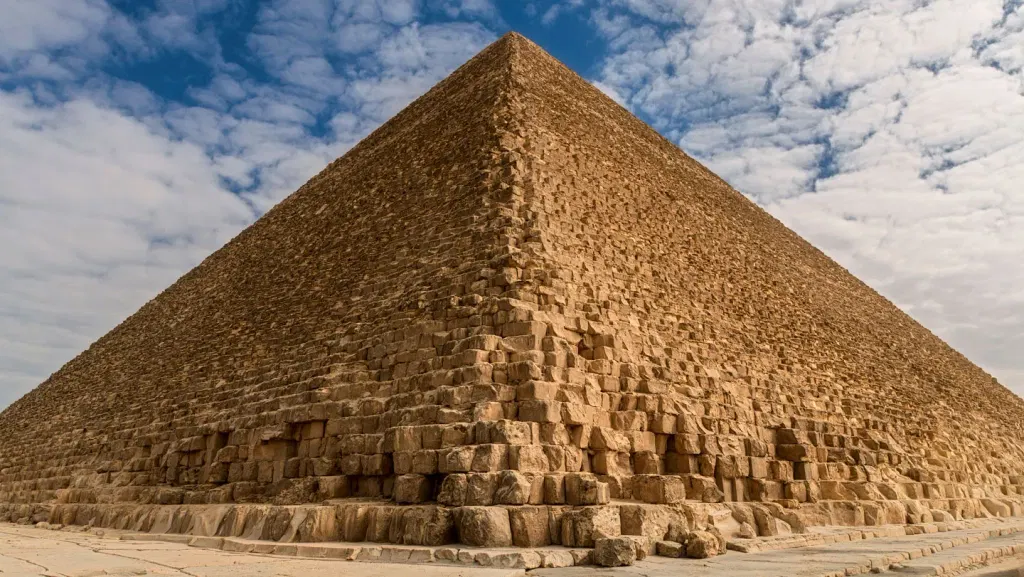
A recent study has revealed why Egypt's Great Pyramid of Giza has remained intact for nearly 5,000 years despite earthquakes. The pyramid's unique shape and internal design allow it to vibrate at a different frequency than the surrounding soil, reducing the impact of seismic activity. This research provides valuable insights into the architectural resilience of ancient structures.
- ▪The Great Pyramid has withstood earthquake damage for almost 5,000 years.
- ▪Its ability to resist seismic damage is attributed to its shape and internal design.
- ▪The pyramid vibrates at a different frequency compared to the surrounding soil, preventing excessive shaking.
Science News files mainly under science. We currently carry 42 of its stories.
Story provenance
Source · retrieval · rights · ranking — open for full record
inspect →
Story provenance
Attribution is not the same as permission. This drawer separates discovery metadata, excerpts, WeSearch-generated summaries, reuse status, and whether the publisher receives the visit. Nothing here claims a legal grant the publisher has not made.
Record
| Original publisher | Science News |
| Canonical URL | https://www.sciencenews.org/article/egypt-great-pyramid-mystery-earthquake |
| Publication time | Thu, 21 May 2026 15:00:00 +0000 |
| Retrieval time | 2026-05-21T15:06:11.139Z |
| Last seen | 2026-05-21T15:06:11.139Z |
| Headline source | Publisher (no WeSearch rewrite) |
| Excerpt source | publisher body |
| Excerpt method | First ~120 words (~800 chars) of extracted publisher body, fair-use limited. |
| Summary | WeSearch · cerebras-chat (WeSearch summarizer) |
| Summary source text | contentText |
| Citation coverage | Summary is a WeSearch-generated derivative; primary citation is the original publisher URL. |
| Cluster | HobcOK2Hl9GR |
| Cluster logic | Grouped by semantic title/content similarity across sources within a rolling window. Same-publisher template collisions are excluded from coverage comparison. |
| Ranking reason | Story pages are not engagement-ranked. Hub feeds use recency, with optional source-diversified chronological ordering (cap consecutive stories per source). No personalized ranking. |
| Publisher visit | Yes — open original |
| Substitutes article? | No — link-out required for full text |
Rights status (four layers)
WeSearch handling by dimension
| Indexing | May the item be indexed (stored, ranked, made findable)? | Allowed |
| Snippet | May a short excerpt of the publisher's text be shown? | Allowed |
| AI summary | May WeSearch generate its own short summary of the article? | Limited |
| Retrieval / RAG | May the content be exposed for third-party retrieval-augmented generation? | Not asserted |
| Model training | May the content be used to train AI models? | Not asserted |
| Commercial reuse | May the content be reused commercially? | Not permitted |
Basis: Derived from the published RSS/Atom feed. Contact: [email protected]. Reviewed: 2026-07-24.
Opening excerpt (first ~120 words) tap to expand
News Archaeology One mystery of the Great Pyramid’s longevity has finally been solved Design and material choices help the nearly 5,000-year-old monument resist temblors Egypt’s Great Pyramid, where the Pharaoh Khufu is entombed, has withstood damage from earthquakes due to a combination of its shape, internal design and building materials, according to a new study. Nicola Micheletti/Moment/Getty Images By Skyler Ware 55 seconds ago Share this:Share Share via email (Opens in new window) Email Share on Facebook (Opens in new window) Facebook Share on Reddit (Opens in new window) Reddit Share on X (Opens in new window) X Print (Opens in new window) Print Egypt’s Great Pyramid of Giza has resisted earthquake damage for nearly 5,000 years, and scientists finally know why.
…
Excerpt limited to ~120 words for fair-use compliance. The full article is at Science News.
Discussion
0 commentsMore from Science News