
Our Solar System Is Terminally Unstable and Will Be Completely Destroyed, Study Finds
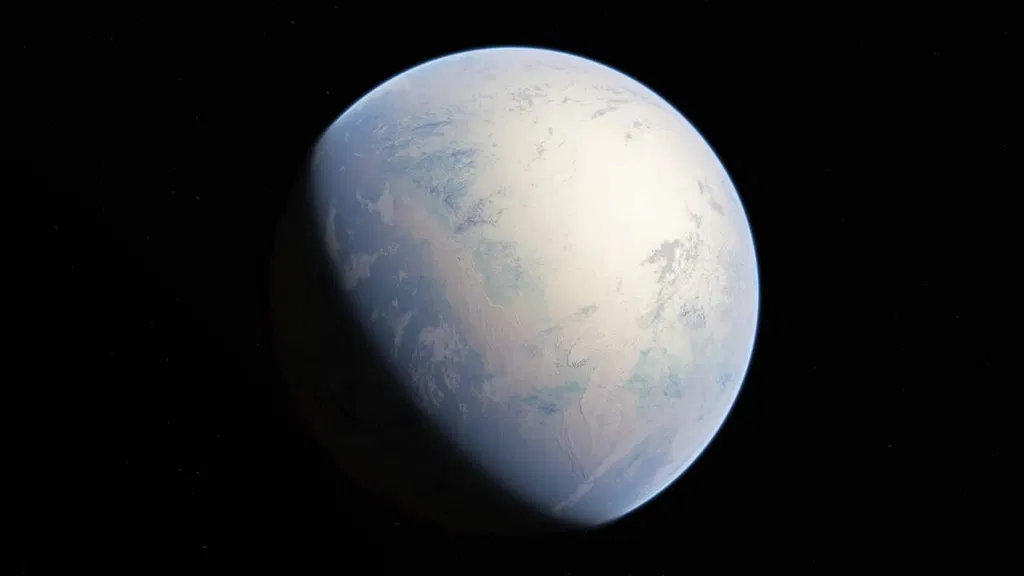
I trace my ancestry to Snowball EarthDurbin, Orin Lole et al. “Re-evaluating molecular clock maximum age calibrations revives pre-Ediacaran divergence estimates for animals.” Science Advances.When did the first animals emerge on Earth? “Unambiguous animal body fossils within the Ediacara Macrobiota provide a hard minimum calibration of 574 [million years] for crown Metazoa.
- ▪I trace my ancestry to Snowball EarthDurbin, Orin Lole et al.
- ▪“Re-evaluating molecular clock maximum age calibrations revives pre-Ediacaran divergence estimates for animals.” Science Advances.When did the first animals emerge on Earth?
- ▪“Unambiguous animal body fossils within the Ediacara Macrobiota provide a hard minimum calibration of 574 [million years] for crown Metazoa.
404 Media files mainly under tech. We currently carry 143 of its stories.
Story provenance
Source · retrieval · rights · ranking — open for full record
inspect →
Story provenance
Attribution is not the same as permission. This drawer separates discovery metadata, excerpts, WeSearch-generated summaries, reuse status, and whether the publisher receives the visit. Nothing here claims a legal grant the publisher has not made.
Record
| Original publisher | 404 Media |
| Canonical URL | https://www.404media.co/our-solar-system-is-terminally-unstable-and-will-be-completely-destroyed-study-finds/ |
| Publication time | Sat, 03 Oct 2026 11:00:34 GMT |
| Retrieval time | 2026-10-03T11:03:12.740Z |
| Last seen | 2026-10-03T11:03:12.740Z |
| Headline source | Publisher (no WeSearch rewrite) |
| Excerpt source | publisher body |
| Excerpt method | First ~120 words (~800 chars) of extracted publisher body, fair-use limited. |
| Summary | WeSearch · cerebras-chat (WeSearch summarizer) |
| Summary source text | contentText |
| Citation coverage | Summary is a WeSearch-generated derivative; primary citation is the original publisher URL. |
| Cluster | rjofbUvfE1qX · 1 stories |
| Cluster logic | Grouped by semantic title/content similarity across sources within a rolling window. Same-publisher template collisions are excluded from coverage comparison. |
| Ranking reason | Story pages are not engagement-ranked. Hub feeds use recency, with optional source-diversified chronological ordering (cap consecutive stories per source). No personalized ranking. |
| Publisher visit | Yes — open original |
| Substitutes article? | No — link-out required for full text |
Rights status (four layers)
WeSearch handling by dimension
| Indexing | May the item be indexed (stored, ranked, made findable)? | Allowed |
| Snippet | May a short excerpt of the publisher's text be shown? | Allowed |
| AI summary | May WeSearch generate its own short summary of the article? | Limited |
| Retrieval / RAG | May the content be exposed for third-party retrieval-augmented generation? | Not asserted |
| Model training | May the content be used to train AI models? | Not asserted |
| Commercial reuse | May the content be reused commercially? | Not permitted |
Basis: Derived from the published RSS/Atom feed. Contact: [email protected]. Reviewed: 2026-07-24.
Opening excerpt (first ~120 words) tap to expand
Welcome back to the Abstract! These are the studies this week that searched for the ur-animals, wandered the poles, rained on Mars, and destroyed the solar system.First, scientists present new evidence that the first animals appeared more than 800 million years ago, a truly ancient origin that suggests our metazoan ancestors survived a period known as Snowball Earth, when our planet is thought to have been nearly completely frozen. Then: Earth’s poles won’t sit still, the sepulchral stuff of life, and a dramatically shortened lifespan for our solar neighborhood.As always, for more of my work, check out my book First Contact: The Story of Our Obsession with Aliens, or subscribe to my personal newsletter The BeX Files. I trace my ancestry to Snowball EarthDurbin, Orin Lole et al.
…
Excerpt limited to ~120 words for fair-use compliance. The full article is at 404 Media.
Discussion
0 commentsMore from 404 Media


