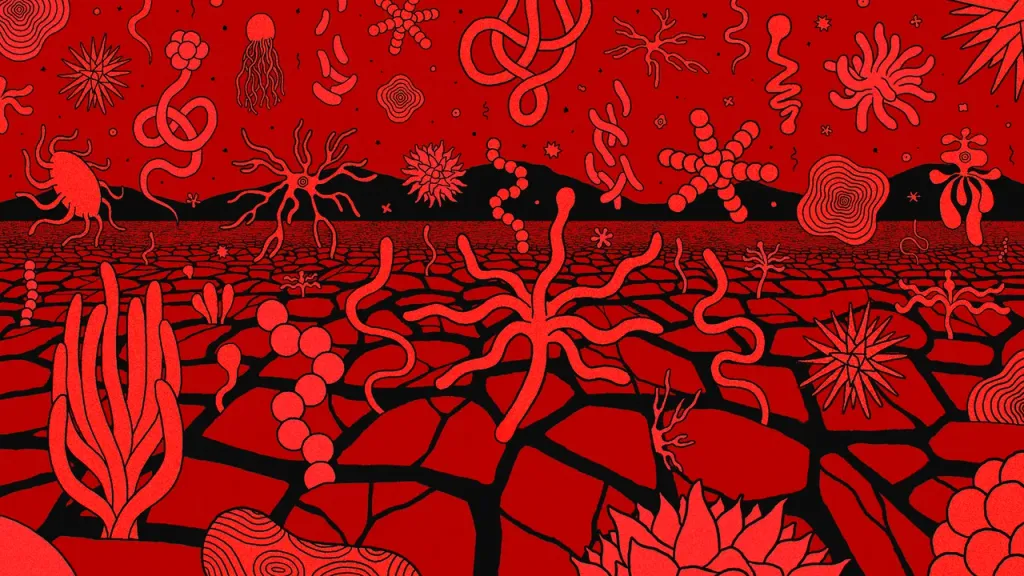
Our Warming Planet Is a Petri Dish for New and Deadly Microbes
Climate change is contributing to the rise of dangerous microbes, including flesh-eating bacteria. An example is the case of an elderly man who contracted Vibrio vulnificus after a minor injury, highlighting the increasing prevalence of such infections. Experts warn that as water temperatures rise, these harmful microorganisms are becoming more common and widespread.
- ▪Vibrio vulnificus infections are becoming more common in areas previously unaffected, such as Maryland and beyond.
- ▪The bacteria thrive in warmer waters, with their population increasing significantly as temperatures rise.
- ▪Climate change is transforming microbial life, leading to potential health risks for humans as these microbes spread to new regions.
Hacker News (Newest) files mainly under programming. We currently carry 5,306 of its stories.
Story provenance
Source · retrieval · rights · ranking — open for full record
inspect →
Story provenance
Attribution is not the same as permission. This drawer separates discovery metadata, excerpts, WeSearch-generated summaries, reuse status, and whether the publisher receives the visit. Nothing here claims a legal grant the publisher has not made.
Record
| Original publisher | The New Yorker |
| Canonical URL | https://www.newyorker.com/magazine/2026/06/01/our-warming-planet-is-a-petri-dish-for-new-and-deadly-microbes |
| Publication time | Tue, 26 May 2026 00:50:14 +0000 |
| Retrieval time | 2026-05-26T01:07:40.934Z |
| Last seen | 2026-05-26T01:07:40.934Z |
| Headline source | Publisher (no WeSearch rewrite) |
| Excerpt source | publisher body |
| Excerpt method | First ~120 words (~800 chars) of extracted publisher body, fair-use limited. |
| Summary | WeSearch · cerebras-chat (WeSearch summarizer) |
| Summary source text | contentText |
| Citation coverage | Summary is a WeSearch-generated derivative; primary citation is the original publisher URL. |
| Cluster | r7njyBFl-hwU |
| Cluster logic | Grouped by semantic title/content similarity across sources within a rolling window. Same-publisher template collisions are excluded from coverage comparison. |
| Ranking reason | Story pages are not engagement-ranked. Hub feeds use recency, with optional source-diversified chronological ordering (cap consecutive stories per source). No personalized ranking. |
| Publisher visit | Yes — open original |
| Substitutes article? | No — link-out required for full text |
Rights status (four layers)
WeSearch handling by dimension
| Indexing | May the item be indexed (stored, ranked, made findable)? | Allowed |
| Snippet | May a short excerpt of the publisher's text be shown? | Allowed |
| AI summary | May WeSearch generate its own short summary of the article? | Limited |
| Retrieval / RAG | May the content be exposed for third-party retrieval-augmented generation? | Not asserted |
| Model training | May the content be used to train AI models? | Not asserted |
| Commercial reuse | May the content be reused commercially? | Not permitted |
Basis: Derived from the published RSS/Atom feed. Contact: [email protected]. Reviewed: 2026-07-24.
Opening excerpt (first ~120 words) tap to expand
Brave New World Dept.Our Warming Planet Is a Petri Dish for New and Deadly Microbes“Flesh-eating” bacteria is spreading. Infectious fungi are emerging. Microbiomes may never be the same. Are we ready?By Shayla LoveMay 25, 2026In the near future, someone you know could be infected with climate-changed microbes.Illustration by Jérôme BerthierSave this storySave this storySave this storySave this storyOn a sweltering morning last July, Vernon Spear, a burly eighty-five-year-old with thinning gray hair, went to check a chicken-wire crab trap that was hanging from a dock in Cambridge, Maryland. Spear is a lifelong resident of the Eastern Shore, near where the Choptank River flows into the Chesapeake Bay. He lives less than fifty yards from the dock.
…
Excerpt limited to ~120 words for fair-use compliance. The full article is at The New Yorker.
Discussion
0 commentsMore from The New Yorker