
Pipelines to bypass the Strait of Hormuz
Efforts are underway to decouple and desensitise global crude markets to events in the Strait of Hormuz. Several new pipelines projected to carry oil from the Middle East to markets bypassing the strait are on the drawing board. In a note released a couple of weeks ago, analysts at Goldman Sachs estimated that seven new pipelines are currently under discussion in the oil-rich Middle East.
- ▪Efforts are underway to decouple and desensitise global crude markets to events in the Strait of Hormuz.
- ▪Several new pipelines projected to carry oil from the Middle East to markets bypassing the strait are on the drawing board.
- ▪In a note released a couple of weeks ago, analysts at Goldman Sachs estimated that seven new pipelines are currently under discussion in the oil-rich Middle East.
Dawn files mainly under world. We currently carry 282 of its stories.
Story provenance
Source · retrieval · rights · ranking — open for full record
inspect →
Story provenance
Attribution is not the same as permission. This drawer separates discovery metadata, excerpts, WeSearch-generated summaries, reuse status, and whether the publisher receives the visit. Nothing here claims a legal grant the publisher has not made.
Record
| Original publisher | Dawn |
| Canonical URL | https://www.dawn.com/news/2018582/pipelines-to-bypass-the-strait-of-hormuz |
| Publication time | Mon, 27 Jul 2026 08:12:04 +0500 |
| Retrieval time | 2026-07-27T03:48:51.675Z |
| Last seen | 2026-07-27T03:48:53.701Z |
| Headline source | Publisher (no WeSearch rewrite) |
| Excerpt source | publisher body |
| Excerpt method | First ~120 words (~800 chars) of extracted publisher body, fair-use limited. |
| Summary | WeSearch · cerebras-chat (WeSearch summarizer) |
| Summary source text | contentText |
| Citation coverage | Summary is a WeSearch-generated derivative; primary citation is the original publisher URL. |
| Cluster | XETpFluJLVsn |
| Cluster logic | Grouped by semantic title/content similarity across sources within a rolling window. Same-publisher template collisions are excluded from coverage comparison. |
| Ranking reason | Story pages are not engagement-ranked. Hub feeds use recency, with optional source-diversified chronological ordering (cap consecutive stories per source). No personalized ranking. |
| Publisher visit | Yes — open original |
| Substitutes article? | No — link-out required for full text |
Rights status (four layers)
WeSearch handling by dimension
| Indexing | May the item be indexed (stored, ranked, made findable)? | Allowed |
| Snippet | May a short excerpt of the publisher's text be shown? | Allowed |
| AI summary | May WeSearch generate its own short summary of the article? | Limited |
| Retrieval / RAG | May the content be exposed for third-party retrieval-augmented generation? | Not asserted |
| Model training | May the content be used to train AI models? | Not asserted |
| Commercial reuse | May the content be reused commercially? | Not permitted |
Basis: Derived from the published RSS/Atom feed. Contact: [email protected]. Reviewed: 2026-07-24.
Opening excerpt (first ~120 words) tap to expand
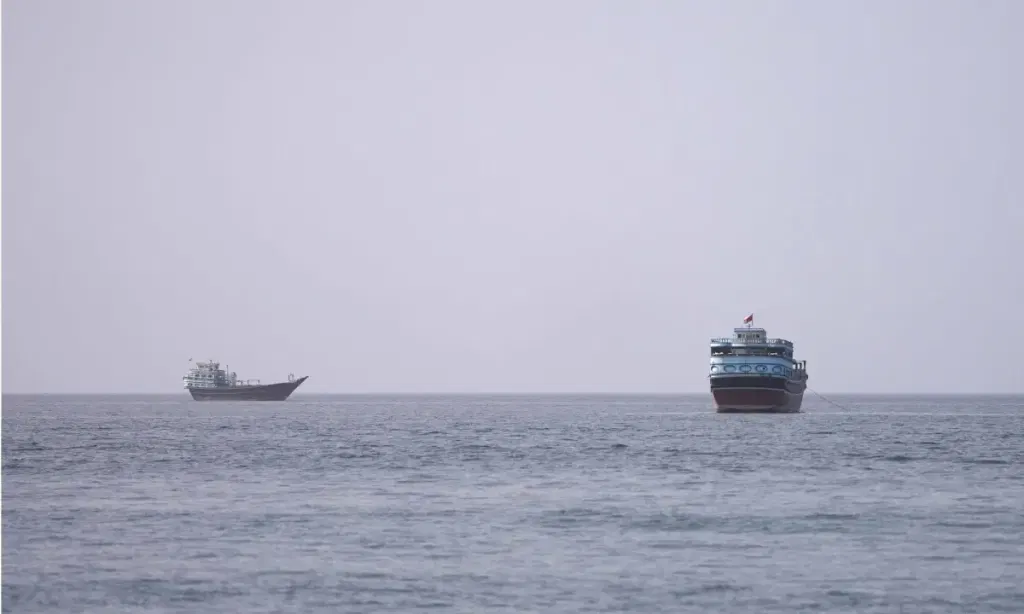
Pipelines to bypass the Strait of Hormuz Syed Rashid Husain Published July 27, 2026 Email Your Name*Recipient Email*Cancel 0 Vessels at the Strait of Hormuz, as seen from Musandam, Oman, July 17, 2026. — Reuters Listen to article 1x 1.2x 1.5x comments Join our Whatsapp Channel Add Dawn as a trusted source The battle for Hormuz, the growing possibility of greater Iranian influence on the critical passageway, question marks about the reliability and security of crude supplies from the Middle East, and the subsequent quest to divert oil shipments away from the crucial shipping chokepoint are reshaping global energy flows. Efforts are underway to decouple and desensitise global crude markets to events in the Strait of Hormuz.
…
Excerpt limited to ~120 words for fair-use compliance. The full article is at Dawn.
Discussion
0 commentsMore from Dawn


