Plots, love letters and remedies: The medieval secrets being revealed by AI
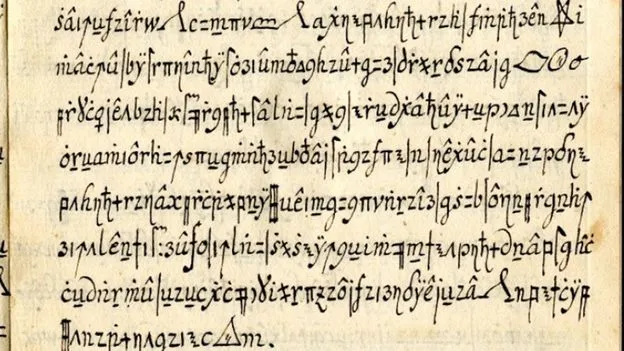
Historians are using artificial intelligence to crack open mysterious medieval texts that have been obscured by ciphers for centuries. The use of machine learning has allowed researchers to unravel the code of a 408-page-long manuscript known as the Borg cipher, which was found in the Vatican library. This technology has the potential to unlock a wealth of coded information from the past that has previously been uncrackable, revealing new insights into historical events and figures.
- ▪The Borg cipher is a 408-page-long manuscript that uses 34 obscure symbols and a few Roman letters to conceal secret remedies and healing practices.
- ▪Artificial intelligence is being used to crack historic ciphers, potentially unlocking around 1% of the material in archives and libraries around the world that is fully or partially encrypted.
- ▪The use of machine learning has allowed researchers to decode the Borg cipher, revealing thousands of bizarre treatments for various ailments, including drinking red wine to combat dysentery.
Hacker News (AI / LLM) files mainly under ai. We currently carry 3,076 of its stories.
Story provenance
Source · retrieval · rights · ranking — open for full record
inspect →
Story provenance
Attribution is not the same as permission. This drawer separates discovery metadata, excerpts, WeSearch-generated summaries, reuse status, and whether the publisher receives the visit. Nothing here claims a legal grant the publisher has not made.
Record
| Original publisher | Bbc |
| Canonical URL | https://www.bbc.com/future/article/20260527-plots-love-letters-and-diplomacy-the-medieval-secrets-being-revealed-by-ai |
| Publication time | Mon, 15 Jun 2026 00:59:18 +0000 |
| Retrieval time | 2026-06-15T01:07:34.804Z |
| Last seen | 2026-06-15T01:07:34.804Z |
| Headline source | Publisher (no WeSearch rewrite) |
| Excerpt source | publisher body |
| Excerpt method | First ~120 words (~800 chars) of extracted publisher body, fair-use limited. |
| Summary | WeSearch · cerebras-chat (WeSearch summarizer) |
| Summary source text | contentText |
| Citation coverage | Summary is a WeSearch-generated derivative; primary citation is the original publisher URL. |
| Cluster | PsD-OxjsT_8O |
| Cluster logic | Grouped by semantic title/content similarity across sources within a rolling window. Same-publisher template collisions are excluded from coverage comparison. |
| Ranking reason | Story pages are not engagement-ranked. Hub feeds use recency, with optional source-diversified chronological ordering (cap consecutive stories per source). No personalized ranking. |
| Publisher visit | Yes — open original |
| Substitutes article? | No — link-out required for full text |
Rights status (four layers)
WeSearch handling by dimension
| Indexing | May the item be indexed (stored, ranked, made findable)? | Allowed |
| Snippet | May a short excerpt of the publisher's text be shown? | Allowed |
| AI summary | May WeSearch generate its own short summary of the article? | Limited |
| Retrieval / RAG | May the content be exposed for third-party retrieval-augmented generation? | Not asserted |
| Model training | May the content be used to train AI models? | Not asserted |
| Commercial reuse | May the content be reused commercially? | Not permitted |
Basis: Derived from the published RSS/Atom feed. Contact: [email protected]. Reviewed: 2026-07-24.
Opening excerpt (first ~120 words) tap to expand
Plots, love letters and remedies: The medieval secrets being revealed by AI28 May 2026ShareSaveAdd as preferred on GoogleSandrine CeurstemontBeáta Megyesi(Credit: Beáta Megyesi)Historic messages and documents obscured by incomprehensible ciphers can be found in libraries and archives all over the world. Artificial intelligence is helping historians crack open these mysterious texts.Deep in the archives of the Vatican library, a mysterious hand-written book, scrawled with strange symbols, had lain unread for more than 400 years. Its cryptic pages apparently concealed secret remedies "for affections of the human body", according to some text scratched inside the cover.
…
Excerpt limited to ~120 words for fair-use compliance. The full article is at Bbc.
Discussion
0 commentsMore from Bbc