Pope Leo’s unfashionable universalism
Pope Leo XIV's encyclical, Magnifica Humanitas, addresses the challenges posed by artificial intelligence while advocating for moral and political universalism. The document emphasizes the need for a universal truth about the good, which is threatened by various irrational ideologies. Despite facing criticism from traditionalists, the encyclical seeks to blend classical philosophy with modern social issues, echoing the teachings of Pope Leo XIII.
- ▪Pope Leo XIV's encyclical focuses on moral and political universalism amidst the rise of AI.
- ▪The document acknowledges the achievements of modernity while advocating for a renewal of universal reason.
- ▪Critics within the Church label the pope as too modern and insufficiently traditional.
2 outlets in our directory ran this story, first to last over 35 hours. All of the coverage we found sits in one bucket: right. That one-sidedness is itself worth noticing.
- ▪ Pope Leo’s ‘Traditionis’ options — The Pillar
UnHerd publishes from United Kingdom and files mainly under culture. We currently carry 40 of its stories.
Story provenance
Source · retrieval · rights · ranking — open for full record
inspect →
Story provenance
Attribution is not the same as permission. This drawer separates discovery metadata, excerpts, WeSearch-generated summaries, reuse status, and whether the publisher receives the visit. Nothing here claims a legal grant the publisher has not made.
Record
| Original publisher | UnHerd |
| Canonical URL | https://unherd.com/2026/05/pope-leos-unfashionable-universalism/?edition=us |
| Publication time | Tue, 26 May 2026 14:32:29 +0000 |
| Retrieval time | 2026-05-26T14:37:49.954Z |
| Last seen | 2026-05-26T14:37:49.954Z |
| Headline source | Publisher (no WeSearch rewrite) |
| Excerpt source | publisher body |
| Excerpt method | First ~120 words (~800 chars) of extracted publisher body, fair-use limited. |
| Summary | WeSearch · cerebras-chat (WeSearch summarizer) |
| Summary source text | contentText |
| Citation coverage | Summary is a WeSearch-generated derivative; primary citation is the original publisher URL. |
| Cluster | 4q0nzQ6yGtPm · 2 stories |
| Cluster logic | Grouped by semantic title/content similarity across sources within a rolling window. Same-publisher template collisions are excluded from coverage comparison. |
| Ranking reason | Story pages are not engagement-ranked. Hub feeds use recency, with optional source-diversified chronological ordering (cap consecutive stories per source). No personalized ranking. |
| Publisher visit | Yes — open original |
| Substitutes article? | No — link-out required for full text |
Rights status (four layers)
WeSearch handling by dimension
| Indexing | May the item be indexed (stored, ranked, made findable)? | Allowed |
| Snippet | May a short excerpt of the publisher's text be shown? | Allowed |
| AI summary | May WeSearch generate its own short summary of the article? | Limited |
| Retrieval / RAG | May the content be exposed for third-party retrieval-augmented generation? | Not asserted |
| Model training | May the content be used to train AI models? | Not asserted |
| Commercial reuse | May the content be reused commercially? | Not permitted |
Basis: Derived from the published RSS/Atom feed. Contact: [email protected]. Reviewed: 2026-07-24.
Opening excerpt (first ~120 words) tap to expand
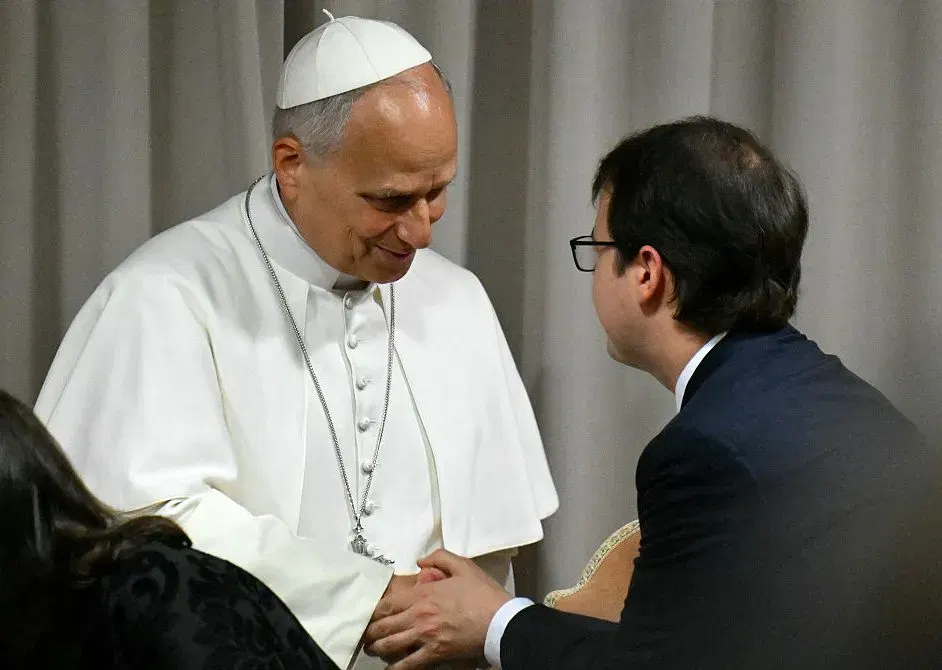
Pope Leo’s unfashionable universalism His new encyclical isn’t really about AI Anthropic’s Christopher Olah shakes hands with Pope Leo XIV. Credit: Getty Anthropic’s Christopher Olah shakes hands with Pope Leo XIV. Credit: Getty aiAnthropicArtificial intellienceCatholic social teachingCatholicismPope Leo XIV Sohrab Ahmari May 26 2026 - 3:32pm 6 mins A two-millennia-old institution with one foot in the Roman Empire challenges Silicon Valley’s masters of AI and automation to do better. That’s the generic read on Pope Leo XIV’s debut encyclical, Magnifica Humanitas, dramatized by photos from the Vatican of the pontiff shaking hands with Anthropic co-founder Christopher Olah.
…
Excerpt limited to ~120 words for fair-use compliance. The full article is at UnHerd.