Re-creating NASA’s Heat Shield Problem
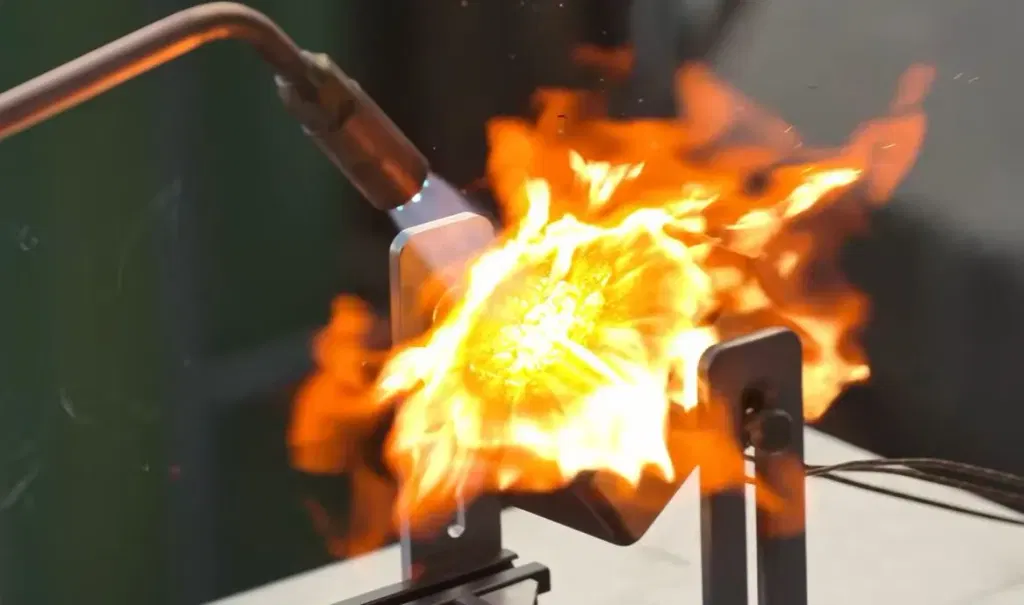
Following the discovery of significant damage to the Orion capsule's heat shield during the Artemis I mission, a creator attempted to replicate the failure in a DIY setting. The experiment involved constructing segmented heat shield samples using NASA-published materials and subjecting them to propane torch heat to simulate re-entry conditions. The results confirmed that gas buildup from sustained pyrolysis was the primary cause of the material fracturing, aligning with NASA's official findings.
- ▪Massive chunks of the Orion capsule's heat shield were found missing after the Artemis I lunar mission, posing risks to future flights.
- ▪A creator recreated the heat shield using segmented structures and NASA-specified filler materials to test its durability.
- ▪The samples were cured with thermocouples and exposed to propane torch heat to simulate various re-entry patterns.
- ▪The experiment demonstrated that gas buildup from sustained pyrolysis caused the material to fracture, matching NASA's conclusions.
- ▪Despite some experimental flaws involving residual heat from the copper structure, the setup proved effective for testing ablative heat shields in a lab environment.
Hackaday files mainly under tech. We currently carry 344 of its stories.
Story provenance
Source · retrieval · rights · ranking — open for full record
inspect →
Story provenance
Attribution is not the same as permission. This drawer separates discovery metadata, excerpts, WeSearch-generated summaries, reuse status, and whether the publisher receives the visit. Nothing here claims a legal grant the publisher has not made.
Record
| Original publisher | Hackaday |
| Canonical URL | https://hackaday.com/2026/09/13/re-creating-nasas-heat-shield-problem/ |
| Publication time | Mon, 14 Sep 2026 02:00:14 +0000 |
| Retrieval time | 2026-09-14T02:01:50.249Z |
| Last seen | 2026-09-14T02:01:50.249Z |
| Headline source | Publisher (no WeSearch rewrite) |
| Excerpt source | publisher body |
| Excerpt method | First ~120 words (~800 chars) of extracted publisher body, fair-use limited. |
| Summary | WeSearch · cerebras-chat (WeSearch summarizer) |
| Summary source text | contentText |
| Citation coverage | Summary is a WeSearch-generated derivative; primary citation is the original publisher URL. |
| Cluster | fI1gD_rVi6_0 · 1 stories |
| Cluster logic | Grouped by semantic title/content similarity across sources within a rolling window. Same-publisher template collisions are excluded from coverage comparison. |
| Ranking reason | Story pages are not engagement-ranked. Hub feeds use recency, with optional source-diversified chronological ordering (cap consecutive stories per source). No personalized ranking. |
| Publisher visit | Yes — open original |
| Substitutes article? | No — link-out required for full text |
Rights status (four layers)
WeSearch handling by dimension
| Indexing | May the item be indexed (stored, ranked, made findable)? | Allowed |
| Snippet | May a short excerpt of the publisher's text be shown? | Allowed |
| AI summary | May WeSearch generate its own short summary of the article? | Limited |
| Retrieval / RAG | May the content be exposed for third-party retrieval-augmented generation? | Not asserted |
| Model training | May the content be used to train AI models? | Not asserted |
| Commercial reuse | May the content be reused commercially? | Not permitted |
Basis: Derived from the published RSS/Atom feed. Contact: [email protected]. Reviewed: 2026-07-24.
Opening excerpt (first ~120 words) tap to expand
Re-creating NASA’s Heat Shield Problem No comments by: Maya Posch September 13, 2026 Title: Copy Short Link: Copy After the Orion capsule of the Artemis I lunar mission returned to Earth, it was found that massive chunks of its heatshield had been ripped off, posing a serious risk to any future missions. In a recent video in which [polymatt] takes a break from repairing old laptop shells and the like, he tries to recreate the Orion’s heatshield using a variety of methods and materials. For this test a number of samples were created, each using the same kind of segmented structure as the larger Orion heatshield. The filler was created from the published materials for the heat shield by NASA, requiring just serious mixing.
…
Excerpt limited to ~120 words for fair-use compliance. The full article is at Hackaday.
Discussion
0 commentsMore from Hackaday