Re-Testing an Apollo Guidance Computer Module that Failed Certification Testing
Mike Stewart acquired an Apollo-era rope driver module marked as scrapped and investigated its failure during certification testing. Using scanned acceptance documents, he performed conservative room‑temperature tests and identified a documentation error regarding pin numbering. The module appears to have been repaired and repurposed for engineering use rather than flight hardware, with only calibration issues noted.
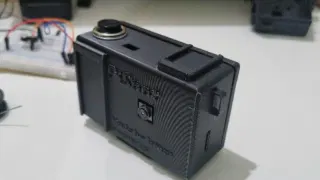
- ▪The module, originally intended for the Apollo Guidance Computer, bore a ‘Scrapped Module’ stamp and showed signs of having been opened and possibly repaired.
- ▪Acceptance testing documents (B16‑B17) were located on the Internet Archive, but the original reasons for rejection were not recorded, prompting re‑testing.
- ▪During testing an error was found in the documentation where input pin 269 was incorrectly linked to output pin 169 instead of the correct pin 168.
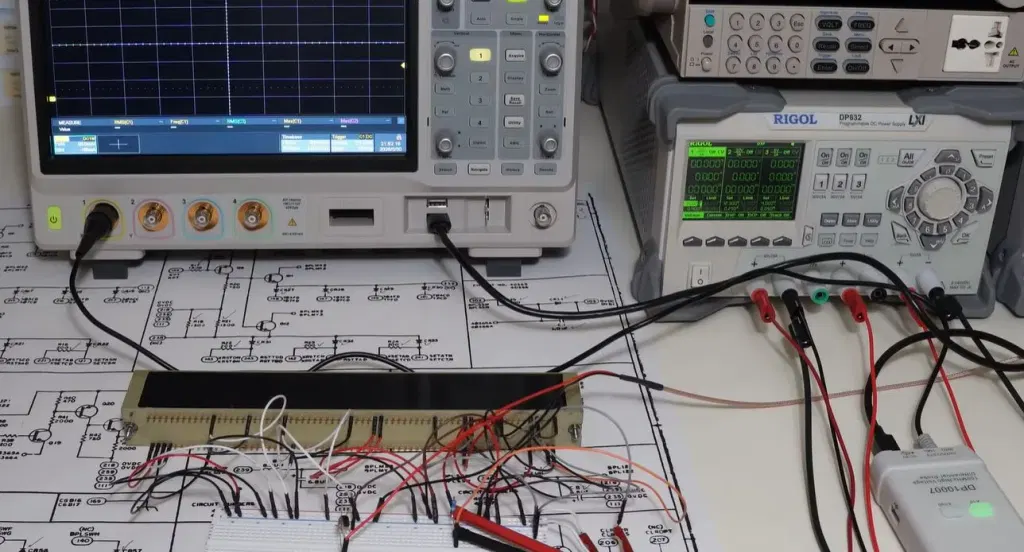
- ▪Basic stationary, room‑temperature tests showed the module passed most checks, with the only issue being out‑of‑calibration channels.
Hackaday files mainly under tech. We currently carry 319 of its stories.
Story provenance
Source · retrieval · rights · ranking — open for full record
inspect →
Story provenance
Attribution is not the same as permission. This drawer separates discovery metadata, excerpts, WeSearch-generated summaries, reuse status, and whether the publisher receives the visit. Nothing here claims a legal grant the publisher has not made.
Record
| Original publisher | Hackaday |
| Canonical URL | https://hackaday.com/2026/07/27/re-testing-an-apollo-guidance-computer-module-that-failed-certification-testing/ |
| Publication time | Mon, 27 Jul 2026 23:00:08 +0000 |
| Retrieval time | 2026-07-27T23:03:07.719Z |
| Last seen | 2026-07-27T23:03:07.719Z |
| Headline source | Publisher (no WeSearch rewrite) |
| Excerpt source | publisher body |
| Excerpt method | First ~120 words (~800 chars) of extracted publisher body, fair-use limited. |
| Summary | WeSearch · cerebras-chat (WeSearch summarizer) |
| Summary source text | contentText |
| Citation coverage | Summary is a WeSearch-generated derivative; primary citation is the original publisher URL. |
| Cluster | aegLtPUCrVwS |
| Cluster logic | Grouped by semantic title/content similarity across sources within a rolling window. Same-publisher template collisions are excluded from coverage comparison. |
| Ranking reason | Story pages are not engagement-ranked. Hub feeds use recency, with optional source-diversified chronological ordering (cap consecutive stories per source). No personalized ranking. |
| Publisher visit | Yes — open original |
| Substitutes article? | No — link-out required for full text |
Rights status (four layers)
WeSearch handling by dimension
| Indexing | May the item be indexed (stored, ranked, made findable)? | Allowed |
| Snippet | May a short excerpt of the publisher's text be shown? | Allowed |
| AI summary | May WeSearch generate its own short summary of the article? | Limited |
| Retrieval / RAG | May the content be exposed for third-party retrieval-augmented generation? | Not asserted |
| Model training | May the content be used to train AI models? | Not asserted |
| Commercial reuse | May the content be reused commercially? | Not permitted |
Basis: Derived from the published RSS/Atom feed. Contact: [email protected]. Reviewed: 2026-07-24.
Opening excerpt (first ~120 words) tap to expand
Re-Testing An Apollo Guidance Computer Module That Failed Certification Testing No comments by: Maya Posch July 27, 2026 Title: Copy Short Link: Copy After getting his hands on a rope driver module from the Apollo project era that had a big ‘Scrapped Module’ stamped on it, [Mike Stewart] was naturally left curious as to what exactly had failed in this module. Originally destined for the Apollo Guidance Computer, these Raytheon-manufactured modules were the pinnacle of space-grade high-tech of the 1960s, with requisite acceptance testing so as to not endanger a very expensive space mission. The cool part here is that the acceptance documents for the module in question (B16-B17) have been scanned in and can be found on the Internet Archive.
…
Excerpt limited to ~120 words for fair-use compliance. The full article is at Hackaday.
Discussion
0 commentsMore from Hackaday