Retrotechtacular: A View of the Moon from 1964
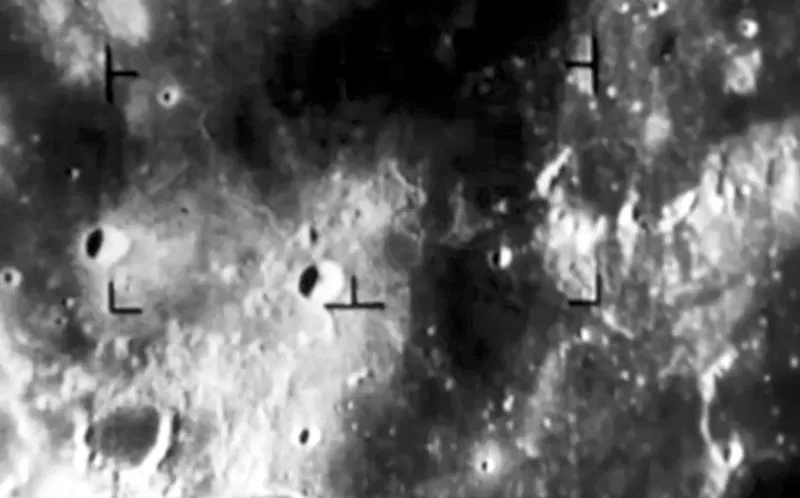
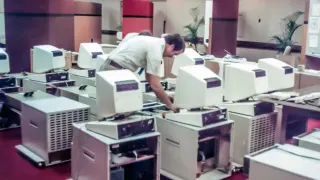
The article reflects on public excitement for the 1960s lunar race, highlighting the Ranger program’s early challenges and successes. It notes that Ranger 7 was the first mission to capture images before the spacecraft’s impact, and that Ranger 8 later photographed the Sea of Tranquility where Apollo 11 would land. The piece also describes vintage technology shown in the film “Lunar Bridgehead,” such as magnetic tape drives and warming cameras.
- ▪The first five Ranger missions failed to reach the Moon, with Ranger 6 reaching it but losing camera function.
- ▪Ranger 7 achieved the program’s first successful imaging of the lunar surface before impact.
- ▪Ranger 8 later photographed the Sea of Tranquility, the same site where Neil Armstrong’s Apollo 11 landed five years later.
- ▪The film “Lunar Bridgehead” showcases 1960s technology like magnetic tape drives, teletypes, paper tape readers, and large dish antennas.
Hackaday files mainly under tech. We currently carry 308 of its stories.
Story provenance
Source · retrieval · rights · ranking — open for full record
inspect →
Story provenance
Attribution is not the same as permission. This drawer separates discovery metadata, excerpts, WeSearch-generated summaries, reuse status, and whether the publisher receives the visit. Nothing here claims a legal grant the publisher has not made.
Record
| Original publisher | Hackaday |
| Canonical URL | https://hackaday.com/2026/08/09/retrotechtacular-a-view-of-the-moon-from-1964/ |
| Publication time | Mon, 10 Aug 2026 02:00:48 +0000 |
| Retrieval time | 2026-08-10T02:05:43.979Z |
| Last seen | 2026-08-10T02:05:43.979Z |
| Headline source | Publisher (no WeSearch rewrite) |
| Excerpt source | publisher body |
| Excerpt method | First ~120 words (~800 chars) of extracted publisher body, fair-use limited. |
| Summary | WeSearch · cerebras-chat (WeSearch summarizer) |
| Summary source text | contentText |
| Citation coverage | Summary is a WeSearch-generated derivative; primary citation is the original publisher URL. |
| Cluster | Mzb_oJ4HvQkl · 1 stories |
| Cluster logic | Grouped by semantic title/content similarity across sources within a rolling window. Same-publisher template collisions are excluded from coverage comparison. |
| Ranking reason | Story pages are not engagement-ranked. Hub feeds use recency, with optional source-diversified chronological ordering (cap consecutive stories per source). No personalized ranking. |
| Publisher visit | Yes — open original |
| Substitutes article? | No — link-out required for full text |
Rights status (four layers)
WeSearch handling by dimension
| Indexing | May the item be indexed (stored, ranked, made findable)? | Allowed |
| Snippet | May a short excerpt of the publisher's text be shown? | Allowed |
| AI summary | May WeSearch generate its own short summary of the article? | Limited |
| Retrieval / RAG | May the content be exposed for third-party retrieval-augmented generation? | Not asserted |
| Model training | May the content be used to train AI models? | Not asserted |
| Commercial reuse | May the content be reused commercially? | Not permitted |
Basis: Derived from the published RSS/Atom feed. Contact: [email protected]. Reviewed: 2026-07-24.
Opening excerpt (first ~120 words) tap to expand
Retrotechtacular: A View Of The Moon From 1964 No comments by: Al Williams August 9, 2026 Title: Copy Short Link: Copy If you didn’t live through it, it is hard to understand how excited the general public was about the race for the moon. You can capture some of it by watching “Lunar Bridgehead,” a film about JPL monitoring the Ranger spacecraft as it hit, rather hard, on the lunar surface. The Ranger program had been plagued with problems. The first five didn’t make it to the moon. Ranger 6 hit the moon, but failed to start its cameras. Ranger 7 was the first successful mission. There would be two more successful missions before the end of the program. Honestly, given the state of technology and computers in those days, it is a miracle they could do it at all.
…
Excerpt limited to ~120 words for fair-use compliance. The full article is at Hackaday.
Discussion
0 commentsMore from Hackaday