Russian secret services target Latvia as Ukraine's drone offensive worries the Kremlin
Russian secret services have accused Latvia of helping Ukraine strike Russian targets using drones, and have threatened the Baltic state with military retaliation. The accusations were made by Russia's representative to the Security Council, Vasily Nebenzia, and by the SVR, Russia's foreign intelligence service. Latvia has denied the accusations, with Foreign Minister Baiba Braze calling them a disinformation campaign.
- ▪Russia has accused Latvia of allowing Ukraine to use its territory to prepare drone strikes against Russia.
- ▪The Russian diplomat Vasily Nebenzia threatened Latvia with military retaliation, claiming that NATO would not come to its aid.
- ▪Latvia has denied the accusations, with Foreign Minister Baiba Braze calling them a disinformation campaign.
France 24 (EN) publishes from France and files mainly under world. We currently carry 819 of its stories.
Story provenance
Source · retrieval · rights · ranking — open for full record
inspect →
Story provenance
Attribution is not the same as permission. This drawer separates discovery metadata, excerpts, WeSearch-generated summaries, reuse status, and whether the publisher receives the visit. Nothing here claims a legal grant the publisher has not made.
Record
| Original publisher | France 24 (EN) |
| Canonical URL | https://www.france24.com/en/europe/20260521-russian-secret-services-target-latvia-as-ukraine-s-drone-offensive-worries-the-kremlin |
| Publication time | Thu, 21 May 2026 12:33:46 GMT |
| Retrieval time | 2026-05-21T12:56:11.034Z |
| Last seen | 2026-05-21T12:56:12.576Z |
| Headline source | Publisher (no WeSearch rewrite) |
| Excerpt source | publisher body |
| Excerpt method | First ~120 words (~800 chars) of extracted publisher body, fair-use limited. |
| Summary | WeSearch · cerebras-chat (WeSearch summarizer) |
| Summary source text | contentText |
| Citation coverage | Summary is a WeSearch-generated derivative; primary citation is the original publisher URL. |
| Cluster | ie00tdHLgV8J |
| Cluster logic | Grouped by semantic title/content similarity across sources within a rolling window. Same-publisher template collisions are excluded from coverage comparison. |
| Ranking reason | Story pages are not engagement-ranked. Hub feeds use recency, with optional source-diversified chronological ordering (cap consecutive stories per source). No personalized ranking. |
| Publisher visit | Yes — open original |
| Substitutes article? | No — link-out required for full text |
Rights status (four layers)
WeSearch handling by dimension
| Indexing | May the item be indexed (stored, ranked, made findable)? | Allowed |
| Snippet | May a short excerpt of the publisher's text be shown? | Allowed |
| AI summary | May WeSearch generate its own short summary of the article? | Limited |
| Retrieval / RAG | May the content be exposed for third-party retrieval-augmented generation? | Not asserted |
| Model training | May the content be used to train AI models? | Not asserted |
| Commercial reuse | May the content be reused commercially? | Not permitted |
Basis: Derived from the published RSS/Atom feed. Contact: [email protected]. Reviewed: 2026-07-24.
Opening excerpt (first ~120 words) tap to expand
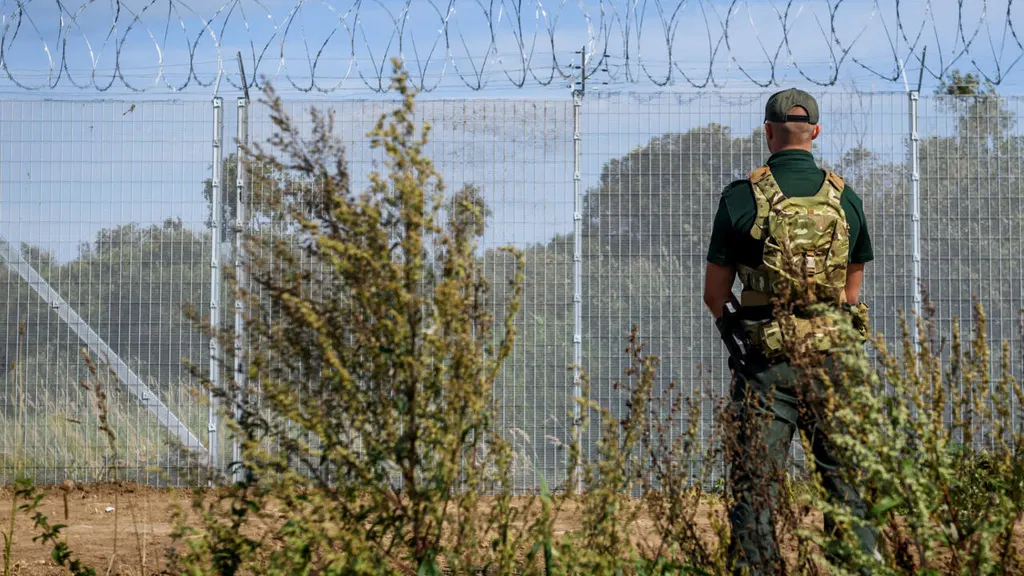
Advertising Home Europe Russian secret services target Latvia as Ukraine's drone offensive worries the Kremlin Analysis Europe The Russian secret services on Monday accused Latvia without evidence of helping Ukraine strike Russian targets using drones, and threatened the Baltic state with military retaliation. But the targeting of Latvia by the Kremlin, which continues to deploy new tactics in its hybrid war, was no accident. Issued on: 21/05/2026 - 14:33 4 min Reading time Share By: Sébastian SEIBT A guard stands at the border fence with barbed wire during a press tour to present military reinforcement measures at the border of Latvia with Russia on August 16, 2024 near Karsava, Latvia. © Gints Ivuskans, AFP Moscow launched a fierce attack on Latvia at the UN on Monday.
…
Excerpt limited to ~120 words for fair-use compliance. The full article is at France 24 (EN).
Discussion
0 commentsMore from France 24 (EN)