
Satellites and AI used to track UK hedgehogs in bid to slow decline
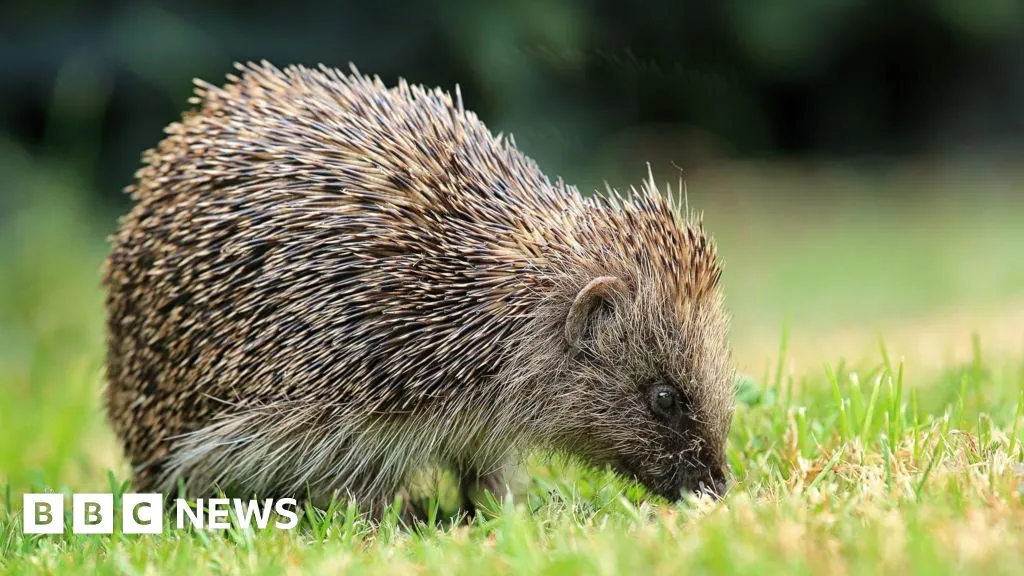
Researchers at the University of Cambridge are utilizing satellite data and AI to address the decline of hedgehogs in the UK. The AI tool, Tessera, helps identify hedgehog habitats and the barriers they face. This initiative aims to combine satellite imagery with real-time tracking data to enhance conservation efforts for these animals.
- ▪Hedgehog populations in the UK have declined by up to 75% in rural areas since 2000.
- ▪The AI tool Tessera analyzes satellite images to determine hedgehog habitats and predict suitable environments.
- ▪Researchers are also using GPS trackers on hedgehogs, referred to as 'digi-hogs', to monitor their movements.
BBC News — Tech publishes from United Kingdom and files mainly under tech. We currently carry 44 of its stories.
Story provenance
Source · retrieval · rights · ranking — open for full record
inspect →
Story provenance
Attribution is not the same as permission. This drawer separates discovery metadata, excerpts, WeSearch-generated summaries, reuse status, and whether the publisher receives the visit. Nothing here claims a legal grant the publisher has not made.
Record
| Original publisher | BBC News — Tech |
| Canonical URL | https://www.bbc.com/news/articles/c202g60qrlpo?at_medium=RSS&at_campaign=rss |
| Publication time | Mon, 18 May 2026 23:04:03 GMT |
| Retrieval time | 2026-05-18T23:09:56.956Z |
| Last seen | 2026-05-18T23:09:56.956Z |
| Headline source | Publisher (no WeSearch rewrite) |
| Excerpt source | publisher body |
| Excerpt method | First ~120 words (~800 chars) of extracted publisher body, fair-use limited. |
| Summary | WeSearch · cerebras-chat (WeSearch summarizer) |
| Summary source text | contentText |
| Citation coverage | Summary is a WeSearch-generated derivative; primary citation is the original publisher URL. |
| Cluster | 5t0Uree2b0-J |
| Cluster logic | Grouped by semantic title/content similarity across sources within a rolling window. Same-publisher template collisions are excluded from coverage comparison. |
| Ranking reason | Story pages are not engagement-ranked. Hub feeds use recency, with optional source-diversified chronological ordering (cap consecutive stories per source). No personalized ranking. |
| Publisher visit | Yes — open original |
| Substitutes article? | No — link-out required for full text |
Rights status (four layers)
WeSearch handling by dimension
| Indexing | May the item be indexed (stored, ranked, made findable)? | Allowed |
| Snippet | May a short excerpt of the publisher's text be shown? | Allowed |
| AI summary | May WeSearch generate its own short summary of the article? | Limited |
| Retrieval / RAG | May the content be exposed for third-party retrieval-augmented generation? | Not asserted |
| Model training | May the content be used to train AI models? | Not asserted |
| Commercial reuse | May the content be reused commercially? | Not permitted |
Basis: Derived from the published RSS/Atom feed. Contact: [email protected]. Reviewed: 2026-07-24.
Opening excerpt (first ~120 words) tap to expand
Satellites and AI used to track UK hedgehogs in bid to slow declineJust nowShareSaveAdd as preferred on GoogleZoe KleinmanTechnology editorGetty ImagesResearchers at the University of Cambridge are using satellite data and AI in an effort to slow the decline in Britain's hedgehog population.Using an AI tool called Tessera, which analyses detailed images of the UK gathered from space, experts can precisely determine locations of hedgehog habitats - and where these are disappearing.The resulting maps capture landscapes in minute detail, including down to individual hedgerows, while AI can accurately predict hedgehog-friendly places obscured by cloud cover.Those behind the project hope it will help to shed light not just on where hedgehogs live across the UK, but barriers preventing them…
Excerpt limited to ~120 words for fair-use compliance. The full article is at BBC News — Tech.
Discussion
0 commentsMore from BBC News — Tech


