Scientists Create a New Form of Ice at More Than 2000°C
Under crushing pressures of millions of atmospheres, this expansion is stymied. Its oxygen atoms remain fixed in a rigid crystal lattice, as they would in a solid. There are some twenty-something known phases of water ice, a few of which become superionic under extreme conditions.
- ▪Under crushing pressures of millions of atmospheres, this expansion is stymied.
- ▪Its oxygen atoms remain fixed in a rigid crystal lattice, as they would in a solid.
- ▪There are some twenty-something known phases of water ice, a few of which become superionic under extreme conditions.
Hacker News (Front Page) files mainly under programming. We currently carry 1,531 of its stories. Top-voted stories on Hacker News.
Story provenance
Source · retrieval · rights · ranking — open for full record
inspect →
Story provenance
Attribution is not the same as permission. This drawer separates discovery metadata, excerpts, WeSearch-generated summaries, reuse status, and whether the publisher receives the visit. Nothing here claims a legal grant the publisher has not made.
Record
| Original publisher | ScienceAlert |
| Canonical URL | https://www.sciencealert.com/scientists-create-a-new-form-of-ice-at-more-than-2000-c |
| Publication time | Sun, 13 Sep 2026 01:12:04 +0000 |
| Retrieval time | 2026-09-13T02:12:05.887Z |
| Last seen | 2026-09-13T02:12:17.220Z |
| Headline source | Publisher (no WeSearch rewrite) |
| Excerpt source | publisher body |
| Excerpt method | First ~120 words (~800 chars) of extracted publisher body, fair-use limited. |
| Summary | WeSearch · cerebras-chat (WeSearch summarizer) |
| Summary source text | contentText |
| Citation coverage | Summary is a WeSearch-generated derivative; primary citation is the original publisher URL. |
| Cluster | dg_oEvSD8-9h · 1 stories |
| Cluster logic | Grouped by semantic title/content similarity across sources within a rolling window. Same-publisher template collisions are excluded from coverage comparison. |
| Ranking reason | Story pages are not engagement-ranked. Hub feeds use recency, with optional source-diversified chronological ordering (cap consecutive stories per source). No personalized ranking. |
| Publisher visit | Yes — open original |
| Substitutes article? | No — link-out required for full text |
Rights status (four layers)
WeSearch handling by dimension
| Indexing | May the item be indexed (stored, ranked, made findable)? | Allowed |
| Snippet | May a short excerpt of the publisher's text be shown? | Allowed |
| AI summary | May WeSearch generate its own short summary of the article? | Limited |
| Retrieval / RAG | May the content be exposed for third-party retrieval-augmented generation? | Not asserted |
| Model training | May the content be used to train AI models? | Not asserted |
| Commercial reuse | May the content be reused commercially? | Not permitted |
Basis: Derived from the published RSS/Atom feed. Contact: [email protected]. Reviewed: 2026-07-24.
Opening excerpt (first ~120 words) tap to expand
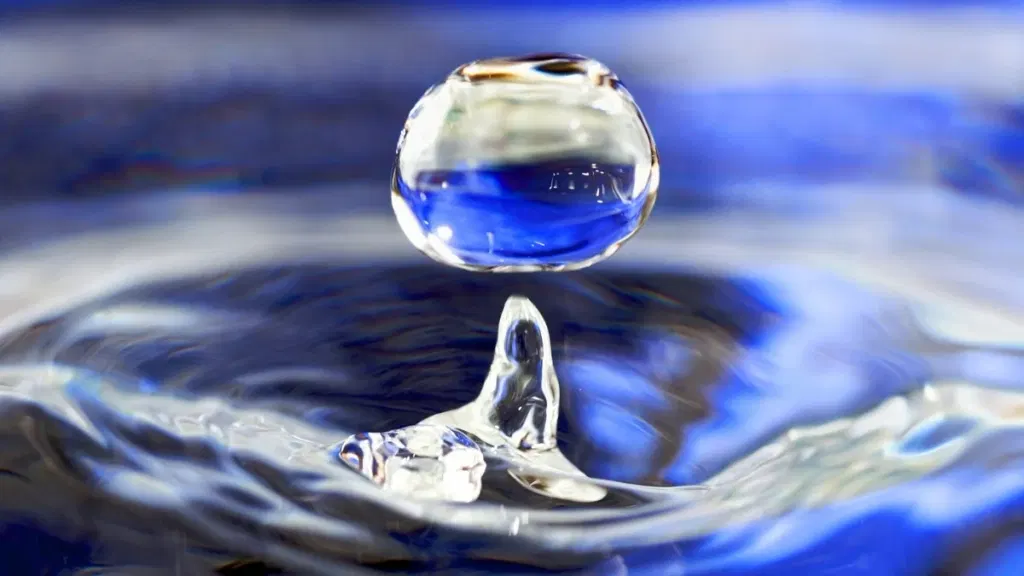
Scientists Create a New Form of Ice at More Than 2,000 °C Physics09 September 2026By Michelle Starr Add ScienceAlert on Google If just considered as a liquid, water is extremely weird. (José Manuel Suárez/Wikimedia Commons/CC BY 2.0) Water is one of the most commonplace, essential substances in the human world.We literally can't function without its properties as a near-universal solvent. It falls from the sky. We bathe in it, drink it, and immerse ourselves in it for fun. if ('undefined' !== typeof window.tmntag && 'undefined' !== typeof window.tmntag.cmd) { tmntag.cmd.push(function () { tmntag.adTag('Purch_Y_C_0_1', false); }); } But if just considered as a liquid, water is extremely weird, behaving in ways completely at odds with other liquids. It becomes less dense when it freezes.
…
Excerpt limited to ~120 words for fair-use compliance. The full article is at ScienceAlert.
Discussion
0 commentsMore from ScienceAlert