
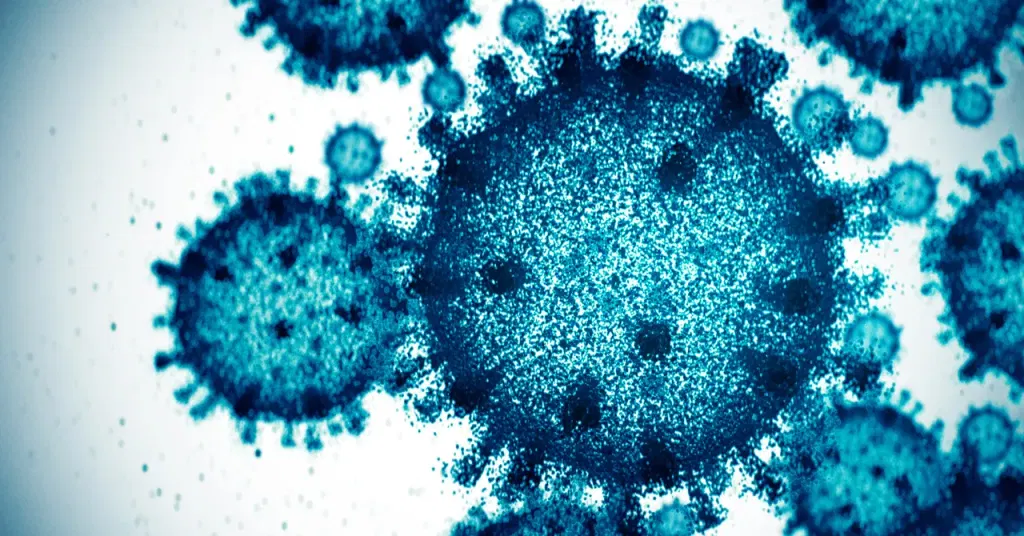
Scientists Used AI to Create 16 New Viruses
Fernanda GonzálezScienceAug 7, 2026 10:13 AMScientists Used AI to Create 16 New VirusesThe use of AI systems to create viruses opens up new possibilities for combating bacterial resistance. This breakthrough opens up new possibilities for combating bacterial resistance. They were then introduced into E. coli bacteria to test whether they were capable of producing functional viruses.Of the 300 synthesized genomes, only 16 gave rise to fully functional bacteriophages, featuring previously unpublished sequences, different genes, new regulatory elements, and even varying genome sizes.
- ▪Fernanda GonzálezScienceAug 7, 2026 10:13 AMScientists Used AI to Create 16 New VirusesThe use of AI systems to create viruses opens up new possibilities for combating bacterial resistance.
- ▪This breakthrough opens up new possibilities for combating bacterial resistance.
- ▪They were then introduced into E. coli bacteria to test whether they were capable of producing functional viruses.Of the 300 synthesized genomes, only 16 gave rise to fully functional bacteriophages, featuring previously unpublished sequenc
4 outlets in our directory ran this story, first to last over 20 hours. Coverage spans 2 points on the political spectrum — 1 lean left, 2 centre.
- ▪ AI creates 16 new viruses from scratch — CNN
- ▪ AI creates first synthetic viruses — Hacker News (AI / LLM)
- ▪ This A.I. Just Created Viruses Not Found in Nature — NYT — Science
WIRED files mainly under tech. We currently carry 870 of its stories.
Story provenance
Source · retrieval · rights · ranking — open for full record
inspect →
Story provenance
Attribution is not the same as permission. This drawer separates discovery metadata, excerpts, WeSearch-generated summaries, reuse status, and whether the publisher receives the visit. Nothing here claims a legal grant the publisher has not made.
Record
| Original publisher | WIRED |
| Canonical URL | https://www.wired.com/story/scientists-used-ai-to-create-16-new-viruses/ |
| Publication time | Fri, 07 Aug 2026 14:13:57 +0000 |
| Retrieval time | 2026-08-07T14:20:44.335Z |
| Last seen | 2026-08-07T14:20:44.335Z |
| Headline source | Publisher (no WeSearch rewrite) |
| Excerpt source | publisher body |
| Excerpt method | First ~120 words (~800 chars) of extracted publisher body, fair-use limited. |
| Summary | WeSearch · cerebras-chat (WeSearch summarizer) |
| Summary source text | contentText |
| Citation coverage | Summary is a WeSearch-generated derivative; primary citation is the original publisher URL. |
| Cluster | KsQI6vQDPLaP · 4 stories |
| Cluster logic | Grouped by semantic title/content similarity across sources within a rolling window. Same-publisher template collisions are excluded from coverage comparison. |
| Ranking reason | Story pages are not engagement-ranked. Hub feeds use recency, with optional source-diversified chronological ordering (cap consecutive stories per source). No personalized ranking. |
| Publisher visit | Yes — open original |
| Substitutes article? | No — link-out required for full text |
Rights status (four layers)
WeSearch handling by dimension
| Indexing | May the item be indexed (stored, ranked, made findable)? | Allowed |
| Snippet | May a short excerpt of the publisher's text be shown? | Allowed |
| AI summary | May WeSearch generate its own short summary of the article? | Limited |
| Retrieval / RAG | May the content be exposed for third-party retrieval-augmented generation? | Not asserted |
| Model training | May the content be used to train AI models? | Not asserted |
| Commercial reuse | May the content be reused commercially? | Not permitted |
Basis: Derived from the published RSS/Atom feed. Contact: [email protected]. Reviewed: 2026-07-24.
Opening excerpt (first ~120 words) tap to expand
Fernanda GonzálezScienceAug 7, 2026 10:13 AMScientists Used AI to Create 16 New VirusesThe use of AI systems to create viruses opens up new possibilities for combating bacterial resistance. It also raises concerns about the pace at which technology is outstripping regulation.Photograph: Getty ImagesCommentLoaderSave StorySave this storyCommentLoaderSave StorySave this storyFor the first time, an artificial intelligence system has created a series of previously unknown viruses capable of infecting and eliminating certain types of bacteria. This breakthrough opens up new possibilities for combating bacterial resistance.
…
Excerpt limited to ~120 words for fair-use compliance. The full article is at WIRED.
Discussion
0 commentsMore from WIRED


.jpg&w=320)

