Shangri-La 2026: US heft, Chinese reluctance, Indian reckoning
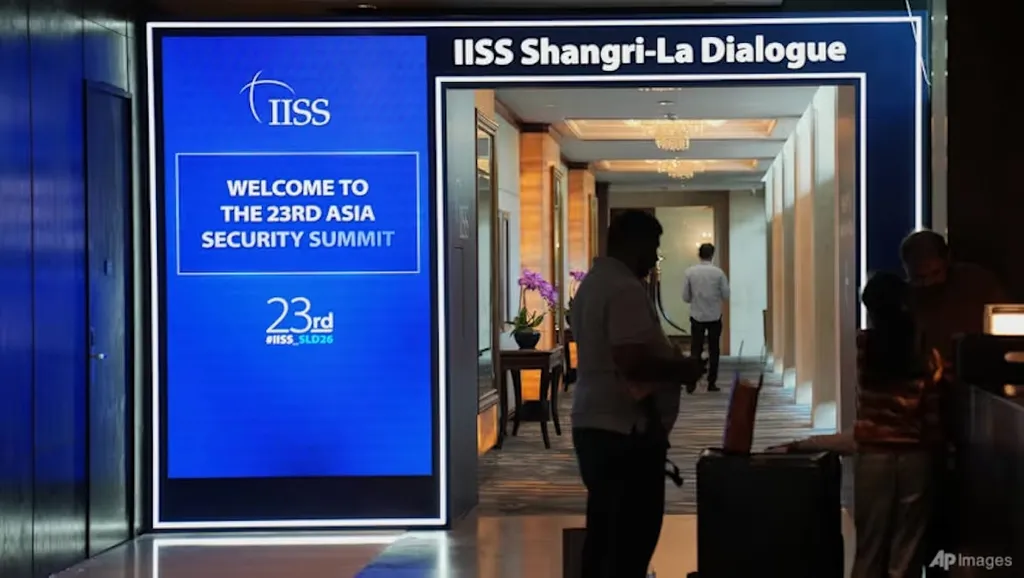
The Shangri-La Dialogue in Singapore serves as a significant platform for discussing the Indo-Pacific strategic order. The 2026 edition highlights the contrasting positions of the United States, China, and India in regional security dynamics. While the U.S. maintains its dominant presence, China faces challenges in participating effectively due to internal issues, and India is beginning to recognize its strategic importance in this context.
- ▪The Shangri-La Dialogue is in its 23rd year and is a key indicator of Asia's regional power dynamics.
- ▪The United States continues to assert its role as the primary security provider in the Indo-Pacific despite domestic political challenges.
- ▪China's military power is significant, yet it struggles to engage comfortably at the forum due to ongoing corruption investigations within its defense leadership.
Asia Times files mainly under world. We currently carry 150 of its stories.
Story provenance
Source · retrieval · rights · ranking — open for full record
inspect →
Attribution is not the same as permission. This drawer separates discovery metadata, excerpts, WeSearch-generated summaries, reuse status, and whether the publisher receives the visit. Nothing here claims a legal grant the publisher has not made.
Record
| Original publisher | Asia Times |
| Canonical URL | https://asiatimes.com/2026/05/shangri-la-2026-us-heft-chinese-reluctance-indian-reckoning/ |
| Publication time | Fri, 29 May 2026 16:14:42 +0000 |
| Retrieval time | 2026-05-29T16:20:02.338Z |
| Last seen | 2026-05-29T16:20:02.338Z |
| Headline source | Publisher (no WeSearch rewrite) |
| Excerpt source | publisher body |
| Excerpt method | First ~120 words (~800 chars) of extracted publisher body, fair-use limited. |
| Summary | WeSearch · cerebras-chat (WeSearch summarizer) |
| Summary source text | contentText |
| Citation coverage | Summary is a WeSearch-generated derivative; primary citation is the original publisher URL. |
| Cluster | wkyBxoa-vP32 |
| Cluster logic | Grouped by semantic title/content similarity across sources within a rolling window. Same-publisher template collisions are excluded from coverage comparison. |
| Ranking reason | Story pages are not engagement-ranked. Hub feeds use recency, with optional source-diversified chronological ordering (cap consecutive stories per source). No personalized ranking. |
| Publisher visit | Yes — open original |
| Substitutes article? | No — link-out required for full text |
Rights status (four layers)
WeSearch handling by dimension
| Indexing | May the item be indexed (stored, ranked, made findable)? | Allowed |
| Snippet | May a short excerpt of the publisher's text be shown? | Allowed |
| AI summary | May WeSearch generate its own short summary of the article? | Limited |
| Retrieval / RAG | May the content be exposed for third-party retrieval-augmented generation? | Not asserted |
| Model training | May the content be used to train AI models? | Not asserted |
| Commercial reuse | May the content be reused commercially? | Not permitted |
Basis: Derived from the published RSS/Atom feed. Contact: [email protected]. Reviewed: 2026-07-24.
Opening excerpt (first ~120 words) tap to expand
Every year, in a gleaming hotel ballroom in Singapore, the Indo-Pacific strategic order gets set for a public display. This happens not through signing of communiqués or conventions but through who shows up, at what level, and what they dare to say in front of an “unscripted” audience. This is what makes Shangri-La Dialogue, now in its 23rd year, the most talked of barometer of Asia’s regional power equations. And the 2026 edition this weekend is unfolding this story of an unequal triangle – with radically different levels of confidence, comfort, and clarity guiding their engagement. The United States sits at its apex – not because anyone voted for it, but because no one has successfully challenged it so far.
…
Excerpt limited to ~120 words for fair-use compliance. The full article is at Asia Times.
Discussion
0 commentsMore from Asia Times