
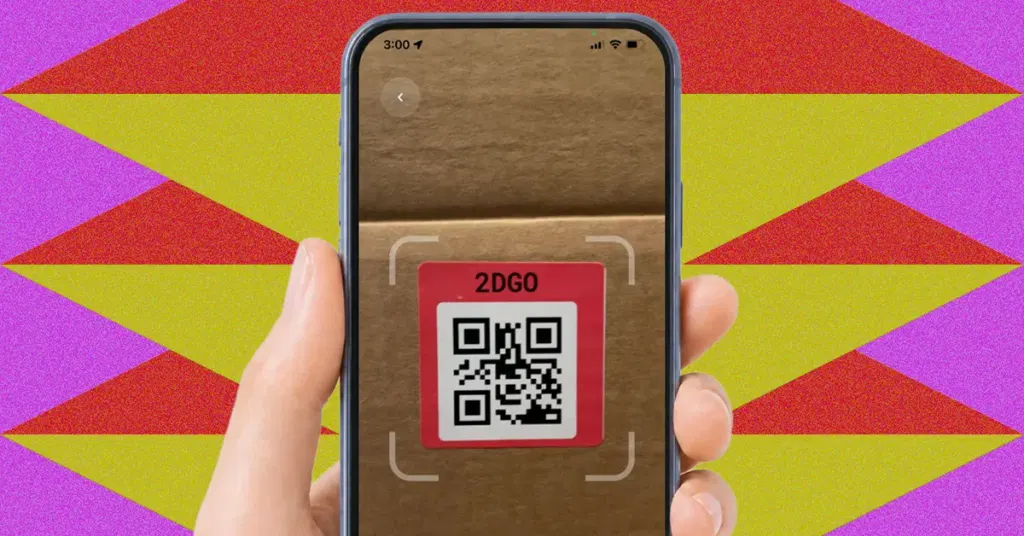
SmartLabels QR Code Organizing System Review (2026): AI Made Sense of My Junk Drawer
SmartLabels is a $20 QR code organizing system that uses a companion app to create a digital inventory of household items. The AI-powered app scans photos of stored contents to generate itemized lists with estimated values, though it occasionally misidentifies objects. While the system is affordable and easy to use, its effectiveness relies heavily on the user consistently updating the app when items are moved or added.
- ▪SmartLabels costs $20 per pack and includes 48 unique QR code stickers for labeling storage bins.
- ▪The free companion app uses AI to photograph and catalog items, assigning estimated monetary values to each.
- ▪A premium subscription costs $15 per year and provides exportable PDFs and spreadsheets of the inventory.
- ▪The system requires users to manually update the app whenever items are moved or new products are added to maintain accuracy.
WIRED files mainly under tech. We currently carry 898 of its stories.
Story provenance
Source · retrieval · rights · ranking — open for full record
inspect →
Story provenance
Attribution is not the same as permission. This drawer separates discovery metadata, excerpts, WeSearch-generated summaries, reuse status, and whether the publisher receives the visit. Nothing here claims a legal grant the publisher has not made.
Record
| Original publisher | WIRED |
| Canonical URL | https://www.wired.com/review/smartlabels-qr-code-organizing-system/ |
| Publication time | Wed, 23 Sep 2026 10:39:00 +0000 |
| Retrieval time | 2026-09-23T10:44:30.532Z |
| Last seen | 2026-09-23T10:44:30.532Z |
| Headline source | Publisher (no WeSearch rewrite) |
| Excerpt source | publisher body |
| Excerpt method | First ~120 words (~800 chars) of extracted publisher body, fair-use limited. |
| Summary | WeSearch · cerebras-chat (WeSearch summarizer) |
| Summary source text | contentText |
| Citation coverage | Summary is a WeSearch-generated derivative; primary citation is the original publisher URL. |
| Cluster | pRhMTmAhFc2R · 1 stories |
| Cluster logic | Grouped by semantic title/content similarity across sources within a rolling window. Same-publisher template collisions are excluded from coverage comparison. |
| Ranking reason | Story pages are not engagement-ranked. Hub feeds use recency, with optional source-diversified chronological ordering (cap consecutive stories per source). No personalized ranking. |
| Publisher visit | Yes — open original |
| Substitutes article? | No — link-out required for full text |
Rights status (four layers)
WeSearch handling by dimension
| Indexing | May the item be indexed (stored, ranked, made findable)? | Allowed |
| Snippet | May a short excerpt of the publisher's text be shown? | Allowed |
| AI summary | May WeSearch generate its own short summary of the article? | Limited |
| Retrieval / RAG | May the content be exposed for third-party retrieval-augmented generation? | Not asserted |
| Model training | May the content be used to train AI models? | Not asserted |
| Commercial reuse | May the content be reused commercially? | Not permitted |
Basis: Derived from the published RSS/Atom feed. Contact: [email protected]. Reviewed: 2026-07-24.
Opening excerpt (first ~120 words) tap to expand
Alexis BergerGearSep 23, 2026 6:39 AMReview: SmartLabels QR Code Organizing SystemI used AI and QR codes to inventory my junk drawer, keepsakes, and other easily forgotten belongings.Courtesy of SmartLabelsTriangleUpBuy NowMultiple Buying Options Available$20 at Amazon$20 at Walmart$19 at SmartLabelsCommentLoaderSave StorySave this storyCommentLoaderSave StorySave this storyRating:8/10Open rating explainerInformationWIREDEasy to use and genuinely helpful for specific cases. Companion app’s search function works well. Affordable at $20 per pack.TIREDOnly useful if you update the app whenever you move or add an item. Photo-scanning technology makes some errors. Stickers can leave residue.A key ingredient to feeling organized is having a space that’s organized.
…
Excerpt limited to ~120 words for fair-use compliance. The full article is at WIRED.
Discussion
0 commentsMore from WIRED


