So Long, CHU, and Thanks for All the Time Signals
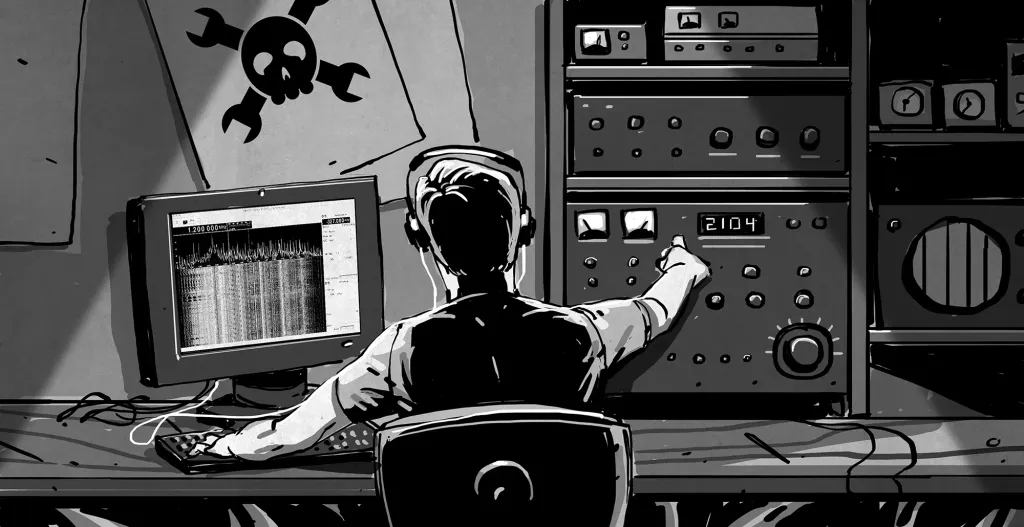
The Canadian time signal station CHU will cease operations on June 22, 2026, after providing time signals since 1923. Originally transmitting in Morse code, CHU evolved to include a speaking clock and digital time codes. While the closure is a cost-saving measure by the Government of Canada, many will miss the iconic time signals.
- ▪CHU has been broadcasting time signals since its establishment in 1923.
- ▪The station will go dark on June 22, 2026, after nearly a century of service.
- ▪Listeners can still request QSL cards before the station shuts down.
Hackaday files mainly under tech. We currently carry 211 of its stories.
Story provenance
Source · retrieval · rights · ranking — open for full record
inspect →
Story provenance
Attribution is not the same as permission. This drawer separates discovery metadata, excerpts, WeSearch-generated summaries, reuse status, and whether the publisher receives the visit. Nothing here claims a legal grant the publisher has not made.
Record
| Original publisher | Hackaday |
| Canonical URL | https://hackaday.com/2026/05/27/so-long-chu-and-thanks-for-all-the-time-signals/ |
| Publication time | Wed, 27 May 2026 11:00:55 +0000 |
| Retrieval time | 2026-05-27T11:02:59.389Z |
| Last seen | 2026-05-27T11:02:59.389Z |
| Headline source | Publisher (no WeSearch rewrite) |
| Excerpt source | publisher body |
| Excerpt method | First ~120 words (~800 chars) of extracted publisher body, fair-use limited. |
| Summary | WeSearch · cerebras-chat (WeSearch summarizer) |
| Summary source text | contentText |
| Citation coverage | Summary is a WeSearch-generated derivative; primary citation is the original publisher URL. |
| Cluster | DUJa5ioslxiU |
| Cluster logic | Grouped by semantic title/content similarity across sources within a rolling window. Same-publisher template collisions are excluded from coverage comparison. |
| Ranking reason | Story pages are not engagement-ranked. Hub feeds use recency, with optional source-diversified chronological ordering (cap consecutive stories per source). No personalized ranking. |
| Publisher visit | Yes — open original |
| Substitutes article? | No — link-out required for full text |
Rights status (four layers)
WeSearch handling by dimension
| Indexing | May the item be indexed (stored, ranked, made findable)? | Allowed |
| Snippet | May a short excerpt of the publisher's text be shown? | Allowed |
| AI summary | May WeSearch generate its own short summary of the article? | Limited |
| Retrieval / RAG | May the content be exposed for third-party retrieval-augmented generation? | Not asserted |
| Model training | May the content be used to train AI models? | Not asserted |
| Commercial reuse | May the content be reused commercially? | Not permitted |
Basis: Derived from the published RSS/Atom feed. Contact: [email protected]. Reviewed: 2026-07-24.
Opening excerpt (first ~120 words) tap to expand
So Long, CHU, And Thanks For All The Time Signals No comments by: Tyler August May 27, 2026 Title: Copy Short Link: Copy In the long ago, pre-internet days when your clock project wasn’t an ESP32 getting its timing via NTP over WiFi, it was still possible to build a wirelessly-updating clock. All you needed was a shortwave receiver tuned to a time signal — perhaps like the National Research Council of Canada’s CHU, found on the dial at 3330, 7850, and 14 670 kHz. At least, it can be found at those frequencies until June 22nd, 2026, when the station will finally go dark. Depending where you were on Earth, it might have been easier to tune into CHU than the United States based WWVB, or one of the various European signals like DF44 or the UK’s MSF.
…
Excerpt limited to ~120 words for fair-use compliance. The full article is at Hackaday.
Discussion
0 commentsMore from Hackaday