Sony’s Bravia 9 II is Most Colorful We’ve Seen. Is That Enough to Drop QLED?
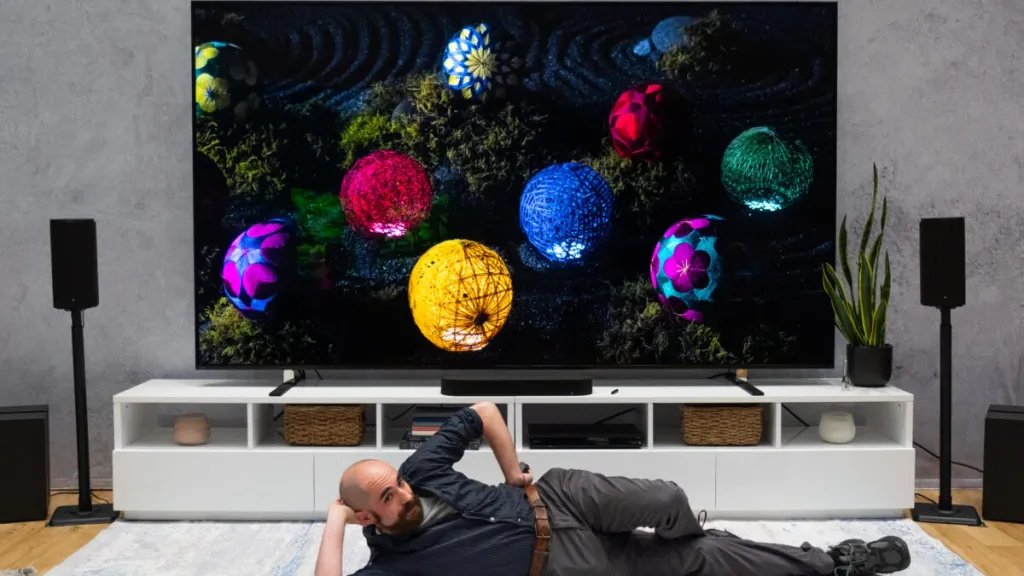
Sony has introduced its new Bravia 9 II RGB TV, which features a vivid picture quality that some may find unrealistic. The company claims that its 'True RGB' technology offers superior color accuracy and brightness compared to previous models. However, the effectiveness of the picture quality may depend on the settings used.
- ▪The Bravia 9 II boasts twice the color volume of the older Bravia 9 QLED.
- ▪It can maintain picture quality at nearly 80-degree angles and offers a peak brightness of 4,000 nits.
- ▪The Bravia 7 II, while using the same RGB technology, lacks some features of the Bravia 9 II, such as the antireflection filter.
Gizmodo files mainly under tech. We currently carry 644 of its stories.
Story provenance
Source · retrieval · rights · ranking — open for full record
inspect →
Story provenance
Attribution is not the same as permission. This drawer separates discovery metadata, excerpts, WeSearch-generated summaries, reuse status, and whether the publisher receives the visit. Nothing here claims a legal grant the publisher has not made.
Record
| Original publisher | Gizmodo |
| Canonical URL | https://gizmodo.com/sonys-bravia-9-ii-is-most-colorful-weve-seen-is-that-enough-to-drop-qled-2000763915 |
| Publication time | Wed, 27 May 2026 16:05:10 +0000 |
| Retrieval time | 2026-05-27T16:08:01.779Z |
| Last seen | 2026-05-27T16:08:01.779Z |
| Headline source | Publisher (no WeSearch rewrite) |
| Excerpt source | publisher body |
| Excerpt method | First ~120 words (~800 chars) of extracted publisher body, fair-use limited. |
| Summary | WeSearch · cerebras-chat (WeSearch summarizer) |
| Summary source text | contentText |
| Citation coverage | Summary is a WeSearch-generated derivative; primary citation is the original publisher URL. |
| Cluster | 4ScbD48QyTin |
| Cluster logic | Grouped by semantic title/content similarity across sources within a rolling window. Same-publisher template collisions are excluded from coverage comparison. |
| Ranking reason | Story pages are not engagement-ranked. Hub feeds use recency, with optional source-diversified chronological ordering (cap consecutive stories per source). No personalized ranking. |
| Publisher visit | Yes — open original |
| Substitutes article? | No — link-out required for full text |
Rights status (four layers)
WeSearch handling by dimension
| Indexing | May the item be indexed (stored, ranked, made findable)? | Allowed |
| Snippet | May a short excerpt of the publisher's text be shown? | Allowed |
| AI summary | May WeSearch generate its own short summary of the article? | Limited |
| Retrieval / RAG | May the content be exposed for third-party retrieval-augmented generation? | Not asserted |
| Model training | May the content be used to train AI models? | Not asserted |
| Commercial reuse | May the content be reused commercially? | Not permitted |
Basis: Derived from the published RSS/Atom feed. Contact: [email protected]. Reviewed: 2026-07-24.
Opening excerpt (first ~120 words) tap to expand
There’s a small voice in the back of my head squeaking with indignation, telling me that turmeric is not nearly as yellow as what I see in front of me. What appears on the screen of Sony’s new Bravia 9 II RGB TV looks more like nuclear dust. While cinephiles will likely be quite interested in “True RGB,” Sony’s upcoming replacement for its premium QLEDs, they may not be prepared for just how vivid this “vivid” picture is. I came out of two hours staring at the picture on Sony’s new Bravia 9 II and Bravia 7 II, sporting its new “True RGB,” with a nagging sense of déjà vu. Two months ago, I exited Samsung’s Micro RGB showcase wondering whether these novel TV forms were so focused on pushing color that they were making images seem unrealistic.
…
Excerpt limited to ~120 words for fair-use compliance. The full article is at Gizmodo.
Discussion
0 commentsMore from Gizmodo