Space Agencies Are Trying to Keep Astronauts From Losing Their Sight
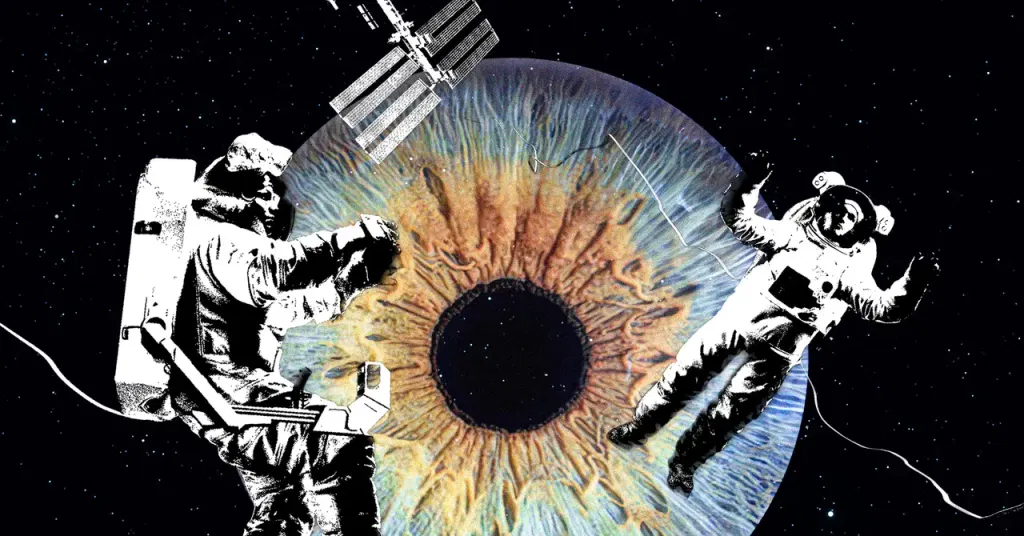
“The ESA pretty much has the same requirements,” says cofounder and chief technology officer Euan Allen. “It's just in a totally different environment.”Spaceflight-associated neuro-ocular syndrome (SANS) is a collection of eye and brain changes caused by spending prolonged periods in a low-gravity environment, and it impacts around 70 percent of astronauts on the International Space Station, according to NASA. One of the starkest cases is that of NASA astronaut John Phillips, who launched to the ISS in 2005 with 20/20 vision, and splashed down six months later with his vision at 20/100—what’s considered a moderate visual impairment.
- ▪“The ESA pretty much has the same requirements,” says cofounder and chief technology officer Euan Allen.
- ▪“It's just in a totally different environment.”Spaceflight-associated neuro-ocular syndrome (SANS) is a collection of eye and brain changes caused by spending prolonged periods in a low-gravity environment, and it impacts around 70 percent
- ▪One of the starkest cases is that of NASA astronaut John Phillips, who launched to the ISS in 2005 with 20/20 vision, and splashed down six months later with his vision at 20/100—what’s considered a moderate visual impairment.
WIRED files mainly under tech. We currently carry 699 of its stories.
Story provenance
Source · retrieval · rights · ranking — open for full record
inspect →
Story provenance
Attribution is not the same as permission. This drawer separates discovery metadata, excerpts, WeSearch-generated summaries, reuse status, and whether the publisher receives the visit. Nothing here claims a legal grant the publisher has not made.
Record
| Original publisher | WIRED |
| Canonical URL | https://www.wired.com/story/space-agencies-trying-stop-astronauts-losing-sight/ |
| Publication time | Mon, 10 Aug 2026 06:00:00 +0000 |
| Retrieval time | 2026-08-10T06:05:42.052Z |
| Last seen | 2026-08-10T06:05:42.052Z |
| Headline source | Publisher (no WeSearch rewrite) |
| Excerpt source | publisher body |
| Excerpt method | First ~120 words (~800 chars) of extracted publisher body, fair-use limited. |
| Summary | WeSearch · cerebras-chat (WeSearch summarizer) |
| Summary source text | contentText |
| Citation coverage | Summary is a WeSearch-generated derivative; primary citation is the original publisher URL. |
| Cluster | k9-LXGsUgFgV · 1 stories |
| Cluster logic | Grouped by semantic title/content similarity across sources within a rolling window. Same-publisher template collisions are excluded from coverage comparison. |
| Ranking reason | Story pages are not engagement-ranked. Hub feeds use recency, with optional source-diversified chronological ordering (cap consecutive stories per source). No personalized ranking. |
| Publisher visit | Yes — open original |
| Substitutes article? | No — link-out required for full text |
Rights status (four layers)
WeSearch handling by dimension
| Indexing | May the item be indexed (stored, ranked, made findable)? | Allowed |
| Snippet | May a short excerpt of the publisher's text be shown? | Allowed |
| AI summary | May WeSearch generate its own short summary of the article? | Limited |
| Retrieval / RAG | May the content be exposed for third-party retrieval-augmented generation? | Not asserted |
| Model training | May the content be used to train AI models? | Not asserted |
| Commercial reuse | May the content be reused commercially? | Not permitted |
Basis: Derived from the published RSS/Atom feed. Contact: [email protected]. Reviewed: 2026-07-24.
Opening excerpt (first ~120 words) tap to expand
Isabella WardScienceAug 10, 2026 2:00 AMSpace Agencies Are Trying to Keep Astronauts From Losing Their SightA device currently being used to help octogenarians do self-administered eye exams could be part of future space missions to monitor astronauts’ ocular health.Photo-Illustration: Wired Staff; Getty ImagesCommentLoaderSave StorySave this storyCommentLoaderSave StorySave this storyThe European Space Agency is trying to understand why astronauts lose their eyesight in space, in the hope they can figure out how to treat—or even prevent—the condition as looming longer spaceflights heighten the risk of permanent vision damage.The agency has commissioned British eye-scanning startup Siloton to develop a solution ahead of the international Artemis flights to the moon and other deep space…
Excerpt limited to ~120 words for fair-use compliance. The full article is at WIRED.
Discussion
0 commentsMore from WIRED