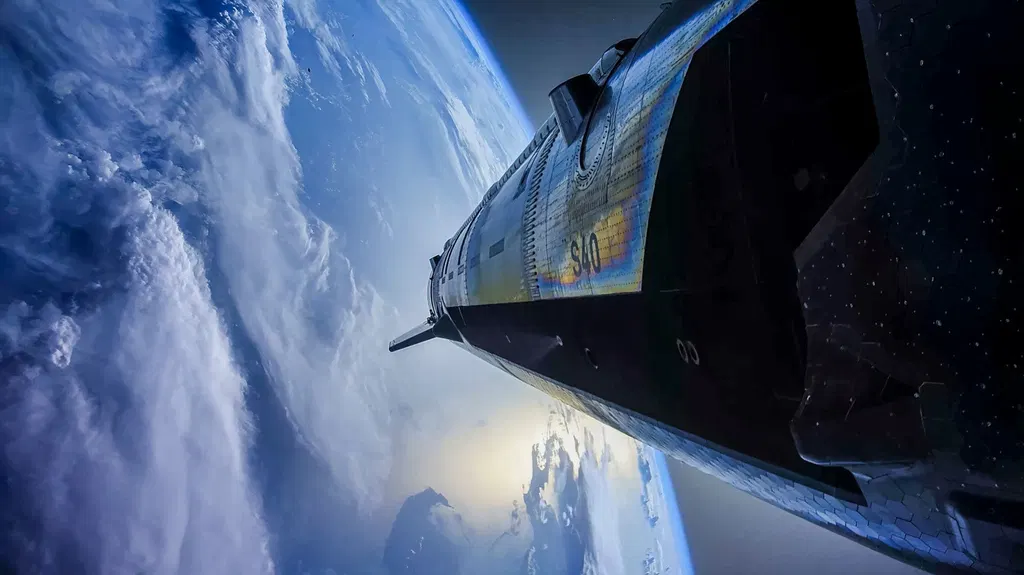
SpaceX targets September 28 for Starship's first orbital flight
SpaceX has scheduled the 14th flight of its Starship rocket for September 28, marking the vehicle's first orbital test. This mission will deploy 26 operational Starlink V3 satellites, significantly boosting the constellation's data capacity. The launch is currently pending regulatory approval and involves a splashdown for the booster and a controlled reentry for the upper stage.
- ▪SpaceX targets September 28 for Starship's 14th flight, which will be its first orbital mission.
- ▪The upper stage will insert 26 Starlink V3 satellites into orbit, providing 1 Tbps of downlink capacity.
- ▪The Super Heavy booster will splash down in the Gulf of Mexico, while the upper stage will reenter the atmosphere near Chile.
- ▪The launch window opens at 8:15 AM Eastern Time and is subject to pending regulatory approval.
Engadget files mainly under tech. We currently carry 775 of its stories.
Story provenance
Source · retrieval · rights · ranking — open for full record
inspect →
Story provenance
Attribution is not the same as permission. This drawer separates discovery metadata, excerpts, WeSearch-generated summaries, reuse status, and whether the publisher receives the visit. Nothing here claims a legal grant the publisher has not made.
Record
| Original publisher | Engadget |
| Canonical URL | https://www.engadget.com/2263238/spacex-targets-september-28-for-the-starships-first-orbital-flight/ |
| Publication time | Sat, 19 Sep 2026 19:45:00 +0000 |
| Retrieval time | 2026-09-19T19:48:46.268Z |
| Last seen | 2026-09-19T19:48:46.268Z |
| Headline source | Publisher (no WeSearch rewrite) |
| Excerpt source | publisher body |
| Excerpt method | First ~120 words (~800 chars) of extracted publisher body, fair-use limited. |
| Summary | WeSearch · cerebras-chat (WeSearch summarizer) |
| Summary source text | contentText |
| Citation coverage | Summary is a WeSearch-generated derivative; primary citation is the original publisher URL. |
| Cluster | 5iwnExu2FQME · 1 stories |
| Cluster logic | Grouped by semantic title/content similarity across sources within a rolling window. Same-publisher template collisions are excluded from coverage comparison. |
| Ranking reason | Story pages are not engagement-ranked. Hub feeds use recency, with optional source-diversified chronological ordering (cap consecutive stories per source). No personalized ranking. |
| Publisher visit | Yes — open original |
| Substitutes article? | No — link-out required for full text |
Rights status (four layers)
WeSearch handling by dimension
| Indexing | May the item be indexed (stored, ranked, made findable)? | Allowed |
| Snippet | May a short excerpt of the publisher's text be shown? | Allowed |
| AI summary | May WeSearch generate its own short summary of the article? | Limited |
| Retrieval / RAG | May the content be exposed for third-party retrieval-augmented generation? | Not asserted |
| Model training | May the content be used to train AI models? | Not asserted |
| Commercial reuse | May the content be reused commercially? | Not permitted |
Basis: Derived from the published RSS/Atom feed. Contact: [email protected]. Reviewed: 2026-07-24.
Opening excerpt (first ~120 words) tap to expand
Tomorrow Space SpaceX targets September 28 for Starship's first orbital flight It will also be the first time the company is adding V3 satellites to the Starlink constellation. By Mariella Moon Sept. 19, 2026 3:45 pm EST SpaceX Add Engadget on Google: Preferred Source Google Discover The next time SpaceX's Starship rocket launches, it will orbit our planet and add Starlink V3 satellites to the company's internet satellite constellation for the first time. SpaceX has now revealed that it's targeting September 28 for the rocket's 14th flight, with a 75-minute launch window opening at 8:15AM Eastern Time. The company was originally planning a September 22 launch, but it announced the new date without an explanation on X, where it also said that it's still pending regulatory approval.
…
Excerpt limited to ~120 words for fair-use compliance. The full article is at Engadget.
Discussion
0 commentsMore from Engadget