Stanford scientists found a way to regrow cartilage and stop arthritis
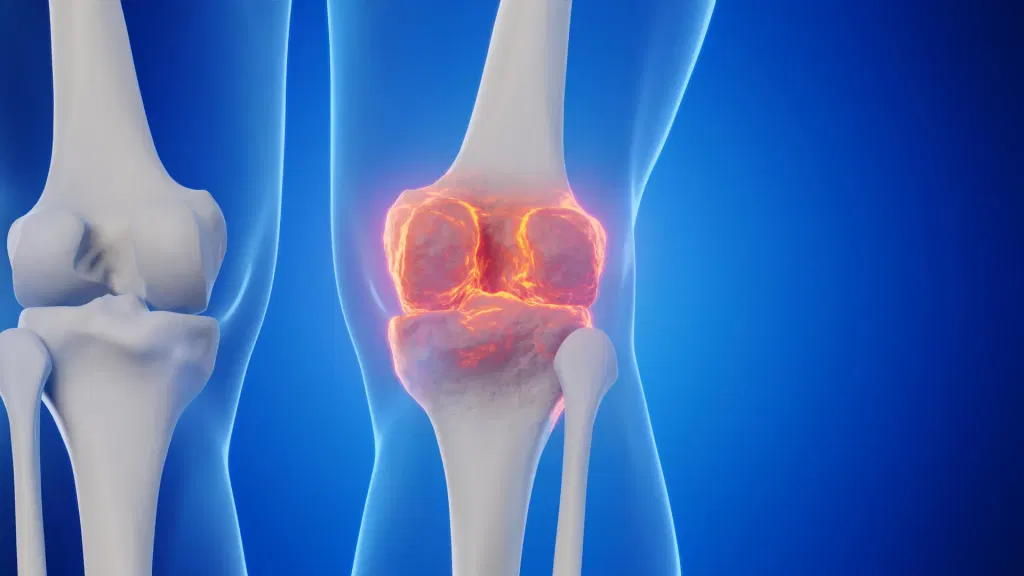
Stanford researchers have identified a method to regrow damaged knee cartilage by blocking the aging-related protein 15-PGDH. In mouse models, this treatment reversed natural cartilage loss and prevented osteoarthritis following knee injuries, while human cartilage samples also began producing new functional tissue. These findings suggest that future therapies could regenerate joint cartilage, potentially reducing the need for surgical joint replacements.
- ▪Blocking the protein 15-PGDH allowed existing cartilage cells to revert to a youthful state and regenerate without the involvement of stem cells.
- ▪The study demonstrated that the treatment restored naturally lost cartilage in old mice and protected them from developing arthritis after ACL-like injuries.
- ▪Human cartilage samples collected from knee replacement surgeries responded to the inhibitor by producing new, functional joint cartilage.
- ▪Osteoarthritis affects approximately one in five adults in the United States and incurs roughly $65 billion in direct health care costs annually.
- ▪The research was published in the journal Science and was led by senior authors Helen Blau and Nidhi Bhutani from Stanford Medicine.
Hacker News (Front Page) files mainly under programming. We currently carry 2,575 of its stories. Top-voted stories on Hacker News.
Story provenance
Source · retrieval · rights · ranking — open for full record
inspect →
Story provenance
Attribution is not the same as permission. This drawer separates discovery metadata, excerpts, WeSearch-generated summaries, reuse status, and whether the publisher receives the visit. Nothing here claims a legal grant the publisher has not made.
Record
| Original publisher | ScienceDaily |
| Canonical URL | https://www.sciencedaily.com/releases/2026/10/261005011249.htm |
| Publication time | Tue, 06 Oct 2026 23:54:35 +0000 |
| Retrieval time | 2026-10-07T00:16:28.041Z |
| Last seen | 2026-10-07T00:16:28.041Z |
| Headline source | Publisher (no WeSearch rewrite) |
| Excerpt source | publisher body |
| Excerpt method | First ~120 words (~800 chars) of extracted publisher body, fair-use limited. |
| Summary | WeSearch · cerebras-chat (WeSearch summarizer) |
| Summary source text | contentText |
| Citation coverage | Summary is a WeSearch-generated derivative; primary citation is the original publisher URL. |
| Cluster | BvzadTKNkOiE · 1 stories |
| Cluster logic | Grouped by semantic title/content similarity across sources within a rolling window. Same-publisher template collisions are excluded from coverage comparison. |
| Ranking reason | Story pages are not engagement-ranked. Hub feeds use recency, with optional source-diversified chronological ordering (cap consecutive stories per source). No personalized ranking. |
| Publisher visit | Yes — open original |
| Substitutes article? | No — link-out required for full text |
Rights status (four layers)
WeSearch handling by dimension
| Indexing | May the item be indexed (stored, ranked, made findable)? | Allowed |
| Snippet | May a short excerpt of the publisher's text be shown? | Allowed |
| AI summary | May WeSearch generate its own short summary of the article? | Limited |
| Retrieval / RAG | May the content be exposed for third-party retrieval-augmented generation? | Not asserted |
| Model training | May the content be used to train AI models? | Not asserted |
| Commercial reuse | May the content be reused commercially? | Not permitted |
Basis: Derived from the published RSS/Atom feed. Contact: [email protected]. Reviewed: 2026-07-24.
Opening excerpt (first ~120 words) tap to expand
Science News from research organizations Goodbye joint replacements? Stanford scientists found a way to regrow cartilage and stop arthritis Scientists have found a way to rejuvenate existing cartilage cells, regrow damaged knee cartilage, and potentially open a path toward treating arthritis without joint replacement. Date: October 6, 2026 Source: Stanford Medicine Summary: Scientists have found a surprising way to regrow damaged knee cartilage by blocking a protein that becomes more abundant with age. In old mice, the treatment restored naturally lost cartilage and also helped prevent osteoarthritis after ACL-like knee injuries, while human cartilage taken from knee replacement patients began producing new, functional joint cartilage after exposure to the same inhibitor.
…
Excerpt limited to ~120 words for fair-use compliance. The full article is at ScienceDaily.
Discussion
0 commentsMore from ScienceDaily