
StubZero: $148,337 RCE in Google Cloud Production
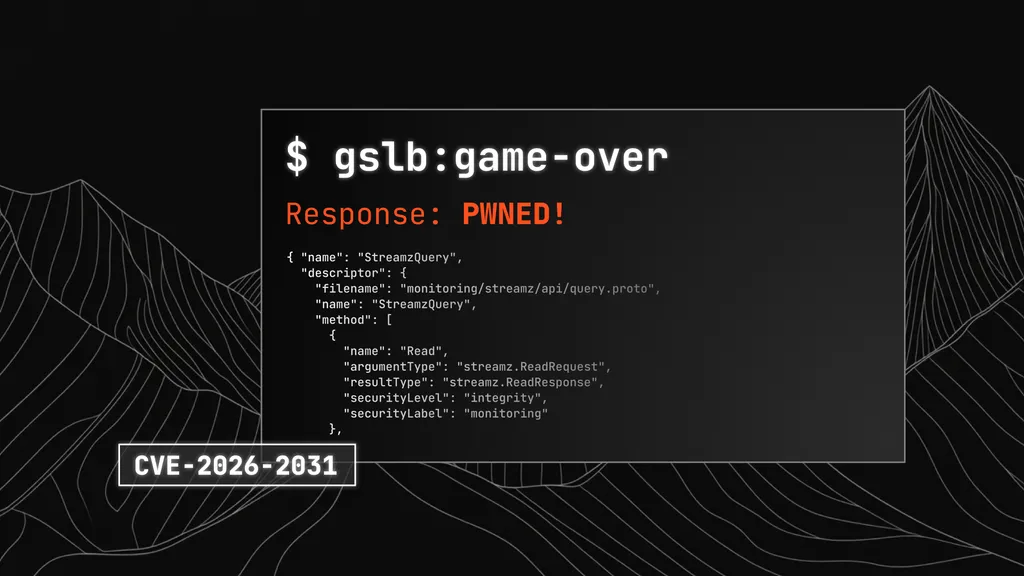
A recent vulnerability in Google Cloud's production environment allowed for remote code execution due to an API information leak. The issue was identified as CVE-2026-2031 and was discovered through automated fuzzing tools. This incident highlights significant security concerns regarding internal API endpoints and their potential exposure of sensitive information.
- ▪The vulnerability was initially detected in an API endpoint responding with status 200 to suspicious requests.
- ▪The endpoint allowed access to internal protobuf definitions, which could disclose sensitive request and response data.
- ▪The issue was exacerbated by the ability to manipulate query parameters to extract further information from the API.
Hacker News (Newest) files mainly under programming. We currently carry 5,306 of its stories.
Story provenance
Source · retrieval · rights · ranking — open for full record
inspect →
Attribution is not the same as permission. This drawer separates discovery metadata, excerpts, WeSearch-generated summaries, reuse status, and whether the publisher receives the visit. Nothing here claims a legal grant the publisher has not made.
Record
| Original publisher | Brutecat |
| Canonical URL | https://brutecat.com/articles/google-cloud-rce/ |
| Publication time | Mon, 25 May 2026 17:31:41 +0000 |
| Retrieval time | 2026-05-25T17:37:39.277Z |
| Last seen | 2026-05-25T17:37:39.277Z |
| Headline source | Publisher (no WeSearch rewrite) |
| Excerpt source | publisher body |
| Excerpt method | First ~120 words (~800 chars) of extracted publisher body, fair-use limited. |
| Summary | WeSearch · cerebras-chat (WeSearch summarizer) |
| Summary source text | contentText |
| Citation coverage | Summary is a WeSearch-generated derivative; primary citation is the original publisher URL. |
| Cluster | kmvdlXeRQjlg |
| Cluster logic | Grouped by semantic title/content similarity across sources within a rolling window. Same-publisher template collisions are excluded from coverage comparison. |
| Ranking reason | Story pages are not engagement-ranked. Hub feeds use recency, with optional source-diversified chronological ordering (cap consecutive stories per source). No personalized ranking. |
| Publisher visit | Yes — open original |
| Substitutes article? | No — link-out required for full text |
Rights status (four layers)
WeSearch handling by dimension
| Indexing | May the item be indexed (stored, ranked, made findable)? | Allowed |
| Snippet | May a short excerpt of the publisher's text be shown? | Allowed |
| AI summary | May WeSearch generate its own short summary of the article? | Limited |
| Retrieval / RAG | May the content be exposed for third-party retrieval-augmented generation? | Not asserted |
| Model training | May the content be used to train AI models? | Not asserted |
| Commercial reuse | May the content be reused commercially? | Not permitted |
Basis: Derived from the published RSS/Atom feed. Contact: [email protected]. Reviewed: 2026-07-24.
Opening excerpt (first ~120 words) tap to expand
What started as a debugging endpoint info leak escalated into full remote code execution on Google Cloud's production environment. Three months later, it happened again. This vulnerability was assigned CVE-2026-2031. This story starts with one of my automated fuzzing tools alerting me about the API cloudcrmipfrontend-pa.googleapis.com, as it was responding with status 200 to some suspicious endpoints. On further inspection, the API seems to have several public debugging endpoints: Screenshot from an internal API explorer tool I built for testing internal Google APIs from a discovery document #req2proto as a Service™Some of the endpoints like GET /v1/integrationPlatform:listServicesByServer seemed to always return internal server error.
…
Excerpt limited to ~120 words for fair-use compliance. The full article is at Brutecat.
Discussion
0 commentsMore from Brutecat


