Taiwan’s more relaxed than most of us about Trumpian deal-making

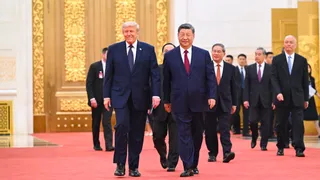
Taiwan appears relatively calm regarding the potential outcomes of the recent Trump-Xi summit, despite global concerns about its future. The Taiwanese government is focused on strengthening its defenses and has recently approved a significant increase in its defense budget. This approach reflects Taiwan's long-standing geopolitical status and its determination to deter any potential aggression from China.
- ▪The summit in Beijing raised fears about Taiwan's future being traded off in US-China negotiations.
- ▪Taiwan's government is working to expand its defense budget to enhance its military capabilities.
- ▪Taiwan's relative calm contrasts with global anxieties about the implications of the Trump-Xi dialogue.
Asia Times files mainly under world. We currently carry 156 of its stories.
Story provenance
Source · retrieval · rights · ranking — open for full record
inspect →
Story provenance
Attribution is not the same as permission. This drawer separates discovery metadata, excerpts, WeSearch-generated summaries, reuse status, and whether the publisher receives the visit. Nothing here claims a legal grant the publisher has not made.
Record
| Original publisher | Asia Times |
| Canonical URL | https://asiatimes.com/2026/05/taiwans-more-relaxed-than-most-of-us-about-trumpian-deal-making/ |
| Publication time | Sat, 30 May 2026 16:09:00 +0000 |
| Retrieval time | 2026-05-30T16:14:38.760Z |
| Last seen | 2026-05-30T16:14:38.760Z |
| Headline source | Publisher (no WeSearch rewrite) |
| Excerpt source | publisher body |
| Excerpt method | First ~120 words (~800 chars) of extracted publisher body, fair-use limited. |
| Summary | WeSearch · cerebras-chat (WeSearch summarizer) |
| Summary source text | contentText |
| Citation coverage | Summary is a WeSearch-generated derivative; primary citation is the original publisher URL. |
| Cluster | 1793IrW4tDBs |
| Cluster logic | Grouped by semantic title/content similarity across sources within a rolling window. Same-publisher template collisions are excluded from coverage comparison. |
| Ranking reason | Story pages are not engagement-ranked. Hub feeds use recency, with optional source-diversified chronological ordering (cap consecutive stories per source). No personalized ranking. |
| Publisher visit | Yes — open original |
| Substitutes article? | No — link-out required for full text |
Rights status (four layers)
WeSearch handling by dimension
| Indexing | May the item be indexed (stored, ranked, made findable)? | Allowed |
| Snippet | May a short excerpt of the publisher's text be shown? | Allowed |
| AI summary | May WeSearch generate its own short summary of the article? | Limited |
| Retrieval / RAG | May the content be exposed for third-party retrieval-augmented generation? | Not asserted |
| Model training | May the content be used to train AI models? | Not asserted |
| Commercial reuse | May the content be reused commercially? | Not permitted |
Basis: Derived from the published RSS/Atom feed. Contact: [email protected]. Reviewed: 2026-07-24.
Opening excerpt (first ~120 words) tap to expand
The most common worry expressed around the world concerning the summit meeting in Beijing on May 14-15 was the fear that the future of Taiwan and its 23 million residents might be traded off in a deal between the men leading the world’s two true superpowers, Xi Jinping and Donald Trump. The American president might soften his country’s support for Taiwan in return for Chinese help in ending the war in Iran. He might get such spectacular promises from Xi of Chinese purchases of soybeans or Boeing aircraft that he would agree to reduce US sales of weapons to Taiwan. As far as we can tell from this secretive summit from which few public statements emerged, no such deal was done.
…
Excerpt limited to ~120 words for fair-use compliance. The full article is at Asia Times.
Discussion
0 commentsMore from Asia Times