Testing how LFP batteries fail when overcharged
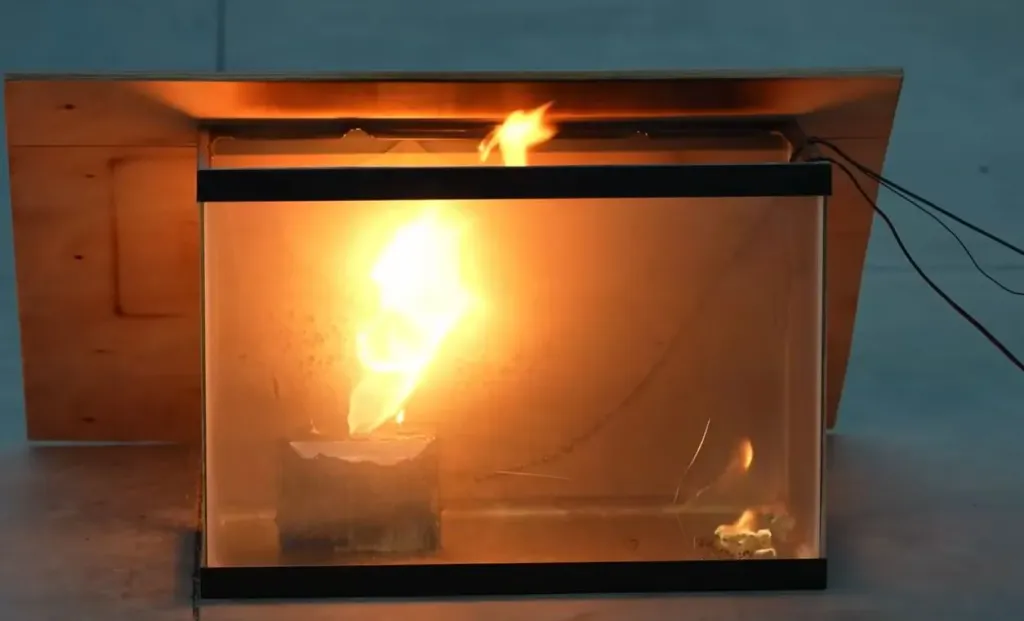
Recent tests have highlighted the risks associated with LiFePO4 (LFP) batteries, particularly when overcharged. A demonstration showed that overcharging a single LFP cell can lead to the release of hydrogen gas, which poses a significant explosion risk. Proper safety measures, such as hydrogen sensors and ventilation, are crucial in commercial settings to mitigate these dangers.
- ▪Overcharging LFP batteries can lead to thermal events and hydrogen gas release.
- ▪A recent test demonstrated the ignition of hydrogen gas from an overcharged LFP cell.
- ▪Hydrogen gas is highly volatile and poses explosion risks, especially in battery storage and nuclear power sectors.
Hacker News (Newest) files mainly under programming. We currently carry 5,306 of its stories.
Story provenance
Source · retrieval · rights · ranking — open for full record
inspect →
Story provenance
Attribution is not the same as permission. This drawer separates discovery metadata, excerpts, WeSearch-generated summaries, reuse status, and whether the publisher receives the visit. Nothing here claims a legal grant the publisher has not made.
Record
| Original publisher | Hackaday |
| Canonical URL | https://hackaday.com/2026/05/28/testing-lfp-battery-failure-modes-with-overcharging/ |
| Publication time | Thu, 28 May 2026 21:15:59 +0000 |
| Retrieval time | 2026-05-28T21:29:38.368Z |
| Last seen | 2026-05-28T21:29:38.368Z |
| Headline source | Publisher (no WeSearch rewrite) |
| Excerpt source | publisher body |
| Excerpt method | First ~120 words (~800 chars) of extracted publisher body, fair-use limited. |
| Summary | WeSearch · cerebras-chat (WeSearch summarizer) |
| Summary source text | contentText |
| Citation coverage | Summary is a WeSearch-generated derivative; primary citation is the original publisher URL. |
| Cluster | hsu48ZrBtPNj |
| Cluster logic | Grouped by semantic title/content similarity across sources within a rolling window. Same-publisher template collisions are excluded from coverage comparison. |
| Ranking reason | Story pages are not engagement-ranked. Hub feeds use recency, with optional source-diversified chronological ordering (cap consecutive stories per source). No personalized ranking. |
| Publisher visit | Yes — open original |
| Substitutes article? | No — link-out required for full text |
Rights status (four layers)
WeSearch handling by dimension
| Indexing | May the item be indexed (stored, ranked, made findable)? | Allowed |
| Snippet | May a short excerpt of the publisher's text be shown? | Allowed |
| AI summary | May WeSearch generate its own short summary of the article? | Limited |
| Retrieval / RAG | May the content be exposed for third-party retrieval-augmented generation? | Not asserted |
| Model training | May the content be used to train AI models? | Not asserted |
| Commercial reuse | May the content be reused commercially? | Not permitted |
Basis: Derived from the published RSS/Atom feed. Contact: [email protected]. Reviewed: 2026-07-24.
Opening excerpt (first ~120 words) tap to expand
Testing LFP Battery Failure Modes With Overcharging 21 Comments by: Maya Posch May 28, 2026 Title: Copy Short Link: Copy As great as batteries are, it’s essential to understand their risks and how to keep them from going spicy. Recently there has been a bit of a fuss about the dangers of LiFePO4 (LFP) batteries after someone’s dedicated LFP battery shed got shredded into matchsticks by a hydrogen explosion, following said LFP batteries having a thermal event. The thing about the LFP chemistry is that if it suffers such a thermal event, it generates hydrogen gas, which is one of the most explosion-happy gases known to man. This is demonstrated in a recent video by [Will Prowse].
…
Excerpt limited to ~120 words for fair-use compliance. The full article is at Hackaday.
Discussion
0 commentsMore from Hackaday