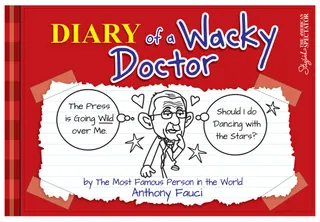
The 30+1 Best Fake Quotes in History
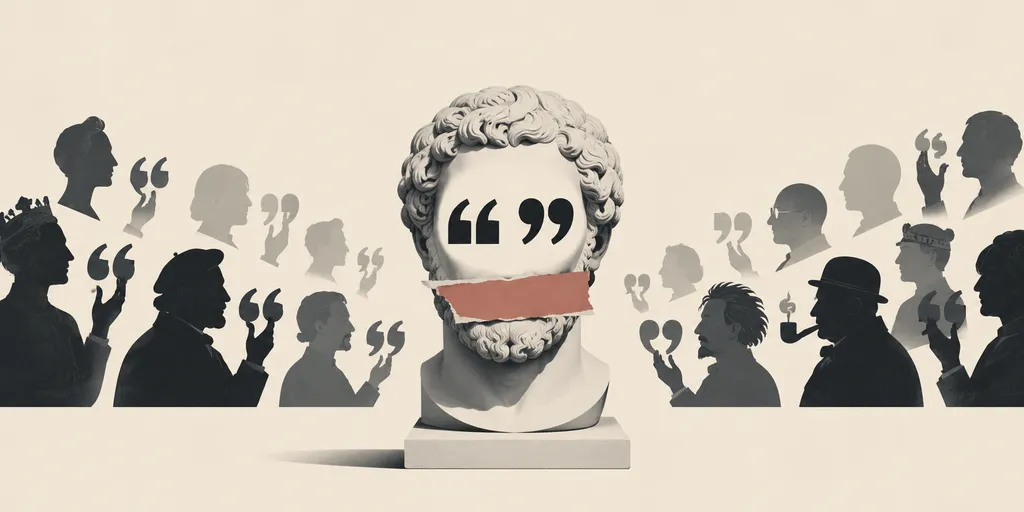
The article discusses the proliferation of fake quotes attributed to famous figures, highlighting the absurdity and humor in some of these misattributions. It features a collection of amusing and fictional quotes from various historical and contemporary personalities. The author reflects on the chaotic nature of quote attribution and its cultural implications.
- ▪There is a growing market for fake quotes that often misattribute sayings to famous figures.
- ▪The article includes a collection of humorous fake quotes from various historical personalities.
- ▪The author suggests that some fake quotes reveal truths that their supposed authors could not have articulated.
The American Spectator files mainly under politics. We currently carry 159 of its stories.
Story provenance
Source · retrieval · rights · ranking — open for full record
inspect →
Story provenance
Attribution is not the same as permission. This drawer separates discovery metadata, excerpts, WeSearch-generated summaries, reuse status, and whether the publisher receives the visit. Nothing here claims a legal grant the publisher has not made.
Record
| Original publisher | The American Spectator | USA News and Politics |
| Canonical URL | https://spectator.org/the-301-best-fake-quotes-in-history/ |
| Publication time | Sat, 23 May 2026 02:07:51 +0000 |
| Retrieval time | 2026-05-23T02:12:53.929Z |
| Last seen | 2026-05-23T02:12:53.929Z |
| Headline source | Publisher (no WeSearch rewrite) |
| Excerpt source | publisher body |
| Excerpt method | First ~120 words (~800 chars) of extracted publisher body, fair-use limited. |
| Summary | WeSearch · cerebras-chat (WeSearch summarizer) |
| Summary source text | contentText |
| Citation coverage | Summary is a WeSearch-generated derivative; primary citation is the original publisher URL. |
| Cluster | xm4zwy_YiRcW |
| Cluster logic | Grouped by semantic title/content similarity across sources within a rolling window. Same-publisher template collisions are excluded from coverage comparison. |
| Ranking reason | Story pages are not engagement-ranked. Hub feeds use recency, with optional source-diversified chronological ordering (cap consecutive stories per source). No personalized ranking. |
| Publisher visit | Yes — open original |
| Substitutes article? | No — link-out required for full text |
Rights status (four layers)
WeSearch handling by dimension
| Indexing | May the item be indexed (stored, ranked, made findable)? | Allowed |
| Snippet | May a short excerpt of the publisher's text be shown? | Allowed |
| AI summary | May WeSearch generate its own short summary of the article? | Limited |
| Retrieval / RAG | May the content be exposed for third-party retrieval-augmented generation? | Not asserted |
| Model training | May the content be used to train AI models? | Not asserted |
| Commercial reuse | May the content be reused commercially? | Not permitted |
Basis: Derived from the published RSS/Atom feed. Contact: [email protected]. Reviewed: 2026-07-24.
Opening excerpt (first ~120 words) tap to expand
There is a growing and worrying market for fake quotes. I have friends who have tattooed their backs with a quote attributed to Diego Armando Maradona, believing it comes from Aristotle. And it’s a plague that is completely out of control. So much so that there are countless fake quotes that are better than the originals, and that reveal truths their supposed authors could never have reached. As a journalist, I like to contribute to the chaos, and that is exactly what I’ve come to do with my own collection (ideal for breakfast mugs, tattoos in Chinese characters, and motivational messages on school and office whiteboards):Adam Smith: “How sad it is that so many people who defend me to the death are incapable of understanding my books.”Albert Einstein: “It is incredible that my theories…
Excerpt limited to ~120 words for fair-use compliance. The full article is at The American Spectator | USA News and Politics.
Discussion
0 comments