The AI Model Confidence Trap
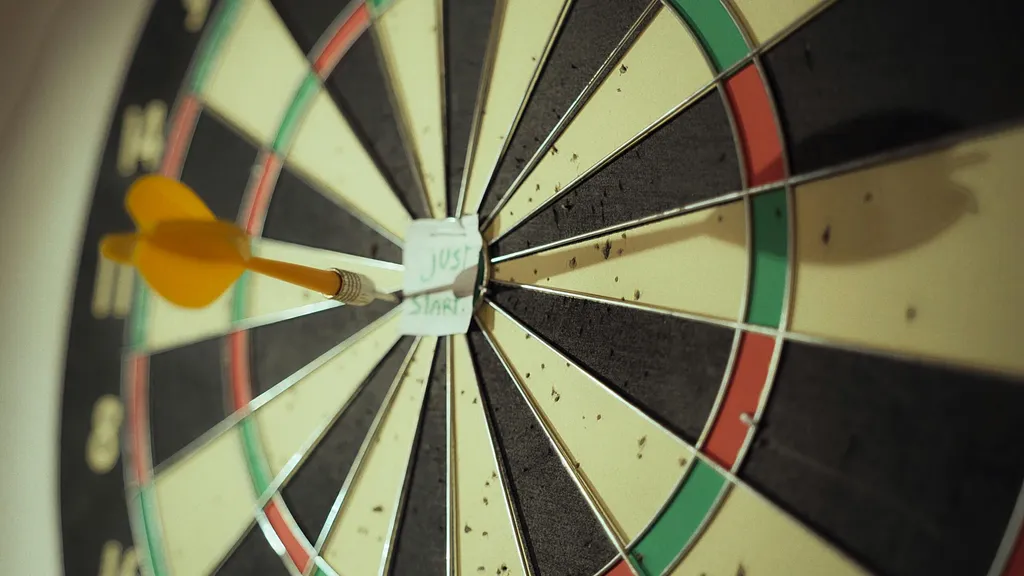
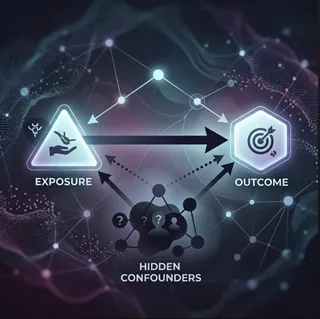
The article discusses the issue of AI model confidence, highlighting how AI systems can present incorrect information with high certainty. It explains that while humans express uncertainty, AI often lacks this nuance, leading to what the author calls the 'confident fool problem.' This phenomenon can result in AI providing misleading answers, especially when faced with unfamiliar situations.
- ▪AI models can present incorrect information with high confidence, leading to misleading conclusions.
- ▪Humans are better at expressing uncertainty compared to AI systems, which often behave overly confident.
- ▪The 'confident fool problem' occurs when AI provides certain answers despite being wrong, particularly with unfamiliar inputs.
Towards Data Science files mainly under ai. We currently carry 90 of its stories.
Story provenance
Source · retrieval · rights · ranking — open for full record
inspect →
Story provenance
Attribution is not the same as permission. This drawer separates discovery metadata, excerpts, WeSearch-generated summaries, reuse status, and whether the publisher receives the visit. Nothing here claims a legal grant the publisher has not made.
Record
| Original publisher | Towards Data Science |
| Canonical URL | https://towardsdatascience.com/the-ai-model-confidence-trap/ |
| Publication time | Tue, 26 May 2026 15:00:00 +0000 |
| Retrieval time | 2026-05-26T15:02:49.913Z |
| Last seen | 2026-05-26T15:02:49.913Z |
| Headline source | Publisher (no WeSearch rewrite) |
| Excerpt source | publisher body |
| Excerpt method | First ~120 words (~800 chars) of extracted publisher body, fair-use limited. |
| Summary | WeSearch · cerebras-chat (WeSearch summarizer) |
| Summary source text | contentText |
| Citation coverage | Summary is a WeSearch-generated derivative; primary citation is the original publisher URL. |
| Cluster | aCsx0SIFeR8w |
| Cluster logic | Grouped by semantic title/content similarity across sources within a rolling window. Same-publisher template collisions are excluded from coverage comparison. |
| Ranking reason | Story pages are not engagement-ranked. Hub feeds use recency, with optional source-diversified chronological ordering (cap consecutive stories per source). No personalized ranking. |
| Publisher visit | Yes — open original |
| Substitutes article? | No — link-out required for full text |
Rights status (four layers)
WeSearch handling by dimension
| Indexing | May the item be indexed (stored, ranked, made findable)? | Allowed |
| Snippet | May a short excerpt of the publisher's text be shown? | Allowed |
| AI summary | May WeSearch generate its own short summary of the article? | Limited |
| Retrieval / RAG | May the content be exposed for third-party retrieval-augmented generation? | Not asserted |
| Model training | May the content be used to train AI models? | Not asserted |
| Commercial reuse | May the content be reused commercially? | Not permitted |
Basis: Derived from the published RSS/Atom feed. Contact: [email protected]. Reviewed: 2026-07-24.
Opening excerpt (first ~120 words) tap to expand
Machine Learning The AI Model Confidence Trap Why your AI model can be wrong with 99% confidence Sara A. Metwalli May 26, 2026 7 min read Share Image by Houssam benamara from Pexels Last year, I was feeling a bit whimsical on a Saturday and decided to ask ChatGPT a fairly simple question: “Who won the Nobel Prize in Physics in 2025?” ChatGPT responded immediately: “The 2025 Nobel Prize in Physics was awarded to…” It even provided names, research areas, and an explanation of the specific research that earned them the Nobel Prize! There was just one problem—a very small one, actually. The Nobel Prize had not yet been announced.
…
Excerpt limited to ~120 words for fair-use compliance. The full article is at Towards Data Science.
Discussion
0 commentsMore from Towards Data Science