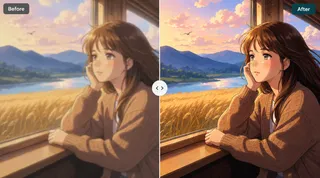
The Art of Dithering and Retro Shading for the Web

The article discusses the author's experience in building a personal website and incorporating 3D work to showcase shader and WebGL skills. It emphasizes the importance of post-processing effects, particularly retro techniques like dithering, in enhancing visual appeal. The author aims to share insights on these techniques and their application in modern web design.
- ▪The author built a personal website to showcase their shader and WebGL skills.
- ▪Post-processing effects, especially retro techniques like dithering, play a crucial role in enhancing visual appeal.
- ▪Dithering originated as a graphics technique to create the illusion of more colors and smooth gradients in early digital media.
Hacker News (Newest) files mainly under programming. We currently carry 5,306 of its stories.
Story provenance
Source · retrieval · rights · ranking — open for full record
inspect →
Attribution is not the same as permission. This drawer separates discovery metadata, excerpts, WeSearch-generated summaries, reuse status, and whether the publisher receives the visit. Nothing here claims a legal grant the publisher has not made.
Record
| Original publisher | The Blog of Maxime Heckel |
| Canonical URL | https://blog.maximeheckel.com/posts/the-art-of-dithering-and-retro-shading-web/ |
| Publication time | Sat, 23 May 2026 18:25:21 +0000 |
| Retrieval time | 2026-05-23T18:37:27.620Z |
| Last seen | 2026-05-23T18:37:27.620Z |
| Headline source | Publisher (no WeSearch rewrite) |
| Excerpt source | publisher body |
| Excerpt method | First ~120 words (~800 chars) of extracted publisher body, fair-use limited. |
| Summary | WeSearch · cerebras-chat (WeSearch summarizer) |
| Summary source text | contentText |
| Citation coverage | Summary is a WeSearch-generated derivative; primary citation is the original publisher URL. |
| Cluster | 0fHxhReS1FPw |
| Cluster logic | Grouped by semantic title/content similarity across sources within a rolling window. Same-publisher template collisions are excluded from coverage comparison. |
| Ranking reason | Story pages are not engagement-ranked. Hub feeds use recency, with optional source-diversified chronological ordering (cap consecutive stories per source). No personalized ranking. |
| Publisher visit | Yes — open original |
| Substitutes article? | No — link-out required for full text |
Rights status (four layers)
WeSearch handling by dimension
| Indexing | May the item be indexed (stored, ranked, made findable)? | Allowed |
| Snippet | May a short excerpt of the publisher's text be shown? | Allowed |
| AI summary | May WeSearch generate its own short summary of the article? | Limited |
| Retrieval / RAG | May the content be exposed for third-party retrieval-augmented generation? | Not asserted |
| Model training | May the content be used to train AI models? | Not asserted |
| Commercial reuse | May the content be reused commercially? | Not permitted |
Basis: Derived from the published RSS/Atom feed. Contact: [email protected]. Reviewed: 2026-07-24.
Opening excerpt (first ~120 words) tap to expand
The Art of Dithering and Retro Shading for the WebAug 6, 2024Aug 6, 2024I spent the past few months building my personal website from the ground up, finally taking the time to incorporate some 3D work to showcase my shader and WebGL skills. Throughout this work, I got to truly understand the crucial role that post-processing plays in making a scene actually look good, which brought some resolutions to long-term frustrations I had with my past React Three Fiber and shader projects where my vision wouldn't materialize regardless of the amount of work and care I was putting into them.
…
Excerpt limited to ~120 words for fair-use compliance. The full article is at The Blog of Maxime Heckel.
Discussion
0 commentsMore from The Blog of Maxime Heckel