The cost of Trump-Xi detente will be paid in Myanmar
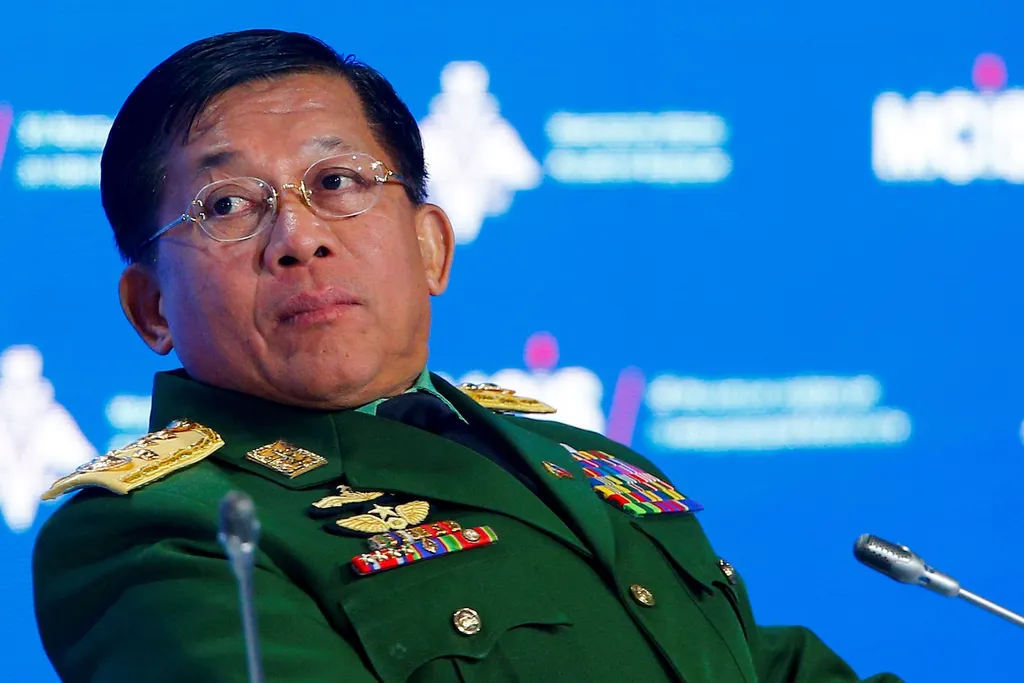
The recent Trump-Xi summit has implications for Myanmar, where military offensives are ongoing. As China seeks stability in the region, its support for the Myanmar junta raises concerns about the impact on local resistance movements. The U.S. focus on trade and tariffs may overlook the complexities of Myanmar's situation, potentially endangering its democratic aspirations.
- ▪Myanmar's military has renewed offensives in strategic border regions amid the Trump-Xi summit.
- ▪China's interests in Myanmar include critical minerals and access to the Indian Ocean, which complicates the local political landscape.
- ▪The U.S. administration's focus on tariffs and trade may signal to the junta that Myanmar is a low-priority crisis.
Asia Times files mainly under world. We currently carry 156 of its stories.
Story provenance
Source · retrieval · rights · ranking — open for full record
inspect →
Attribution is not the same as permission. This drawer separates discovery metadata, excerpts, WeSearch-generated summaries, reuse status, and whether the publisher receives the visit. Nothing here claims a legal grant the publisher has not made.
Record
| Original publisher | Asia Times |
| Canonical URL | https://asiatimes.com/2026/05/the-cost-of-trump-xi-detente-will-be-paid-in-myanmar/ |
| Publication time | Fri, 29 May 2026 01:46:19 +0000 |
| Retrieval time | 2026-05-29T01:49:39.730Z |
| Last seen | 2026-05-29T01:49:39.730Z |
| Headline source | Publisher (no WeSearch rewrite) |
| Excerpt source | publisher body |
| Excerpt method | First ~120 words (~800 chars) of extracted publisher body, fair-use limited. |
| Summary | WeSearch · cerebras-chat (WeSearch summarizer) |
| Summary source text | contentText |
| Citation coverage | Summary is a WeSearch-generated derivative; primary citation is the original publisher URL. |
| Cluster | 10tqbsxhJPKO |
| Cluster logic | Grouped by semantic title/content similarity across sources within a rolling window. Same-publisher template collisions are excluded from coverage comparison. |
| Ranking reason | Story pages are not engagement-ranked. Hub feeds use recency, with optional source-diversified chronological ordering (cap consecutive stories per source). No personalized ranking. |
| Publisher visit | Yes — open original |
| Substitutes article? | No — link-out required for full text |
Rights status (four layers)
WeSearch handling by dimension
| Indexing | May the item be indexed (stored, ranked, made findable)? | Allowed |
| Snippet | May a short excerpt of the publisher's text be shown? | Allowed |
| AI summary | May WeSearch generate its own short summary of the article? | Limited |
| Retrieval / RAG | May the content be exposed for third-party retrieval-augmented generation? | Not asserted |
| Model training | May the content be used to train AI models? | Not asserted |
| Commercial reuse | May the content be reused commercially? | Not permitted |
Basis: Derived from the published RSS/Atom feed. Contact: [email protected]. Reviewed: 2026-07-24.
Opening excerpt (first ~120 words) tap to expand
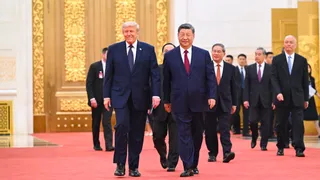
As Donald Trump and Xi Jinping embraced the language of “constructive strategic stability” in Beijing, Myanmar’s war was again showing what calm between great powers can mean at China’s frontier. In May, the Myanmar military renewed offensives toward strategic border regions, including in Kachin State, where mines along the Chinese border produce roughly half of the world’s heavy rare earths. Those mines feed China’s dominant rare-earth supply chain, even as the White House listed Chinese commitments to address rare-earth shortages among the summit’s economic gains. Yet Myanmar was not the main headline from the Trump-Xi summit.
…
Excerpt limited to ~120 words for fair-use compliance. The full article is at Asia Times.
Discussion
0 commentsMore from Asia Times