The Deep Magic of 3D Graphics Perspective
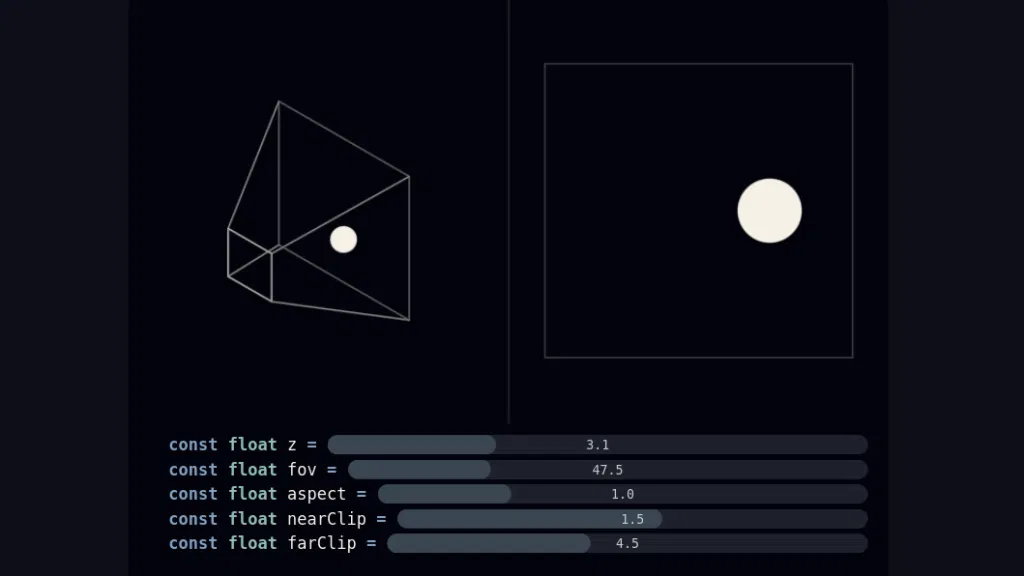
The article explores the mathematical foundations of 3D graphics perspective, noting that the mechanic became standard after its introduction in Super Mario 64. It explains that creating a 3D camera view involves using matrix math to define clipping planes, aspect ratio, and field of view. By dividing X and Y coordinates by the Z coordinate, the system generates a depth effect that makes distant objects appear smaller.
- ▪Super Mario 64 was a landmark title that introduced player-controllable cameras to 3D gaming.
- ▪Implementing 3D perspective from scratch requires understanding matrix math and specific camera parameters.
- ▪The depth effect in 3D graphics is achieved by dividing X and Y coordinates by the Z coordinate.
- ▪The article references an interactive website that uses sliders to demonstrate how changing matrix values affects the visual perspective.
Hackaday files mainly under tech. We currently carry 486 of its stories.
Story provenance
Source · retrieval · rights · ranking — open for full record
inspect →
Story provenance
Attribution is not the same as permission. This drawer separates discovery metadata, excerpts, WeSearch-generated summaries, reuse status, and whether the publisher receives the visit. Nothing here claims a legal grant the publisher has not made.
Record
| Original publisher | Hackaday |
| Canonical URL | https://hackaday.com/2026/09/29/the-deep-magic-of-3d-graphics-perspective/ |
| Publication time | Tue, 29 Sep 2026 23:00:46 +0000 |
| Retrieval time | 2026-09-29T23:02:33.563Z |
| Last seen | 2026-09-29T23:02:33.563Z |
| Headline source | Publisher (no WeSearch rewrite) |
| Excerpt source | publisher body |
| Excerpt method | First ~120 words (~800 chars) of extracted publisher body, fair-use limited. |
| Summary | WeSearch · cerebras-chat (WeSearch summarizer) |
| Summary source text | contentText |
| Citation coverage | Summary is a WeSearch-generated derivative; primary citation is the original publisher URL. |
| Cluster | ldEQCUD80Dcb · 1 stories |
| Cluster logic | Grouped by semantic title/content similarity across sources within a rolling window. Same-publisher template collisions are excluded from coverage comparison. |
| Ranking reason | Story pages are not engagement-ranked. Hub feeds use recency, with optional source-diversified chronological ordering (cap consecutive stories per source). No personalized ranking. |
| Publisher visit | Yes — open original |
| Substitutes article? | No — link-out required for full text |
Rights status (four layers)
WeSearch handling by dimension
| Indexing | May the item be indexed (stored, ranked, made findable)? | Allowed |
| Snippet | May a short excerpt of the publisher's text be shown? | Allowed |
| AI summary | May WeSearch generate its own short summary of the article? | Limited |
| Retrieval / RAG | May the content be exposed for third-party retrieval-augmented generation? | Not asserted |
| Model training | May the content be used to train AI models? | Not asserted |
| Commercial reuse | May the content be reused commercially? | Not permitted |
Basis: Derived from the published RSS/Atom feed. Contact: [email protected]. Reviewed: 2026-07-24.
Opening excerpt (first ~120 words) tap to expand
The Deep Magic Of 3D Graphics Perspective No comments by: Bryan Cockfield September 29, 2026 Title: Copy Short Link: Copy Many of us of a certain age will have had their first true, good 3D video game experience with Super Mario 64. Unlike previous 3D games, the camera was an object controllable by the player, rather than a first-person-ony mode or one where the game tries to guess the best placement for the camera. We might take this mechanic for granted today, but 3D was a new technology at the time that took experimentation before settling on the norms we have today. From a programming perspective, 3D graphics can be a bit of a head-scratcher but [Gabriel] shows that perspective and the camera can be as simple as a few lines of math.
…
Excerpt limited to ~120 words for fair-use compliance. The full article is at Hackaday.
Discussion
0 commentsMore from Hackaday