The Email Of The Future In 1986
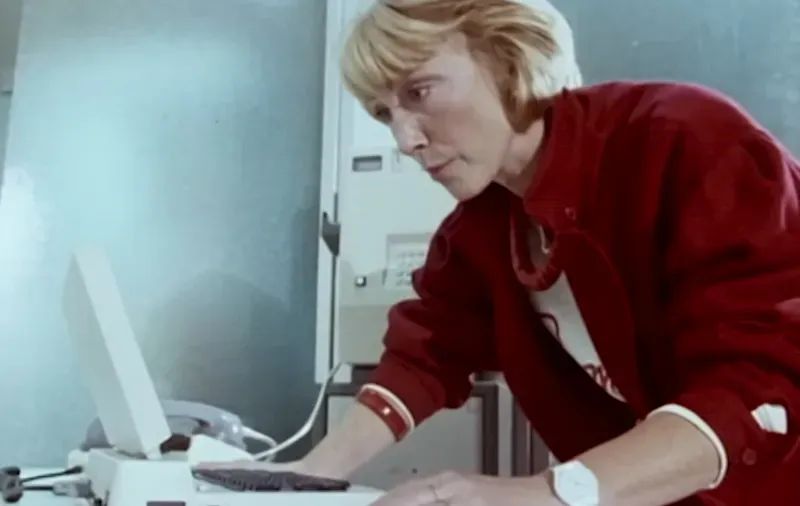
The article reflects on the history of email, particularly focusing on a 1986 demonstration of the technology. It highlights the use of Telecom Gold, a precursor to modern internet-based email services, and the unique quirks of that era. The piece emphasizes how rapidly technology has evolved since then, making past systems seem almost unrecognizable today.
- ▪In 1986, Lesley Judd sent an email using a chunky laptop and an acoustic coupler.
- ▪The email system used was Telecom Gold, a service offered by BT before the internet took over.
- ▪The film showcases various 1980s quirks, such as smoking areas on planes and payphones operating in Guilders.
Hackaday files mainly under tech. We currently carry 211 of its stories.
Story provenance
Source · retrieval · rights · ranking — open for full record
inspect →
Story provenance
Attribution is not the same as permission. This drawer separates discovery metadata, excerpts, WeSearch-generated summaries, reuse status, and whether the publisher receives the visit. Nothing here claims a legal grant the publisher has not made.
Record
| Original publisher | Hackaday |
| Canonical URL | https://hackaday.com/2026/05/24/the-email-of-the-future-in-1986/ |
| Publication time | Mon, 25 May 2026 02:00:00 +0000 |
| Retrieval time | 2026-05-25T02:02:35.279Z |
| Last seen | 2026-05-25T02:02:35.279Z |
| Headline source | Publisher (no WeSearch rewrite) |
| Excerpt source | publisher body |
| Excerpt method | First ~120 words (~800 chars) of extracted publisher body, fair-use limited. |
| Summary | WeSearch · cerebras-chat (WeSearch summarizer) |
| Summary source text | contentText |
| Citation coverage | Summary is a WeSearch-generated derivative; primary citation is the original publisher URL. |
| Cluster | kl-pyX-RUV4j |
| Cluster logic | Grouped by semantic title/content similarity across sources within a rolling window. Same-publisher template collisions are excluded from coverage comparison. |
| Ranking reason | Story pages are not engagement-ranked. Hub feeds use recency, with optional source-diversified chronological ordering (cap consecutive stories per source). No personalized ranking. |
| Publisher visit | Yes — open original |
| Substitutes article? | No — link-out required for full text |
Rights status (four layers)
WeSearch handling by dimension
| Indexing | May the item be indexed (stored, ranked, made findable)? | Allowed |
| Snippet | May a short excerpt of the publisher's text be shown? | Allowed |
| AI summary | May WeSearch generate its own short summary of the article? | Limited |
| Retrieval / RAG | May the content be exposed for third-party retrieval-augmented generation? | Not asserted |
| Model training | May the content be used to train AI models? | Not asserted |
| Commercial reuse | May the content be reused commercially? | Not permitted |
Basis: Derived from the published RSS/Atom feed. Contact: [email protected]. Reviewed: 2026-07-24.
Opening excerpt (first ~120 words) tap to expand
The Email Of The Future In 1986 No comments by: Jenny List May 24, 2026 Title: Copy Short Link: Copy With so many online messaging services to choose from it’s almost as though the daddy of them all, email, has faded into the background as something you only use for more formal contacts. But it’s still the underpinning of much of the business world’s electronic communication and is likely to stay so for the foreseeable future. The BBC Archive takes us back to a time when email was relatively new, when in 1986 [Lesley Judd] takes a very chunky 1980s laptop on a plane from London to the Netherlands, and sends an email to her colleague at home using a payphone and an acoustic coupler.
…
Excerpt limited to ~120 words for fair-use compliance. The full article is at Hackaday.
Discussion
0 commentsMore from Hackaday