The explosion in kids with special educational needs is destroying our schools
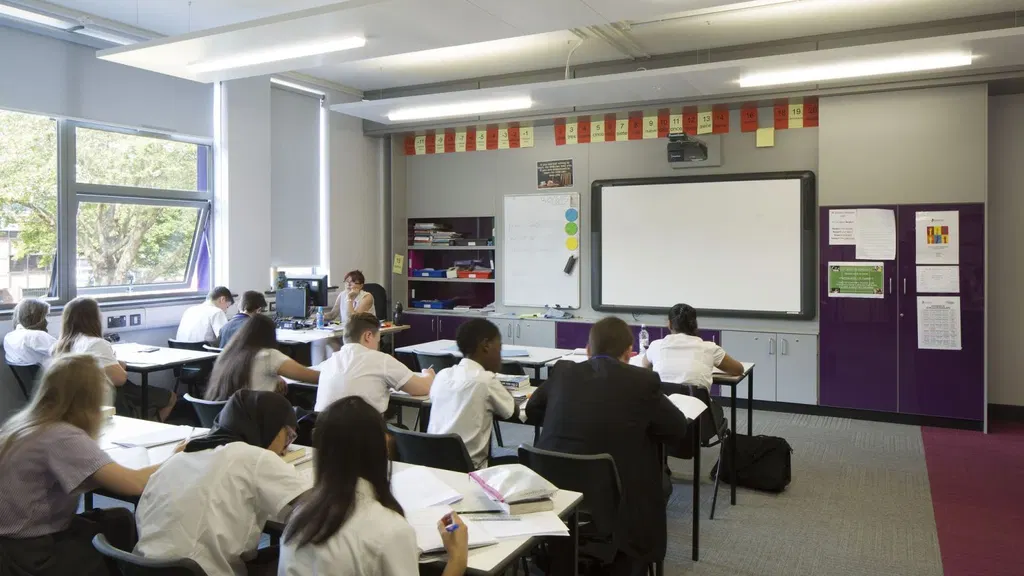
Liverpool Walton has the highest proportion of pupils identified with special educational needs in England, at 32 percent. Dave Clements' new book examines the rapid rise in SEND diagnoses, attributing it to a mix of increased awareness, cultural shifts, and a bureaucratic support system that often fails to deliver appropriate help. The article highlights how educational priorities have moved from fostering academic excellence to managing vulnerability, making SEND a central organising principle for schools.
- ▪The Times reported that Liverpool Walton now has the highest proportion of pupils with special educational needs in England, at 32 percent.
- ▪Clements argues that the rise in SEND diagnoses reflects both better awareness of neurodevelopmental conditions and a cultural trend toward medicalising normal childhood variation.
- ▪The current SEND support system is described as slow, bureaucratic, and often delivering labels without matching interventions.
- ▪Educational policy has shifted from emphasizing gifted and talented programmes to focusing on vulnerability and wellbeing, making SEND a core framework for schools.
Spiked publishes from United Kingdom and files mainly under politics. We currently carry 84 of its stories.
Story provenance
Source · retrieval · rights · ranking — open for full record
inspect →
Story provenance
Attribution is not the same as permission. This drawer separates discovery metadata, excerpts, WeSearch-generated summaries, reuse status, and whether the publisher receives the visit. Nothing here claims a legal grant the publisher has not made.
Record
| Original publisher | spiked |
| Canonical URL | https://www.spiked-online.com/2026/08/06/the-explosion-in-kids-with-special-educational-needs-is-destroying-our-schools/ |
| Publication time | Thu, 06 Aug 2026 04:55:58 +0000 |
| Retrieval time | 2026-08-06T05:10:23.638Z |
| Last seen | 2026-08-06T05:10:23.638Z |
| Headline source | Publisher (no WeSearch rewrite) |
| Excerpt source | publisher body |
| Excerpt method | First ~120 words (~800 chars) of extracted publisher body, fair-use limited. |
| Summary | WeSearch · cerebras-chat (WeSearch summarizer) |
| Summary source text | contentText |
| Citation coverage | Summary is a WeSearch-generated derivative; primary citation is the original publisher URL. |
| Cluster | TmvrTxsDe2jZ · 1 stories |
| Cluster logic | Grouped by semantic title/content similarity across sources within a rolling window. Same-publisher template collisions are excluded from coverage comparison. |
| Ranking reason | Story pages are not engagement-ranked. Hub feeds use recency, with optional source-diversified chronological ordering (cap consecutive stories per source). No personalized ranking. |
| Publisher visit | Yes — open original |
| Substitutes article? | No — link-out required for full text |
Rights status (four layers)
WeSearch handling by dimension
| Indexing | May the item be indexed (stored, ranked, made findable)? | Allowed |
| Snippet | May a short excerpt of the publisher's text be shown? | Allowed |
| AI summary | May WeSearch generate its own short summary of the article? | Limited |
| Retrieval / RAG | May the content be exposed for third-party retrieval-augmented generation? | Not asserted |
| Model training | May the content be used to train AI models? | Not asserted |
| Commercial reuse | May the content be reused commercially? | Not permitted |
Basis: Derived from the published RSS/Atom feed. Contact: [email protected]. Reviewed: 2026-07-24.
Opening excerpt (first ~120 words) tap to expand
The explosion in kids with special educational needs is destroying our schools Dave Clements’ The Crisis in the Classroom is a vital, timely intervention. i Getty dataLayer.push({ event: 'author', author: "Neil Davenport" }) Neil Davenport 6th August 2026 i Getty Share Topics Books UK Want unlimited, ad-free access? Become a spiked supporter. The Times reported last month that Liverpool Walton now has the highest proportion of pupils identified as having special educational needs in England, with 32 per cent of children recorded as requiring additional support. This includes both pupils with formal education, health and care plans (EHCPs) and those identified by schools as needing extra provision.
…
Excerpt limited to ~120 words for fair-use compliance. The full article is at spiked.
Discussion
0 commentsMore from spiked