
The fight to stop animals dying in fishing nets
Follow BBC Devon on X, Facebook and Instagram. Send your story ideas to [email protected] on this storyAction demanded to protect dolphins and porpoisesMore whales are stranding. Now more people are needed to help themRelated internet linksWildlife and Countryside Link - Hidden in the HaulMarine Management OrganisationDefraDevonCornwallFishingEnvironmentSealsFishing industry
- ▪Follow BBC Devon on X, Facebook and Instagram.
- ▪Send your story ideas to [email protected] on this storyAction demanded to protect dolphins and porpoisesMore whales are stranding.
- ▪Now more people are needed to help themRelated internet linksWildlife and Countryside Link - Hidden in the HaulMarine Management OrganisationDefraDevonCornwallFishingEnvironmentSealsFishing industry
BBC News — Science publishes from United Kingdom and files mainly under science. We currently carry 84 of its stories.
Story provenance
Source · retrieval · rights · ranking — open for full record
inspect →
Attribution is not the same as permission. This drawer separates discovery metadata, excerpts, WeSearch-generated summaries, reuse status, and whether the publisher receives the visit. Nothing here claims a legal grant the publisher has not made.
Record
| Original publisher | BBC News — Science |
| Canonical URL | https://www.bbc.com/news/articles/c1kynwpd0jlo?at_medium=RSS&at_campaign=rss |
| Publication time | Wed, 10 Jun 2026 17:17:20 GMT |
| Retrieval time | 2026-06-10T17:49:05.665Z |
| Last seen | 2026-06-10T17:49:05.665Z |
| Headline source | Publisher (no WeSearch rewrite) |
| Excerpt source | publisher body |
| Excerpt method | First ~120 words (~800 chars) of extracted publisher body, fair-use limited. |
| Summary | WeSearch · cerebras-chat (WeSearch summarizer) |
| Summary source text | contentText |
| Citation coverage | Summary is a WeSearch-generated derivative; primary citation is the original publisher URL. |
| Cluster | zEYr5_s1RUzP |
| Cluster logic | Grouped by semantic title/content similarity across sources within a rolling window. Same-publisher template collisions are excluded from coverage comparison. |
| Ranking reason | Story pages are not engagement-ranked. Hub feeds use recency, with optional source-diversified chronological ordering (cap consecutive stories per source). No personalized ranking. |
| Publisher visit | Yes — open original |
| Substitutes article? | No — link-out required for full text |
Rights status (four layers)
WeSearch handling by dimension
| Indexing | May the item be indexed (stored, ranked, made findable)? | Allowed |
| Snippet | May a short excerpt of the publisher's text be shown? | Allowed |
| AI summary | May WeSearch generate its own short summary of the article? | Limited |
| Retrieval / RAG | May the content be exposed for third-party retrieval-augmented generation? | Not asserted |
| Model training | May the content be used to train AI models? | Not asserted |
| Commercial reuse | May the content be reused commercially? | Not permitted |
Basis: Derived from the published RSS/Atom feed. Contact: [email protected]. Reviewed: 2026-07-24.
Opening excerpt (first ~120 words) tap to expand
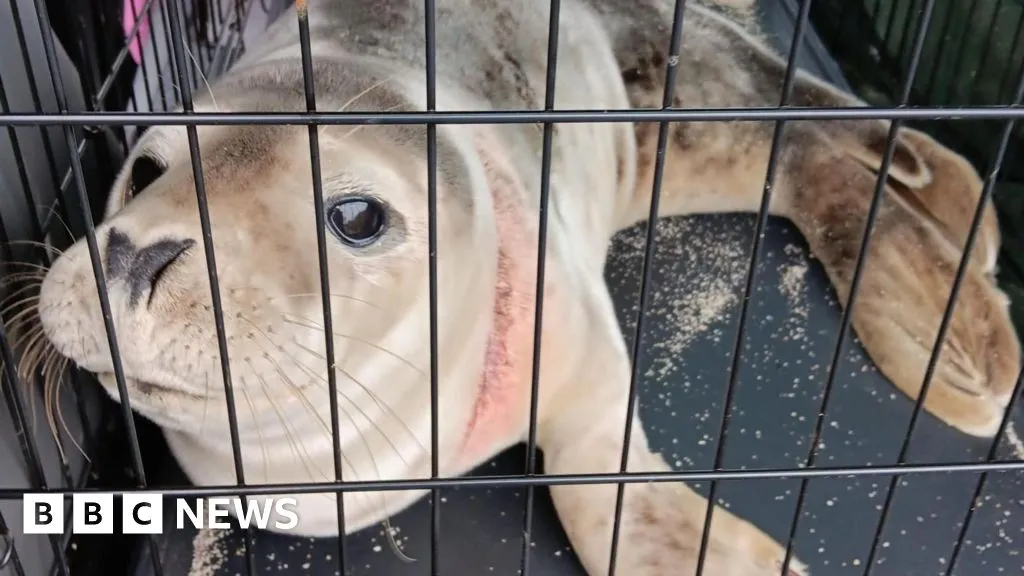
The fight to stop animals dying in fishing nets1 hour agoShareSaveAdd as preferred on GoogleJonah Fisher,Climate correspondentandCharlotte Cox,South West Cornish Seal SanctuaryThis seal named Hot Cross Bun was found malnourished and in pain on a Cornish beachEnvironmental groups have renewed calls for the government to do more to prevent the deaths of thousands of dolphins, whales and seabirds accidentally caught in fishing nets in UK waters.Known as bycatch a new report estimates that tens of thousands of protected seabirds, more than 1,000 porpoises and dolphins and dozens of whales are dying in this way each year.A report spokesperson said the government had been slow to develop plans to reduce bycatch and rules prevent fishermen near UK shores from putting acoustic devices on their…
Excerpt limited to ~120 words for fair-use compliance. The full article is at BBC News — Science.
Discussion
0 commentsMore from BBC News — Science


