The Game Boy Test Lab Provides a Cartridge-Sized Diagnostic Lab
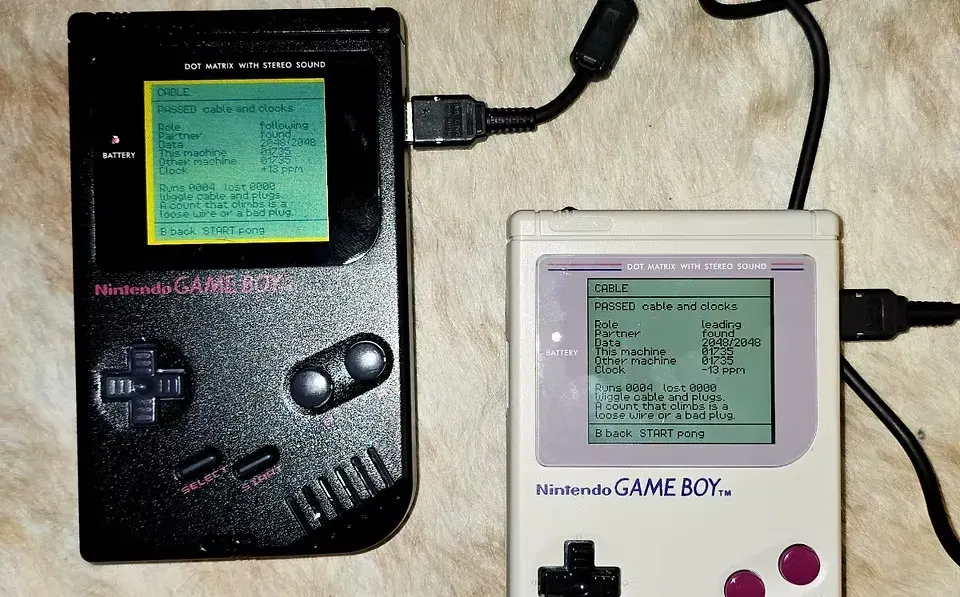
The GB Test Lab is a diagnostic cartridge developed by Marcel Pflug of the Game Boy Museum to thoroughly assess the functionality of original Game Boy systems. It tests a wide range of components, including the CPU, RAM, buttons, and link port, going beyond simple boot-up checks. The tool saves results per device and includes a built-in reference guide for interpreting symptoms and component details.
- ▪The GB Test Lab cartridge is designed to detect intermittent faults and specific hardware issues that standard game booting might miss.
- ▪The diagnostic tool is based on a freely available ROM that can be loaded onto flash cartridges like the EverDrive.
- ▪It performs comprehensive tests on the DMG-01 model, including CPU, RAM, interrupts, key bounce time, and link cable connectivity.
- ▪Results from the tests are saved per Game Boy unit if the flash cartridge supports battery backup.
- ▪The ROM includes a built-in reference manual that explains component details and how to interpret test results.
Hackaday files mainly under tech. We currently carry 507 of its stories.
Story provenance
Source · retrieval · rights · ranking — open for full record
inspect →
Story provenance
Attribution is not the same as permission. This drawer separates discovery metadata, excerpts, WeSearch-generated summaries, reuse status, and whether the publisher receives the visit. Nothing here claims a legal grant the publisher has not made.
Record
| Original publisher | Hackaday |
| Canonical URL | https://hackaday.com/2026/10/02/the-game-boy-test-lab-provides-a-cartridge-sized-diagnostic-lab/ |
| Publication time | Fri, 02 Oct 2026 08:00:56 +0000 |
| Retrieval time | 2026-10-02T08:05:44.463Z |
| Last seen | 2026-10-02T08:05:44.463Z |
| Headline source | Publisher (no WeSearch rewrite) |
| Excerpt source | publisher body |
| Excerpt method | First ~120 words (~800 chars) of extracted publisher body, fair-use limited. |
| Summary | WeSearch · cerebras-chat (WeSearch summarizer) |
| Summary source text | contentText |
| Citation coverage | Summary is a WeSearch-generated derivative; primary citation is the original publisher URL. |
| Cluster | 0y_dvjpOlBsn · 1 stories |
| Cluster logic | Grouped by semantic title/content similarity across sources within a rolling window. Same-publisher template collisions are excluded from coverage comparison. |
| Ranking reason | Story pages are not engagement-ranked. Hub feeds use recency, with optional source-diversified chronological ordering (cap consecutive stories per source). No personalized ranking. |
| Publisher visit | Yes — open original |
| Substitutes article? | No — link-out required for full text |
Rights status (four layers)
WeSearch handling by dimension
| Indexing | May the item be indexed (stored, ranked, made findable)? | Allowed |
| Snippet | May a short excerpt of the publisher's text be shown? | Allowed |
| AI summary | May WeSearch generate its own short summary of the article? | Limited |
| Retrieval / RAG | May the content be exposed for third-party retrieval-augmented generation? | Not asserted |
| Model training | May the content be used to train AI models? | Not asserted |
| Commercial reuse | May the content be reused commercially? | Not permitted |
Basis: Derived from the published RSS/Atom feed. Contact: [email protected]. Reviewed: 2026-07-24.
Opening excerpt (first ~120 words) tap to expand
The Game Boy Test Lab Provides A Cartridge-Sized Diagnostic Lab No comments by: Maya Posch October 2, 2026 Title: Copy Short Link: Copy Most of the time when you see a repair video of a Game Boy it’ll be demonstrated with a cartridge inserted and booting up into the game, but does this actually mean that the system is truely fully functional? There can still be more intermittent faults, dodgy buttons, or even something like a defective link port — all of which can be much harder to detect than firing up a copy of Tetris. This is where the GB Test Lab cartridge by [Marcel Pflug] of the Game Boy Museum comes into play.
…
Excerpt limited to ~120 words for fair-use compliance. The full article is at Hackaday.
Discussion
0 commentsMore from Hackaday